Turning urban wildlife mortality into a surveillance tool: Detection of vector-borne pathogens in carcasses of hedgehogs, squirrels, and blackbirds
Karolina Volfová, Václav Hönig, Michal Houda, Petr Papežík, Paulina Maria Lesiczka, Manoj Fonville, Hein Sprong, Barbora Černá Bolfíková, Pavel Hulva, Daniel Růžek, Lada Hofmannová, Jan Votýpka, David Modrý

TL;DR
This study shows that dead urban animals like hedgehogs and squirrels can help track tick-borne diseases, offering a new way to monitor public health risks.
Contribution
The study introduces urban wildlife carcasses as a practical and overlooked resource for surveillance of tick-borne pathogens.
Findings
Carcasses of urban wildlife provide reliable biological material for detecting tick-borne pathogens.
Anaplasma phagocytophilum, Borrelia burgdorferi s.l., Bartonella spp., and Rickettsia helvetica were the most prevalent pathogens detected.
Ear and skin tissues are the most effective for pathogen detection, and multi-tissue sampling increases detection rates.
Abstract
Tick-borne zoonoses pose a major challenge to human and animal health, driving efforts to monitor the distribution, intensity, and diversity of their causative agents. Within the One Health framework, which links human, animal, and environmental health, integrated surveillance strategies are increasingly needed. However, most studies focus on tick vectors, while vertebrate reservoirs are often overlooked due to labour-intensive sampling, the need for specialized skills, and legislative or species protection constraints. This study evaluated whether carcasses of accidentally killed wildlife (primarily roadkill) can serve as a source of biological material for vector-borne pathogen surveillance, with a focus on urban habitats due to their public health relevance. Hedgehogs, squirrels, and blackbirds were selected as synanthropic species that thrive in cities, are commonly infested by…
Genes, proteins, chemicals, diseases, species, mutations and cell lines named across the full text — each resolved to its canonical identifier and authoritative record.
Click any figure to enlarge with its caption.
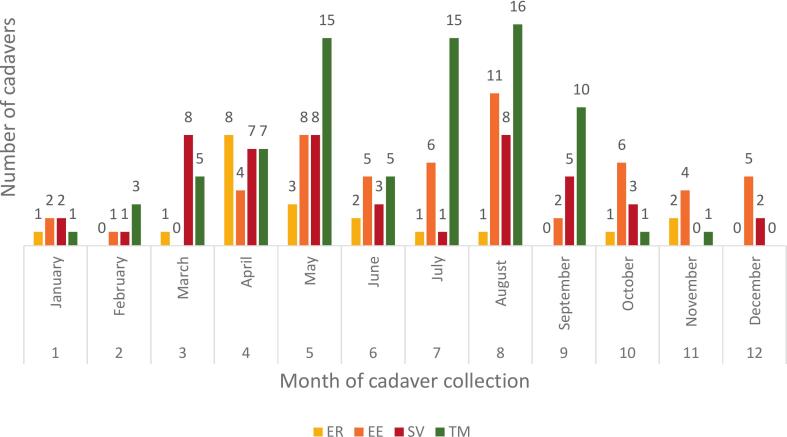 Figure 1
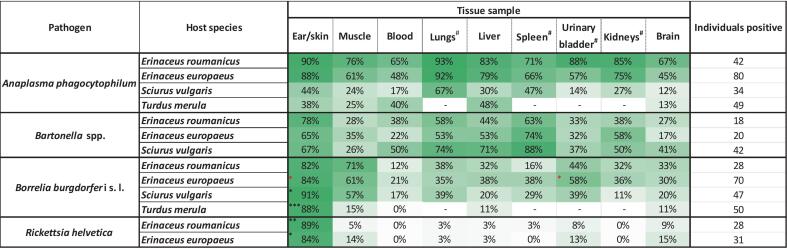 Figure 2
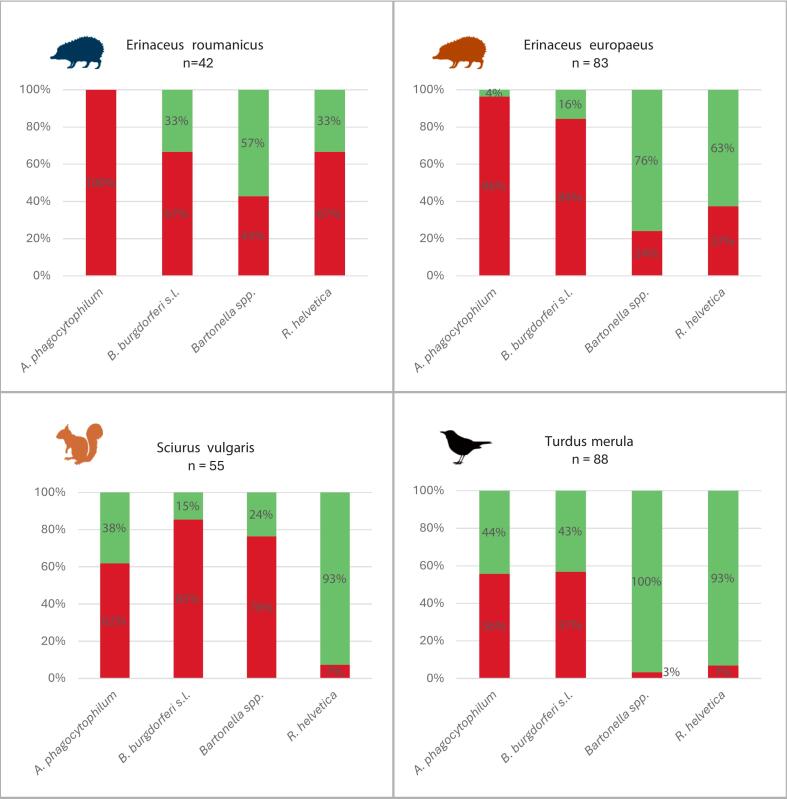 Figure 3
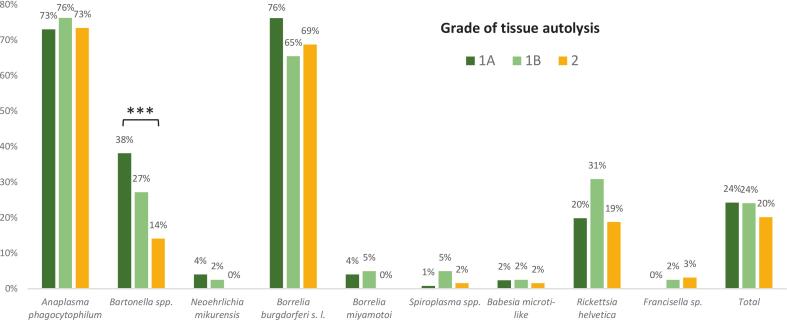 Figure 4
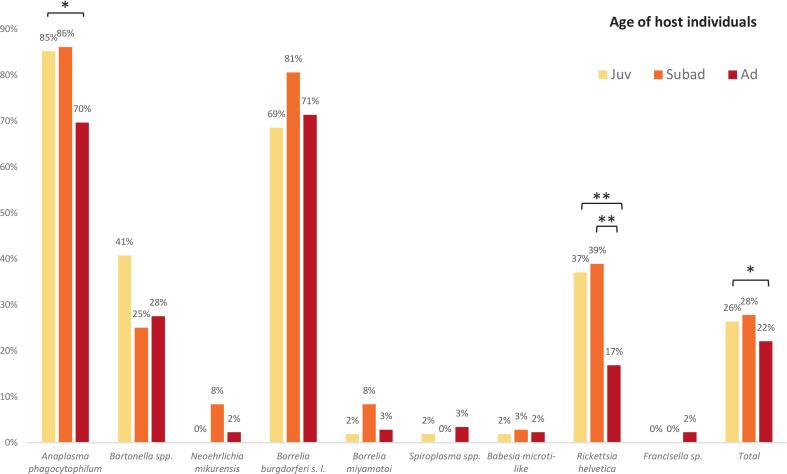 Figure 5
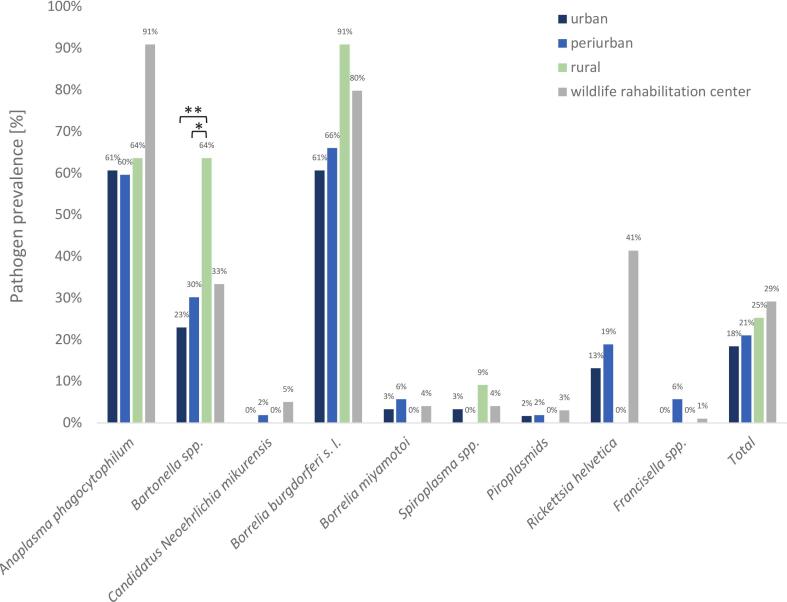 Figure 6
Peer Reviews
No public reviews on file for this paper yet. If you reviewed it on a platform where reviews are public (OpenReview, ICLR, NeurIPS, ICML), you can paste yours below so the community can read it here.
Videos
No videos yet. Explain this paper in a talk, walkthrough, or lecture? Add one.
Taxonomy
TopicsBartonella species infections research · Vector-borne infectious diseases · Zoonotic diseases and public health