Development and validation of an interpretable machine learning model for non-invasive screening of precancerous gastric lesions using symptom and lifestyle data: a multicentre cohort study
Lan Wang, Kaiqiang Tang, Peng Zhang, Jiasheng Liu, Bowen Wu, Jun Chen, Yan Li, Shiyu Du, Yan Wang, Shao Li

TL;DR
Researchers developed a non-invasive machine learning model to screen for precancerous stomach lesions using symptoms and lifestyle data, outperforming current guidelines in accuracy and cost-effectiveness.
Contribution
An interpretable machine learning model for non-invasive precancerous gastric lesion screening that outperforms existing guidelines in multiple validation settings.
Findings
The model achieved AUCs of 0.82 in internal testing and 0.80 in external validation for detecting precancerous gastric lesions.
It outperformed existing guidelines by 0.18–0.35 in AUC across all datasets and reduced the average cost per detected case by 37.1%.
Key predictors identified include Helicobacter pylori infection, age, and melaena.
Abstract
Precancerous gastric lesions (PLGC) are a critical stage in gastric cancer progression, where timely intervention can substantially reduce mortality. However, current screening strategies are predominantly endoscopic, which are invasive, costly, and often inaccessible in resource-limited settings. We aimed to develop and validate an interpretable machine learning model for non-invasive PLGC screening using symptom and lifestyle data. In this multicentre study, we enrolled eligible adult participants undergoing or scheduled to undergo upper gastrointestinal endoscopy with no prior diagnosis of malignancy. The development cohort comprised 1034 participants recruited at two hospitals between Nov 16, 2022, and Apr 7, 2023. Symptom and lifestyle data from this cohort were used to construct the development dataset, which was randomly split into a training set (n = 620), an internal…
Genes, proteins, chemicals, diseases, species, mutations and cell lines named across the full text — each resolved to its canonical identifier and authoritative record.
Click any figure to enlarge with its caption.
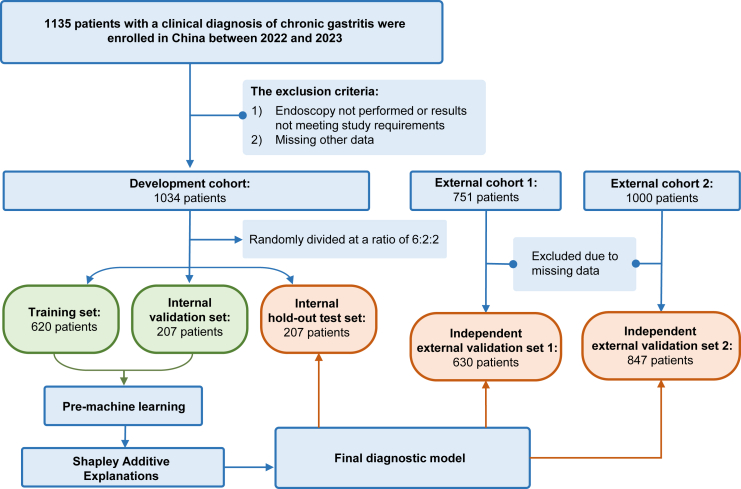 Figure 1
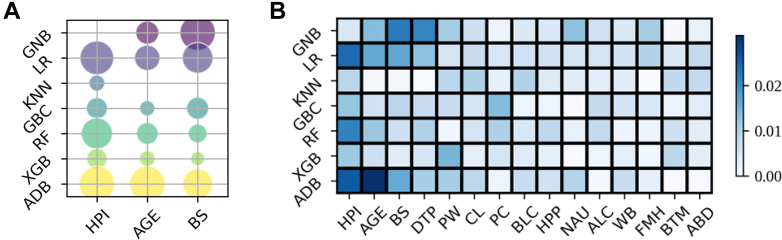 Figure 2
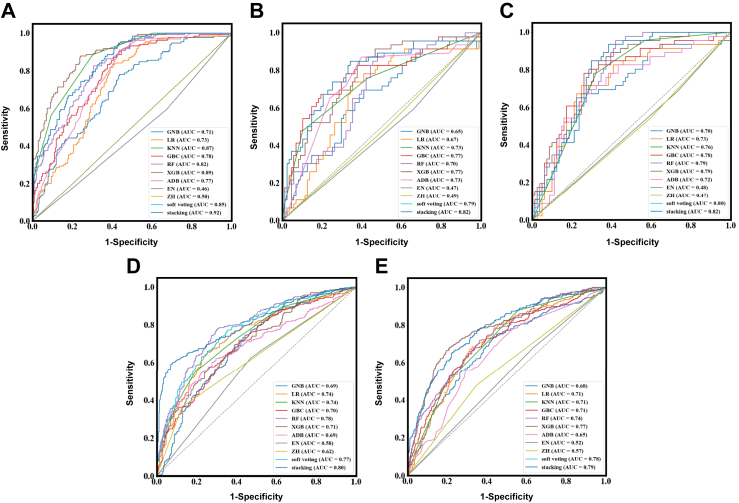 Figure 3
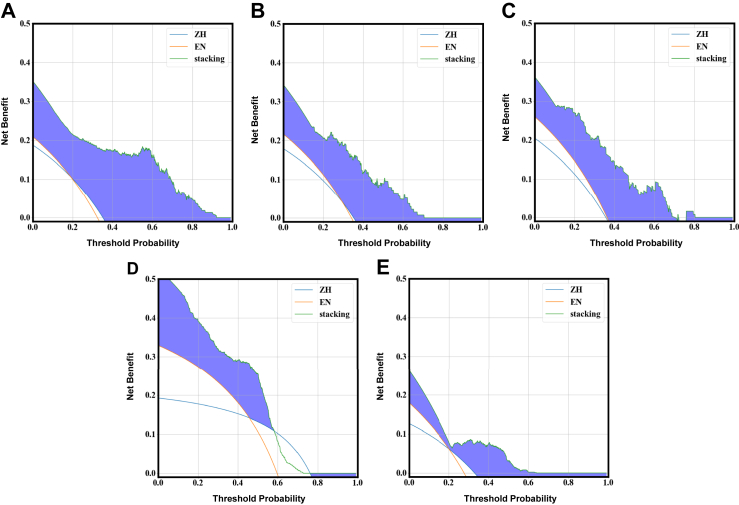 Figure 4
Peer Reviews
No public reviews on file for this paper yet. If you reviewed it on a platform where reviews are public (OpenReview, ICLR, NeurIPS, ICML), you can paste yours below so the community can read it here.
Videos
No videos yet. Explain this paper in a talk, walkthrough, or lecture? Add one.
Taxonomy
TopicsColorectal Cancer Screening and Detection · Traditional Chinese Medicine Studies · Gastric Cancer Management and Outcomes