Integration of bioinformatic tools for the detection of SARS-CoV-2 co-infection cases
Adeliza Mae L. Realingo, Francisco Gerardo M. Polotan, Miguel Francisco B. Abulencia, Roslind Anne R. Pantoni, Jessel Babe G. Capin, Gerald Ivan Sotelo, Maria Carmen A. Corpuz, Neil Tristan M. Yabut, Saul M. Rojas, Ma. Angelica Tujan, Karen Iana Tomas, Ardiane Ysabelle Dolor

TL;DR
This paper describes a bioinformatics pipeline that detects SARS-CoV-2 co-infections and variant recombination using genomic data from patient samples.
Contribution
The study introduces a novel bioinformatics pipeline called Katmon to identify co-infections and recombinant variants in SARS-CoV-2.
Findings
Two probable co-infection cases were identified using the Katmon pipeline, involving Delta and Omicron variants.
A retrospective analysis of 1,078 samples revealed a lower bound co-infection prevalence of 0.27% and 0.19%.
The pipeline detected recombinant variants and confirmed co-infections from multiple countries.
Abstract
Co-infection with multiple severe acute respiratory syndrome coronavirus 2 (SARS-CoV-2) variants, though rare, may have clinical and public health implications, including facilitating variant recombination. Early detection of co-infections is, therefore, crucial. In this study, we report two probable cases of co-infection identified during routine genomic surveillance. Initially suspected as cross-contamination due to the presence of private mutations and nucleotide mixtures flagged by Nextclade and bammix, the samples were re-extracted and re-sequenced after workspace decontamination, yet the anomalies persisted. To investigate further, we developed a bioinformatics pipeline (Katmon) incorporating various tools such as Freyja, with lineage abundance results that illustrated the presence of multiple variants, and VirStrain, which confirmed inconsistent lineage assignments. We also…
Genes, proteins, chemicals, diseases, species, mutations and cell lines named across the full text — each resolved to its canonical identifier and authoritative record.
Click any figure to enlarge with its caption.
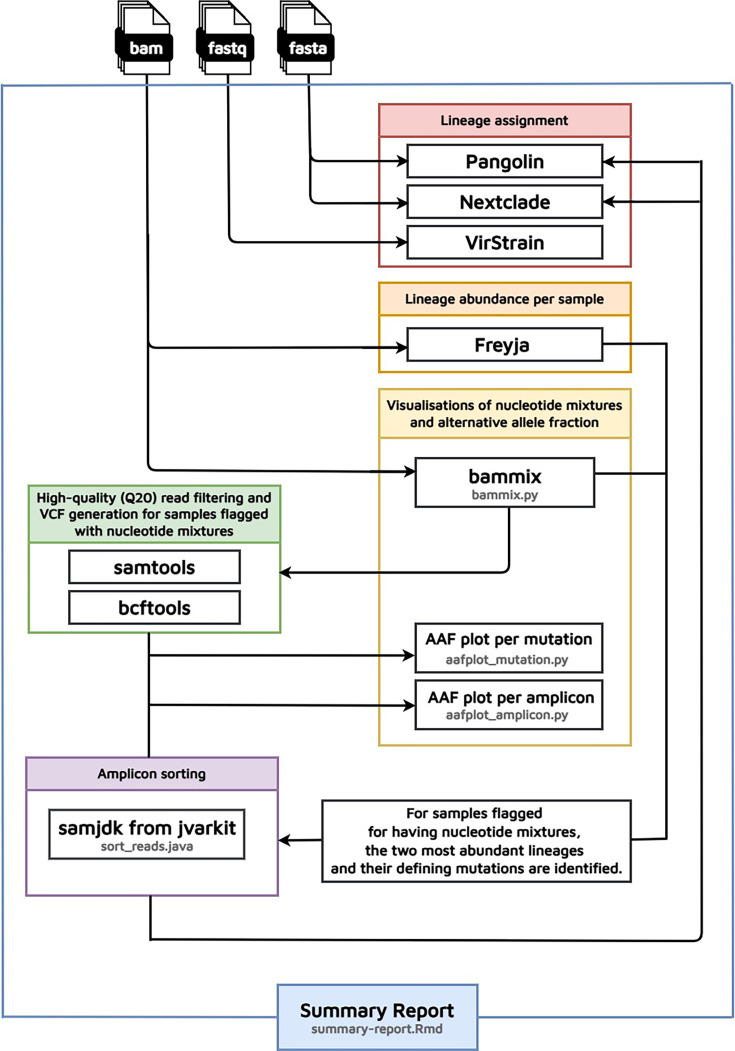 Figure 1
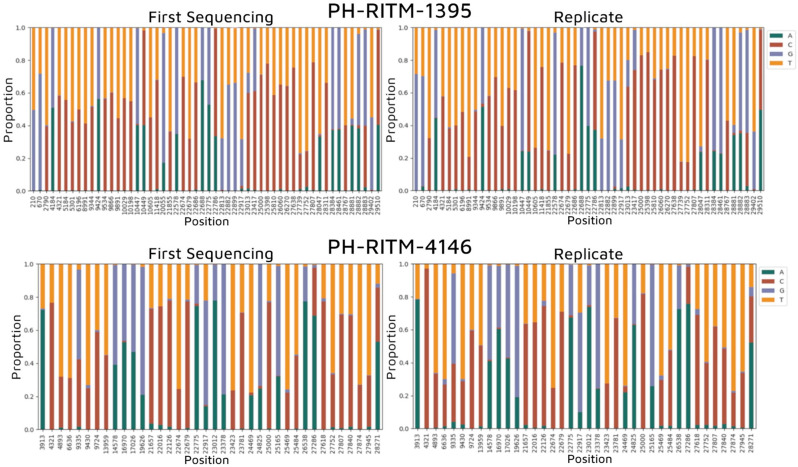 Figure 2
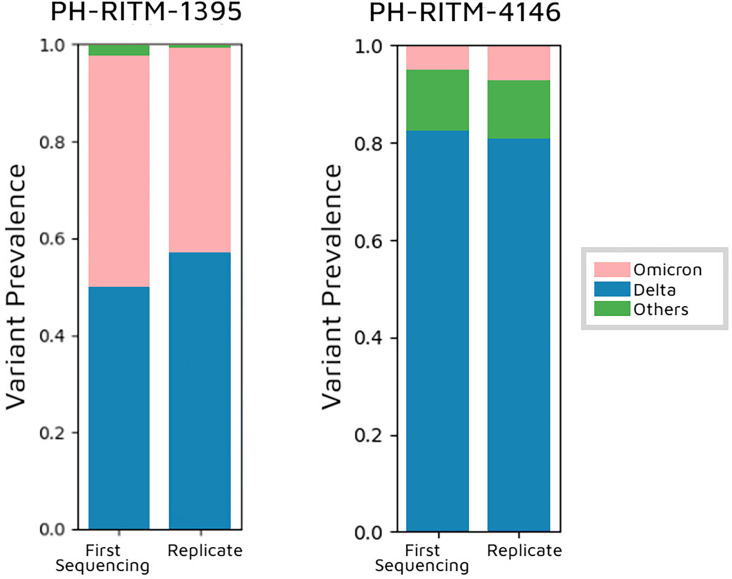 Figure 3
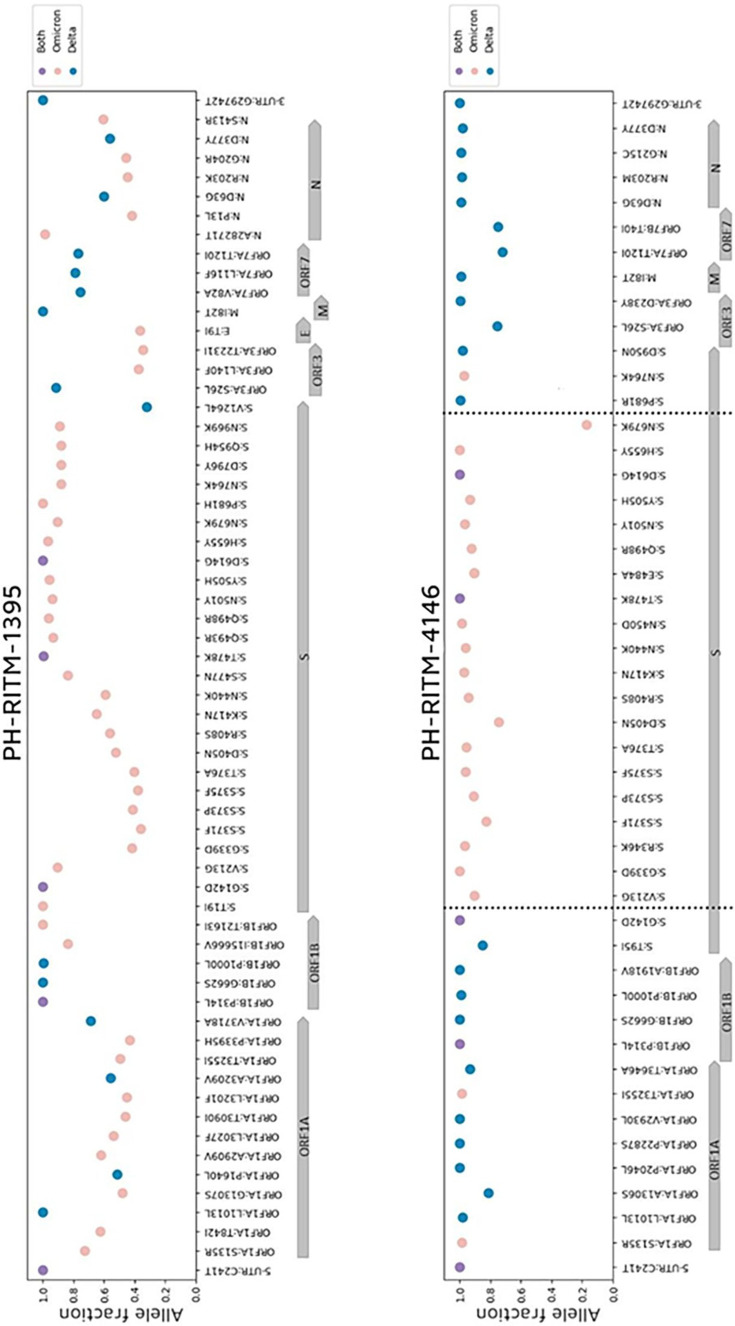 Figure 4
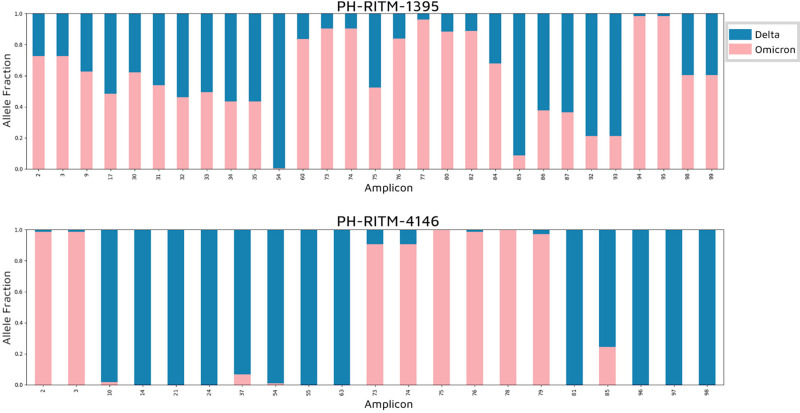 Figure 5
 Figure 6
Peer Reviews
No public reviews on file for this paper yet. If you reviewed it on a platform where reviews are public (OpenReview, ICLR, NeurIPS, ICML), you can paste yours below so the community can read it here.
Videos
No videos yet. Explain this paper in a talk, walkthrough, or lecture? Add one.
Taxonomy
TopicsSARS-CoV-2 and COVID-19 Research · vaccines and immunoinformatics approaches · COVID-19 Clinical Research Studies