Assessing the Performance of Mass Spectrometry Search Strategies in Identifying Translational Errors Using PDX Proteomics Data
Araf Mahmud, Yingnan Song, Qi Zhou, Chen Huang

TL;DR
This study evaluates how well mass spectrometry methods can detect errors in protein translation using cross-species data from patient-derived xenografts.
Contribution
The paper introduces the first benchmark for identifying translational errors using proteomics data and evaluates open and closed search strategies.
Findings
Open search approaches achieve over 65% sensitivity and 70% precision in high-quality samples.
Performance varies significantly across different amino acid substitutions.
Closed searches are limited by mislocalization of post-translational modifications.
Abstract
Translational errors (TEs) result in a mismatch between mRNA codons and the amino acids (AAs) of the corresponding protein. Unlike DNA mutations or RNA editing, where nucleotide sequences can be used to infer AA substitutions, TEs can only be detected at the protein level. Although high-throughput mass spectrometry (MS) proteomics offers the potential to resolve peptide sequences and could theoretically be used to identify TEs, the feasibility of current MS data analysis approaches for this application remains uncertain. Here, we utilize patient-derived xenograft proteomics data, which include both human and mouse peptides with identifiable cross-species AA variations, as a ground truth for benchmarking TE identification methods. By using high-confidence mouse peptides as surrogates for “TE-containing” peptides, we show that current open search approaches can achieve >65% overall…
Genes, proteins, chemicals, diseases, species, mutations and cell lines named across the full text — each resolved to its canonical identifier and authoritative record.
Click any figure to enlarge with its caption.
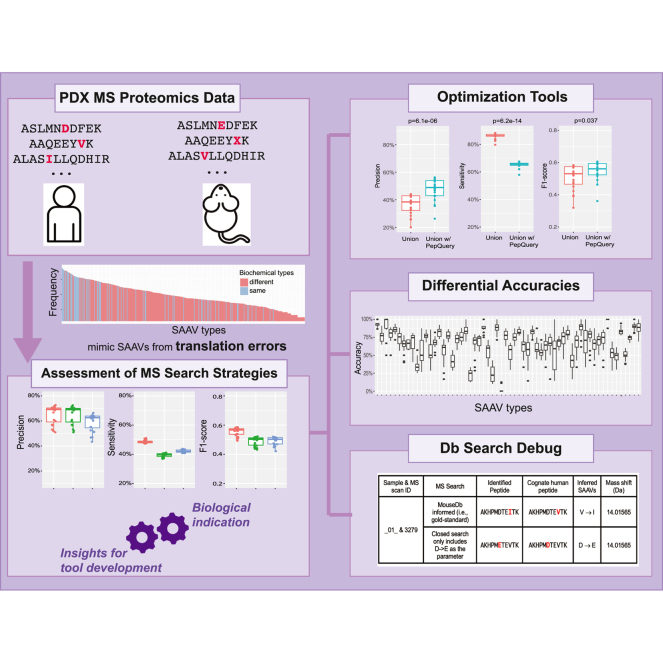 Figure 1
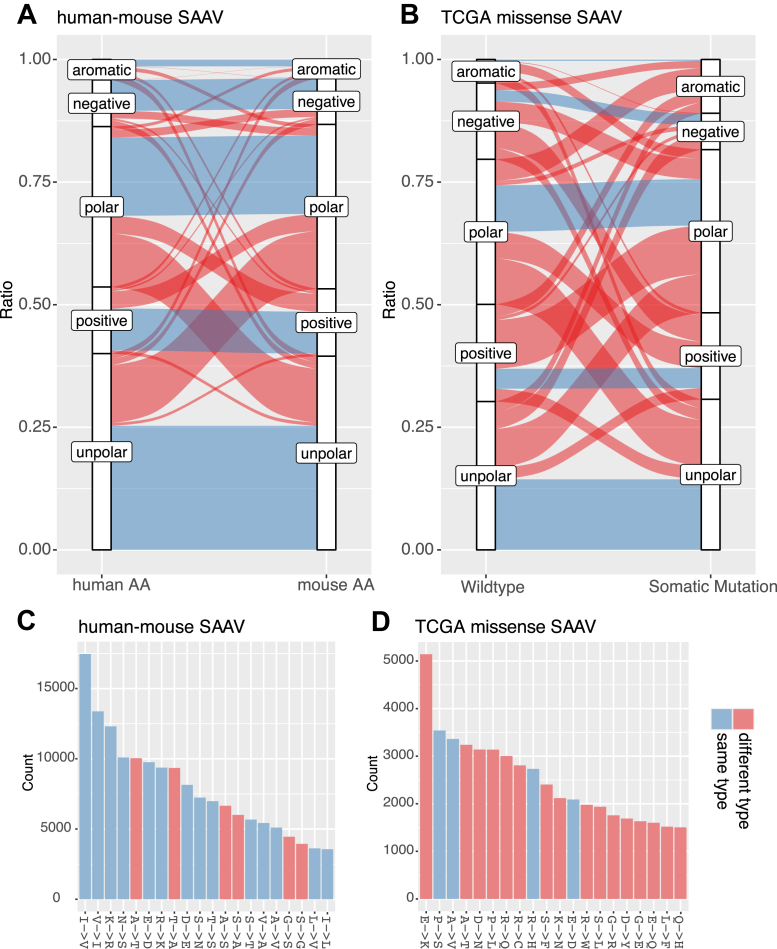 Figure 2
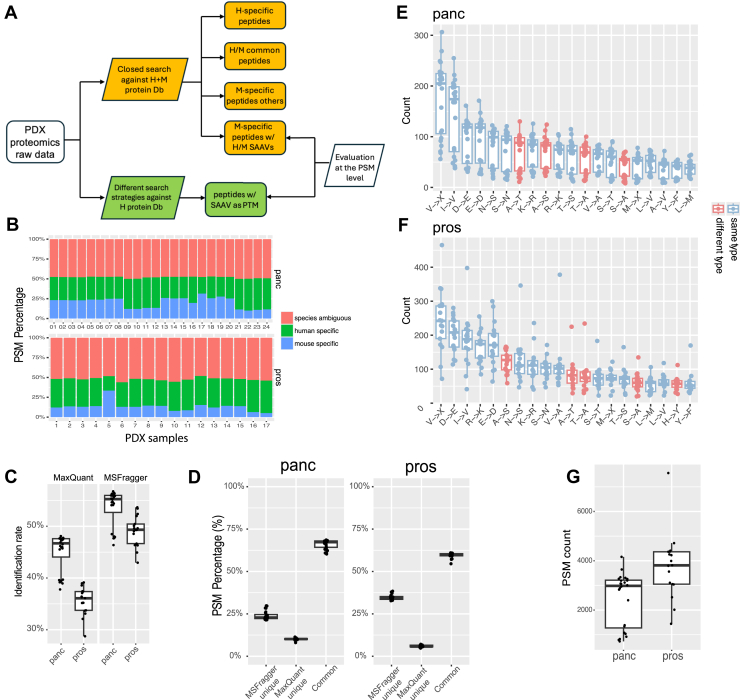 Figure 3
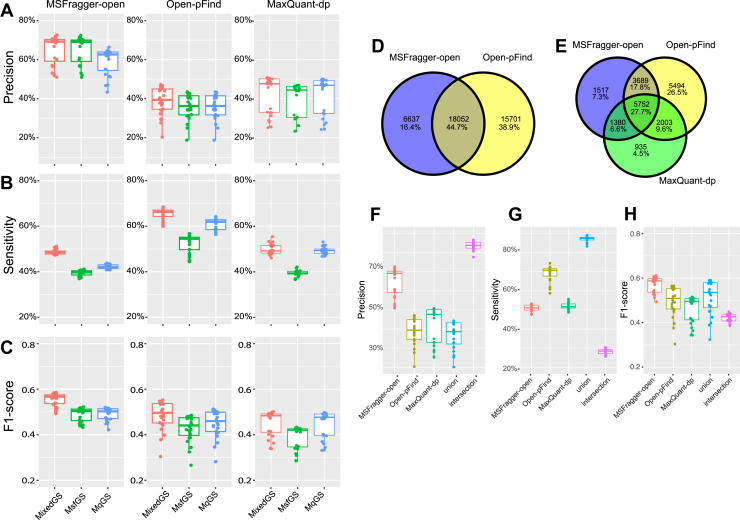 Figure 4
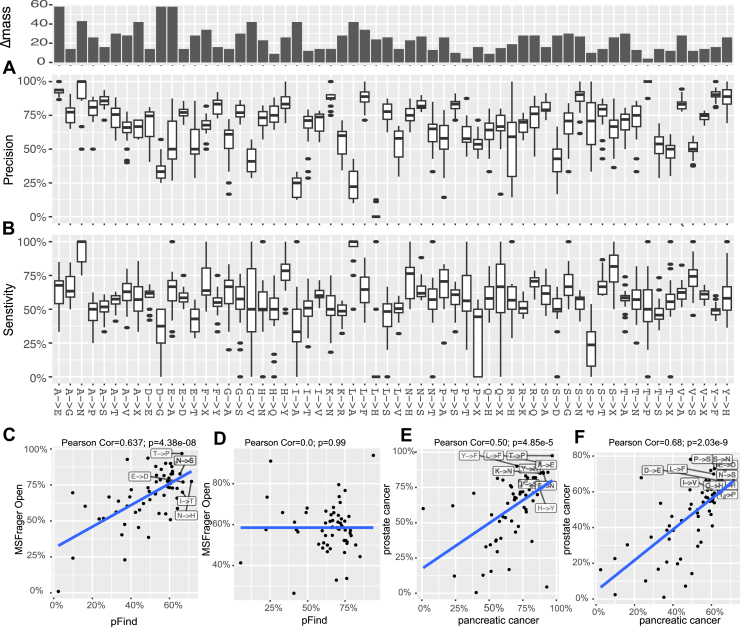 Figure 5
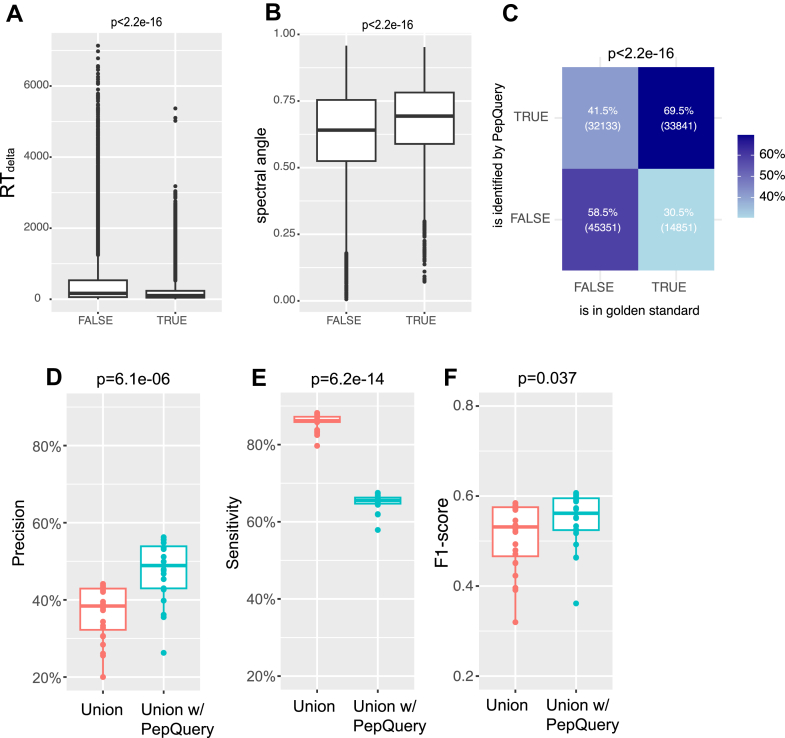 Figure 6
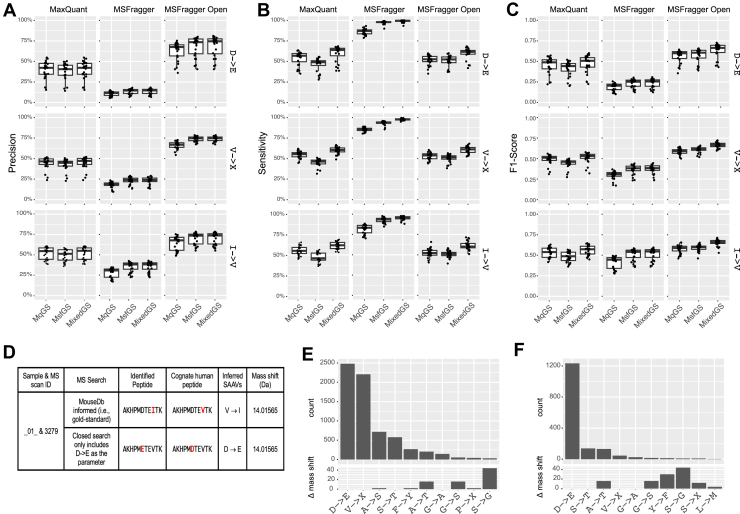 Figure 7
Peer Reviews
No public reviews on file for this paper yet. If you reviewed it on a platform where reviews are public (OpenReview, ICLR, NeurIPS, ICML), you can paste yours below so the community can read it here.
Videos
No videos yet. Explain this paper in a talk, walkthrough, or lecture? Add one.
Taxonomy
TopicsAdvanced Proteomics Techniques and Applications · RNA and protein synthesis mechanisms · Mass Spectrometry Techniques and Applications