The Ottawa score for prediction of recurrent venous thromboembolism in cancer patients treated with tinzaparin: an individual patient data meta-analysis
Céline Chapelle, Philippe Girard, Luis Jara-Palomares, Agnès Y.Y. Lee, Olivier Sanchez, Guy Meyer, Géraldine Poenou, Patrick Mismetti, Isabelle Mahé, Silvy Laporte

TL;DR
The Ottawa score does not accurately predict recurrent blood clots in cancer patients treated with tinzaparin, despite being tested in a large group of patients.
Contribution
This study evaluates the Ottawa score's performance in predicting VTE recurrence in cancer patients on tinzaparin using individual patient data from multiple studies.
Findings
The Ottawa score had a poor predictive accuracy (area under the curve of 0.56) for VTE recurrence.
Adding other factors did not improve the score's ability to predict recurrence.
Recurrent VTE rates were 5.0% in low-risk and 8.5% in high-risk groups at 6 months.
Abstract
Risk of venous thromboembolism (VTE) recurrence remains high in patients with cancer-associated thrombosis (CAT), despite therapeutic anticoagulation. Identifying patients at risk of treatment failure is still a challenge. We aimed to assess the performance of the Ottawa score in predicting VTE recurrence in a large homogeneous population of patients with CAT treated with the same anticoagulant, tinzaparin, for at least 3 months. Individual patient data from 3 prospective cohort studies and 1 randomized controlled trial were pooled (PROSPERO: CRD42019119907). Clinical events of interest were adjudicated by independent central adjudication committees in all 4 studies. Among the 1413 patients included, the Ottawa score could be calculated for 1088 of whom 646 (59.4%) were classified at high risk of recurrence (Ottawa score ≥ 1). The 6-month cumulative incidence of recurrent VTE was…
Genes, proteins, chemicals, diseases, species, mutations and cell lines named across the full text — each resolved to its canonical identifier and authoritative record.
Click any figure to enlarge with its caption.
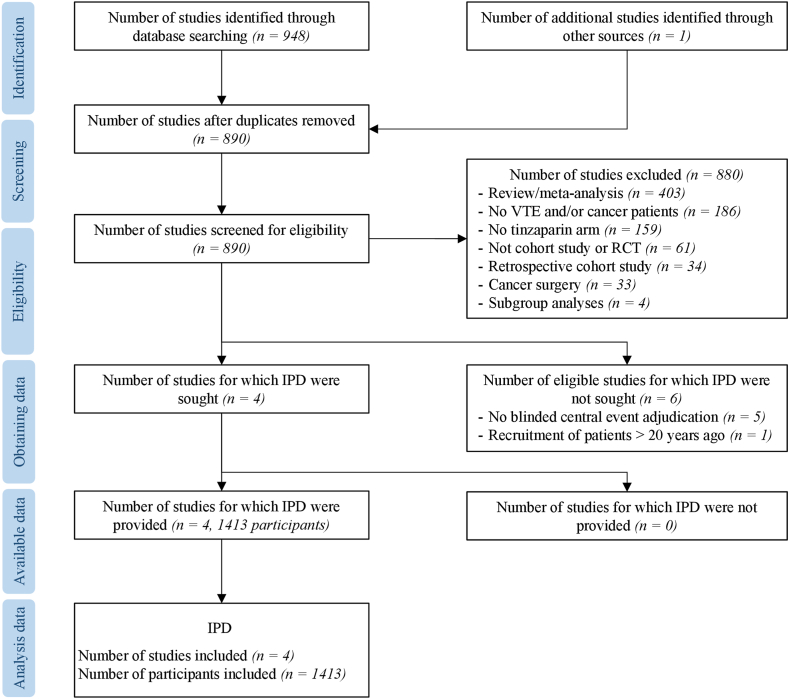 Figure 1
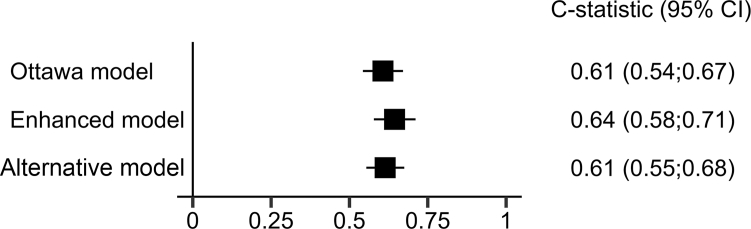 Figure 2
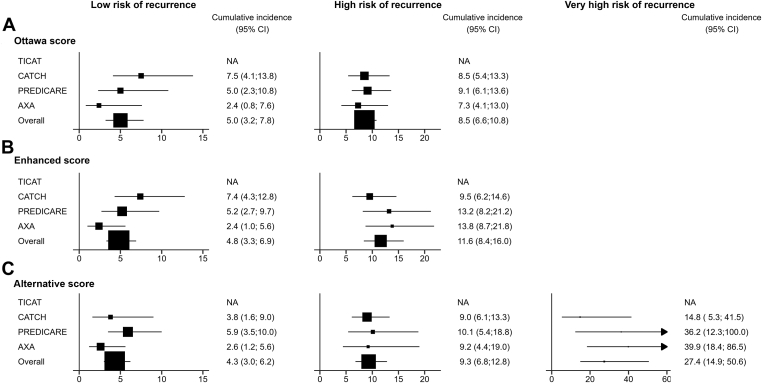 Figure 3
Peer Reviews
No public reviews on file for this paper yet. If you reviewed it on a platform where reviews are public (OpenReview, ICLR, NeurIPS, ICML), you can paste yours below so the community can read it here.
Videos
No videos yet. Explain this paper in a talk, walkthrough, or lecture? Add one.
Taxonomy
TopicsVenous Thromboembolism Diagnosis and Management · Blood Coagulation and Thrombosis Mechanisms · Heparin-Induced Thrombocytopenia and Thrombosis