A Comparison of Snoring Changes With a Supine‐Avoidance Alarm Device Compared to Constant Positive Airway Pressure Treatment in Patients With Supine‐Predominant OSA
Matthew M. Rahimi, Andrew Vakulin, David Stevens, Peter G. Catcheside

TL;DR
This study compares two treatments for snoring in patients with sleep apnea, finding that a supine-avoidance device works better for some people than others.
Contribution
The study evaluates the effectiveness of supine-avoidance therapy versus CPAP in reducing snoring in supine-predominant OSA patients.
Findings
Supine-avoidance therapy nearly eliminated supine sleep but did not consistently reduce snoring frequency in all patients.
CPAP significantly reduced snoring frequency compared to supine-avoidance therapy in the whole group.
In supine-predominant snorers, supine-avoidance therapy reduced snoring frequency, though CPAP was more effective.
Abstract
This study aimed to quantify how much snoring occurs in patients with supine‐predominant OSA and the comparative effectiveness of supine‐avoidance therapy versus CPAP to reduce objective measures of snoring. Participants had a 1‐week in‐home sleep posture assessment and a in‐home PSG study before being randomised to either CPAP or supine‐avoidance therapy for 6–8 weeks, then switched treatments for another 6–8 weeks. Snoring and treatment outcomes were examined in a subgroup of patients with supine dependent snoring. Baseline measurements showed snoring frequency was 48.9 [95% CI 16.7 to 188.7], 26.3 [95% CI 17.0 to 106.3], 57.5 [95% CI 16.8 to 190.7] snores/h for the whole group, supine snorer and non‐supine snorers respectively. Supine sleep as a percentage of total sleep was almost completely abolished with supine‐avoidance treatment (Baseline = 30.7% [95% 15.4 to 46.4],…
Genes, proteins, chemicals, diseases, species, mutations and cell lines named across the full text — each resolved to its canonical identifier and authoritative record.
Click any figure to enlarge with its caption.
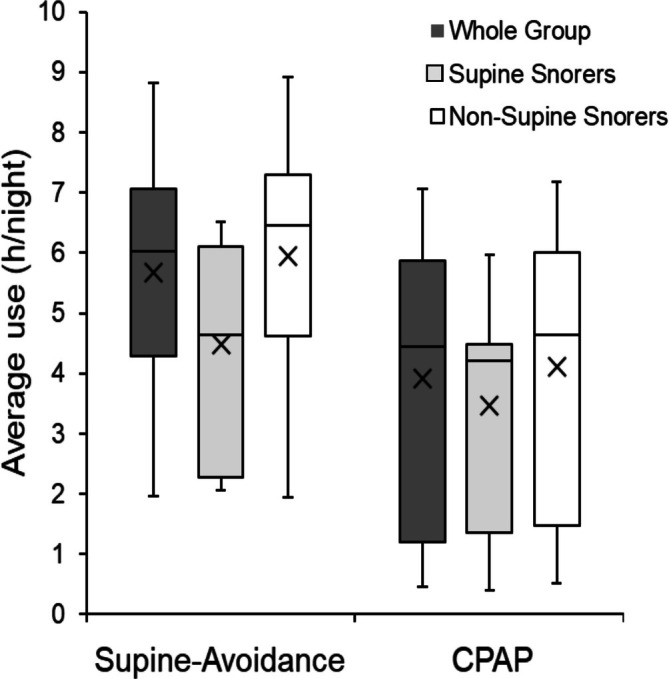 Figure 1
Peer Reviews
No public reviews on file for this paper yet. If you reviewed it on a platform where reviews are public (OpenReview, ICLR, NeurIPS, ICML), you can paste yours below so the community can read it here.
Videos
No videos yet. Explain this paper in a talk, walkthrough, or lecture? Add one.
Taxonomy
TopicsObstructive Sleep Apnea Research · Neuroscience of respiration and sleep · Tracheal and airway disorders