Autonomic Control of Heart Rate During Sleep Is Depressed in Young Children With Prader–Willi Syndrome
Okkes R. Patoglu, Lisa M. Walter, Georgina Plunkett, Margot J. Davey, Gillian M. Nixon, Bradley A. Edwards, Rosemary S. C. Horne

TL;DR
Children with Prader-Willi syndrome show reduced heart rate control during sleep, especially in younger age groups, suggesting delayed autonomic development.
Contribution
The study reveals age-dependent autonomic control deficits in Prader-Willi syndrome during sleep, particularly in children under 6 years old.
Findings
Children with Prader-Willi syndrome had reduced heart rate variability and higher heart rates during REM and total sleep.
They showed reduced low frequency power and nocturnal heart rate dipping, indicating impaired autonomic maturation.
Differences were most pronounced in children under 6 years old, with no significant differences in older children.
Abstract
Children with Prader–Willi syndrome are at increased risk of both obstructive and central sleep apnoea. In addition, these children have impaired autonomic control, which may be exacerbated by sleep apnoea. The aim of this study was to compare autonomic control using heart rate variability and nocturnal dipping of heart rate in children with Prader–Willi syndrome and typically developing children. We identified 50 children with Prader–Willi syndrome and matched them for age, obstructive and central apnoea‐hypoponea index, body mass index and sex to 50 typically developing children. All children underwent overnight polysomnography. Time and frequency domain heart rate variability were analysed during N2, N3, REM and total sleep, and nocturnal dipping of heart rate from wake was calculated. Children with Prader–Willi syndrome had reduced time domain heart rate variability in REM, reduced…
Genes, proteins, chemicals, diseases, species, mutations and cell lines named across the full text — each resolved to its canonical identifier and authoritative record.
Click any figure to enlarge with its caption.
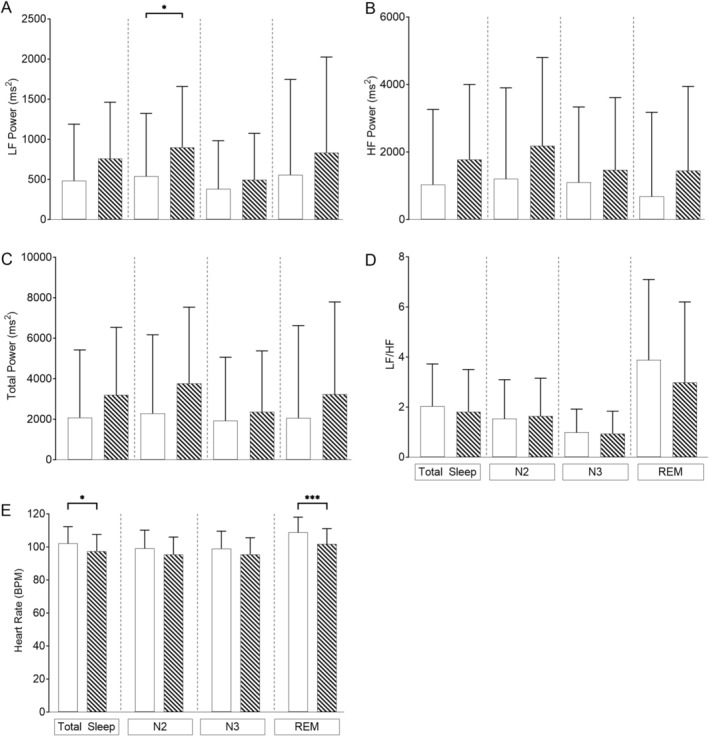 Figure 1
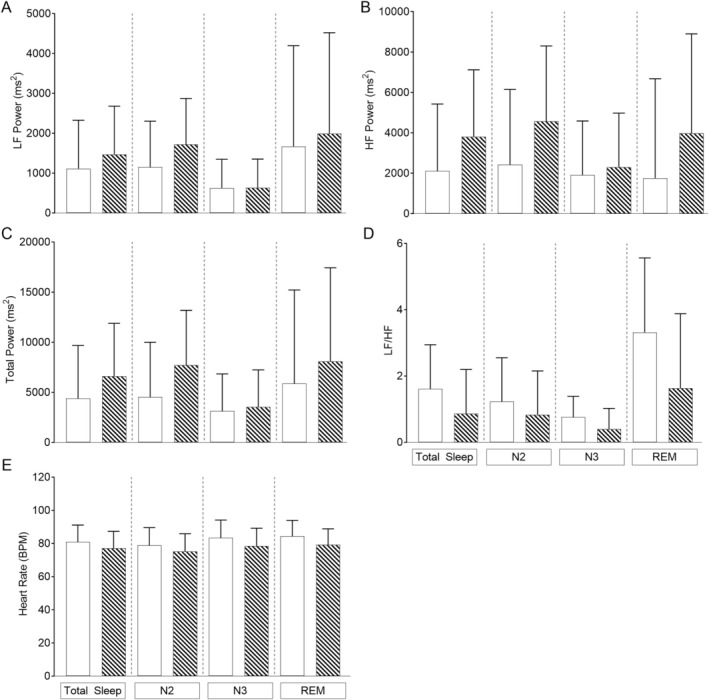 Figure 2
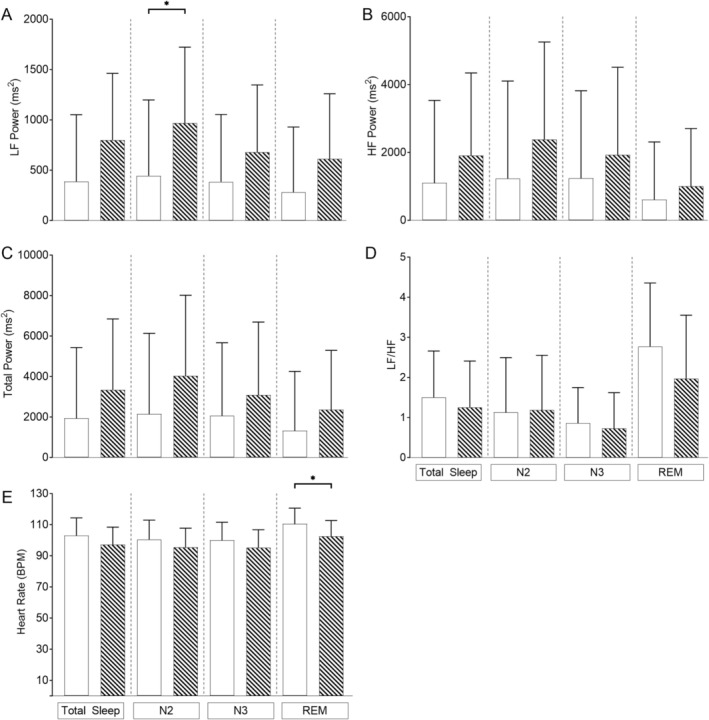 Figure 3
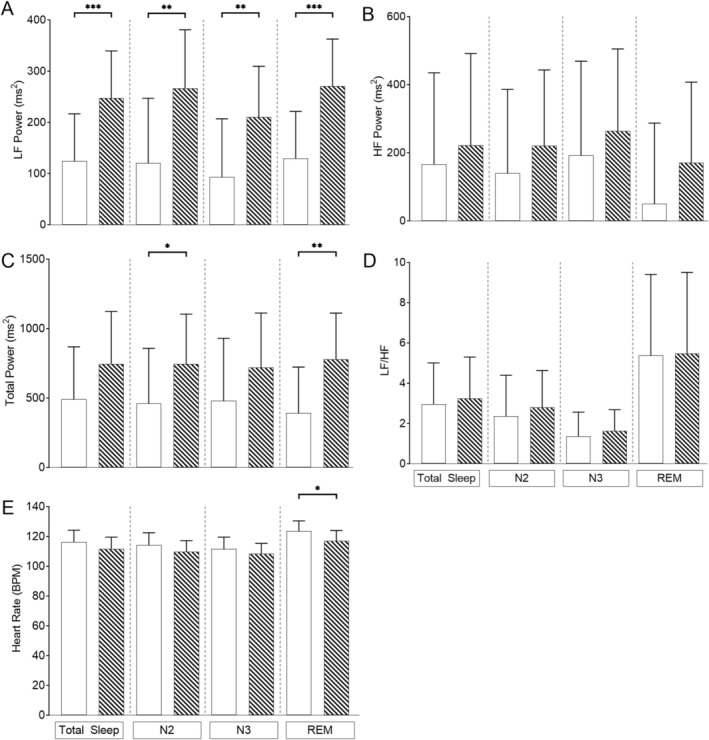 Figure 4
Peer Reviews
No public reviews on file for this paper yet. If you reviewed it on a platform where reviews are public (OpenReview, ICLR, NeurIPS, ICML), you can paste yours below so the community can read it here.
Videos
No videos yet. Explain this paper in a talk, walkthrough, or lecture? Add one.
Taxonomy
TopicsGenetic Syndromes and Imprinting · Fetal and Pediatric Neurological Disorders · Genetics and Neurodevelopmental Disorders