Insomnia Subtypes in Clinical Population According to the Insomnia Type Questionnaire (ITQ): A Multi‐Centre Study in Spanish Sleep Clinics
Francesca Canellas, Manuel de Entrambasaguas, Odile Romero, Ainhoa Álvarez, Rybel Wix, Francisco Javier Puertas, Jesús Pujol, Guillem Frontera

TL;DR
This study identifies five insomnia subtypes in Spanish sleep clinics, showing that some subtypes are more common and have different psychological traits.
Contribution
The study validates the use of the Insomnia Type Questionnaire (ITQ) for subtyping insomnia in clinical populations.
Findings
Insomnia subtypes Type 1 and Type 3 were overrepresented in sleep clinics compared to the general population.
Type 1 insomnia patients had higher depression and anxiety scores than other subtypes.
Type 3 patients were more worried about sleep, while Type 4 had the lowest depression and anxiety scores.
Abstract
The lack of robust subtyping for insomnia disorder (ID) led to its current classification as a uniform condition. A novel approach to subtyping ID developed a new tool, the insomnia type questionnaire (ITQ). Our research aimed to assess whether the ID subtypes identified in the general population could also be found in ID patients referred to sleep clinics in a multi‐centre study throughout Spain, and to gather insights for the management of complex ID patients. The ITQ classified ID patients into the five previously described subtypes: Type 1 = 35.1%, Type 2 = 12%, Type 3 = 46.7%, Type 4 = 5.8% and Type 5 = 0.4%. Compared to the general population, there was an overrepresentation of Types 1 and 3, consistently across all participating clinical centres. The total self‐reported sleep duration was 4.7 (SD 1.2) h, with no significant differences between subtypes. Type 1 patients had…
Genes, proteins, chemicals, diseases, species, mutations and cell lines named across the full text — each resolved to its canonical identifier and authoritative record.
Click any figure to enlarge with its caption.
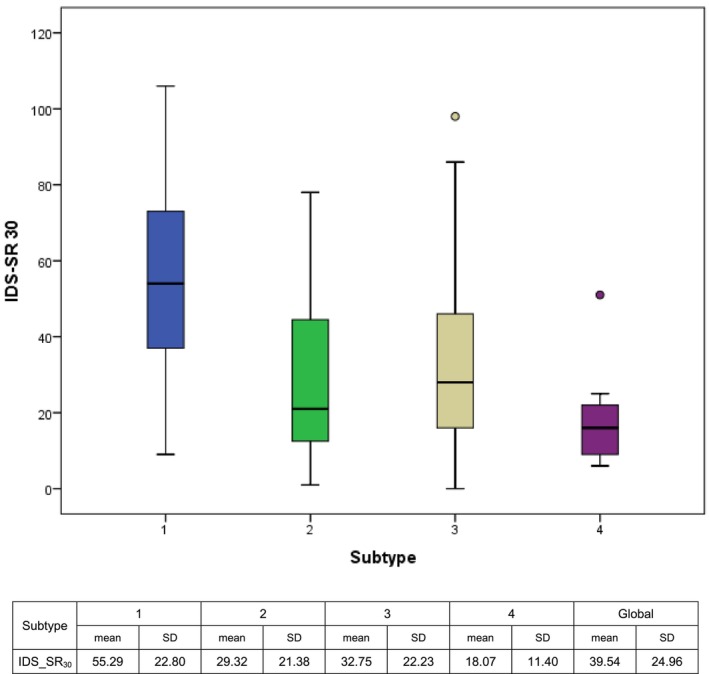 Figure 1
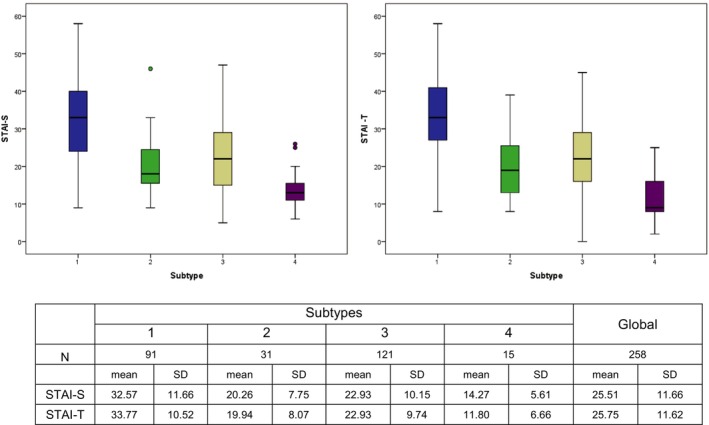 Figure 2
 Figure 3
Peer Reviews
No public reviews on file for this paper yet. If you reviewed it on a platform where reviews are public (OpenReview, ICLR, NeurIPS, ICML), you can paste yours below so the community can read it here.
Videos
No videos yet. Explain this paper in a talk, walkthrough, or lecture? Add one.
Taxonomy
TopicsSleep and related disorders · Sleep and Wakefulness Research · Circadian rhythm and melatonin