Reduced Proteasome Degradation of HSF‐1 Shifts Protein Stress Management With Age in Caenorhabditis elegans
Hongwei Wang, Fengzhen Sun, Zhidong He, Xiaojie Wang, Hao Liu, Mengjiao Song, Qingxia Chen, Zhixue Li, Ligang Wu, Xiumin Yan, Xueliang Zhu, Yidong Shen

TL;DR
Aging worms adjust their protein stress responses by reducing the breakdown of HSF-1, helping them better handle chronic stress but lessening their response to sudden stress.
Contribution
The study identifies PBS-7 as a key regulator of HSF-1 degradation, revealing an age-dependent mechanism for managing protein stress.
Findings
Decreased PBS-7 binding in aged C. elegans reduces HSF-1 degradation.
Increased HSF-1 enhances chronic stress responses by upregulating HSPs and autophagy genes.
Upregulated HSPs suppress HSF-1 activation during acute stress like heat shock.
Abstract
To maintain protein homeostasis, which is essential for health, animals have developed complex protective mechanisms against various acute and chronic stresses. However, the coordination of responses to these protein stresses, especially their age‐dependent changes, is not well understood. HSF‐1 is a key regulator of protein homeostasis. Our study identifies PBS‐7, a proteasome subunit, as its crucial regulator. In aged C. elegans , decreased PBS‐7 binding reduces proteasome‐mediated degradation of HSF‐1. The increase in HSF‐1 enhances responses to chronic stresses, like accumulating protein aggregates, by upregulating heat shock proteins (HSPs) and autophagy genes. Meanwhile, the upregulated HSPs suppress the activation of HSF‐1 upon acute stress, such as heat shock. Our findings reveal a mechanism that coordinates responses to acute and chronic protein stresses and highlights an…
Genes, proteins, chemicals, diseases, species, mutations and cell lines named across the full text — each resolved to its canonical identifier and authoritative record.
Click any figure to enlarge with its caption.
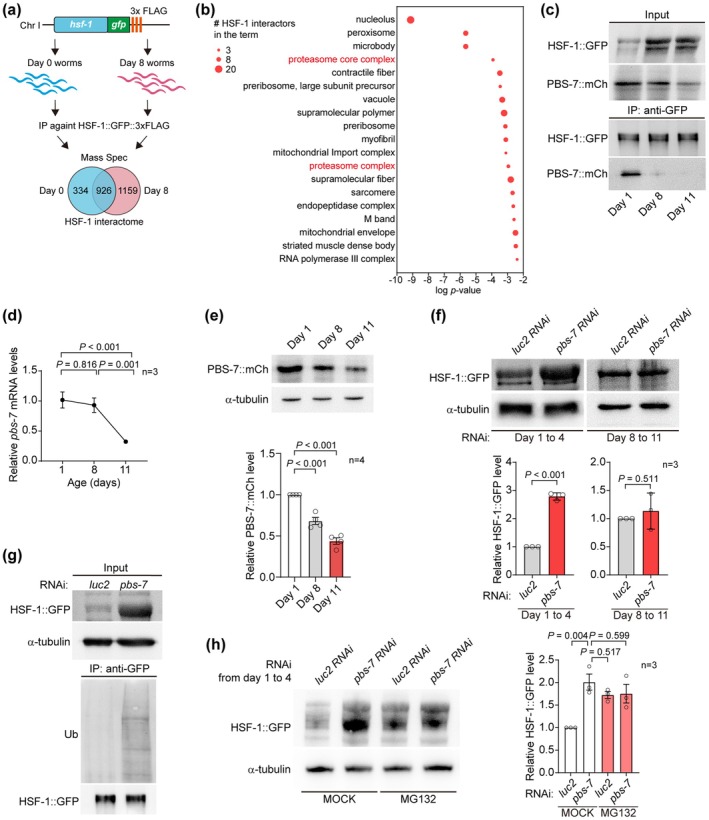 Figure 1
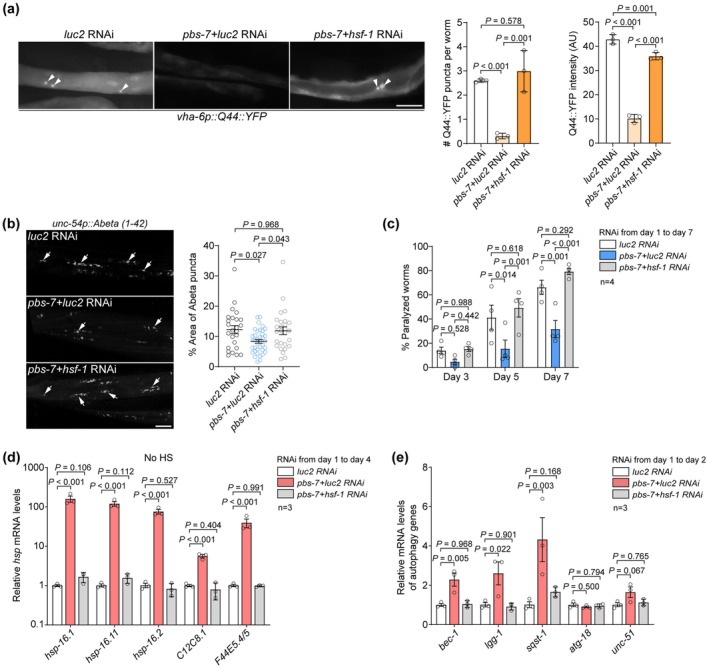 Figure 2
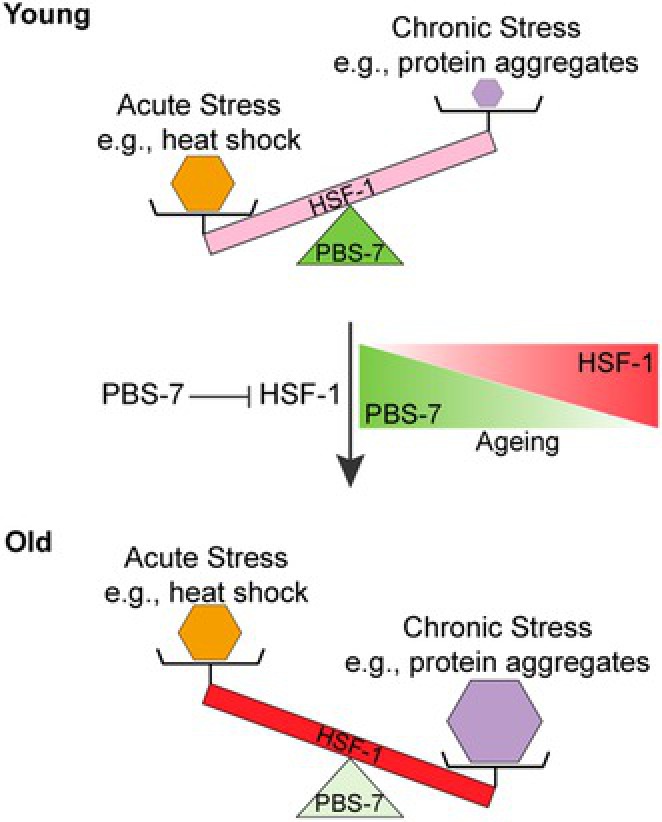 Figure 3
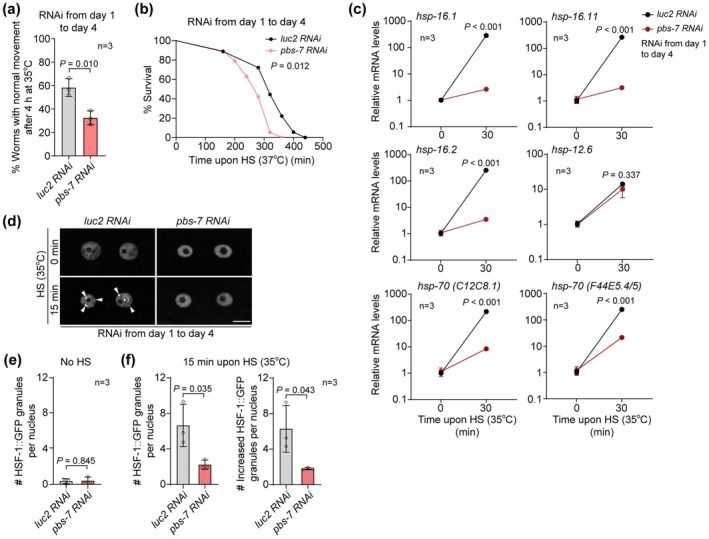 Figure 4
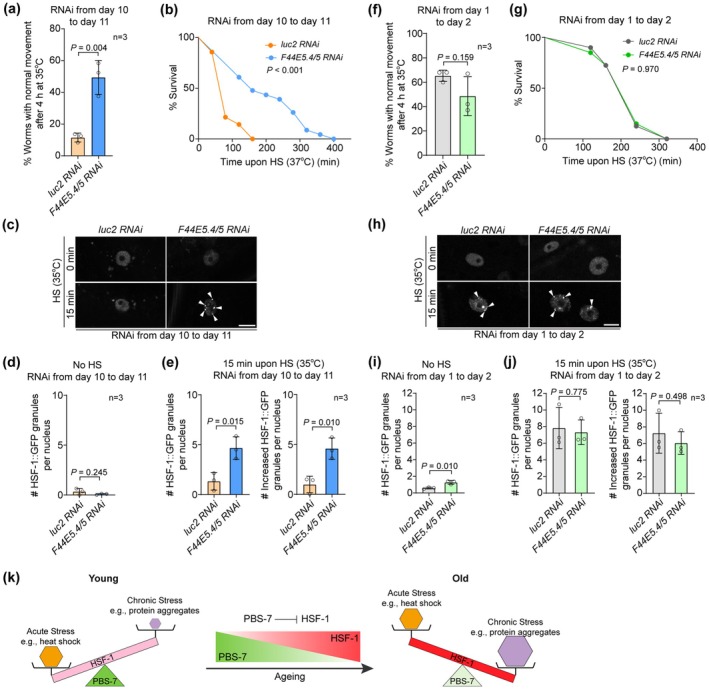 Figure 5
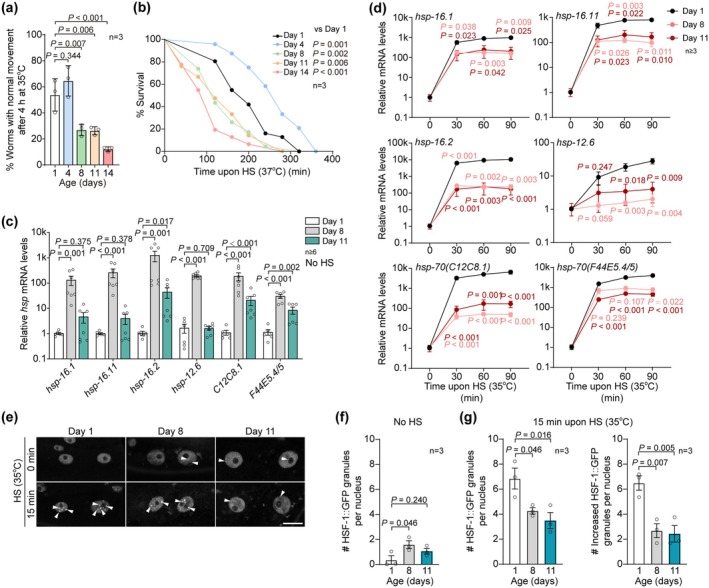 Figure 6
Peer Reviews
No public reviews on file for this paper yet. If you reviewed it on a platform where reviews are public (OpenReview, ICLR, NeurIPS, ICML), you can paste yours below so the community can read it here.
Videos
No videos yet. Explain this paper in a talk, walkthrough, or lecture? Add one.
Taxonomy
TopicsUbiquitin and proteasome pathways · Heat shock proteins research · Endoplasmic Reticulum Stress and Disease