The rise and spread of invasive emm49 Streptococcus pyogenes in the USA
Benjamin Metcalf, Srinivas Nanduri, Yuan Li, Zhongya Li, Saundra Mathis, Joy Rivers, Sopio Chochua, Bernard Beall, Lesley McGee, Chris Van Beneden

TL;DR
A specific type of Streptococcus pyogenes (emm49) has rapidly increased in the U.S., mainly affecting homeless and drug-injecting populations, highlighting the role of social factors in disease spread.
Contribution
Identifies the rise of emm49 iGAS cases and links it to social determinants like homelessness and drug use, using genomic and epidemiological data.
Findings
emm49 cases were more common in males, homeless individuals, and drug users compared to other emm types.
Phylogeographic analysis suggests emm49 originated in the western U.S. around 2004 and spread nationwide.
The expansion of emm49 is associated with socially marginalized populations, indicating social determinants influence its spread.
Abstract
Background. The propensity of Streptococcus pyogenes (group A Streptococcus) to invade normally sterile sites and cause invasive group A Streptococcus (iGAS) disease varies across strains, which are classified using the emm gene. Between 2015 and 2017, multistate iGAS surveillance identified an ~150-fold increase of one particular emm type, emm49. This genomic epidemiological analysis aimed to identify bacterial, patient and societal factors associated with this expansion. Methods. We analysed 1322 emm49 iGAS cases and the genome sequences of the clinical isolates acquired through the population-based Active Bacterial Core surveillance during 2015–2022. For each invasive case, we received both a cultured isolate and a standardized case report form that included basic demographic attributes and risk factors of infection. A phylogeographic analysis was performed to reconstruct the…
Genes, proteins, chemicals, diseases, species, mutations and cell lines named across the full text — each resolved to its canonical identifier and authoritative record.
Click any figure to enlarge with its caption.
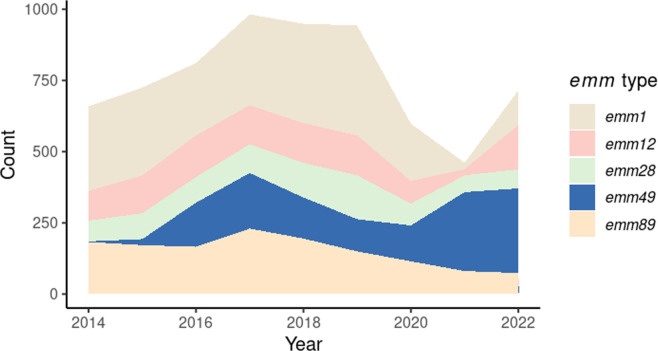 Figure 1
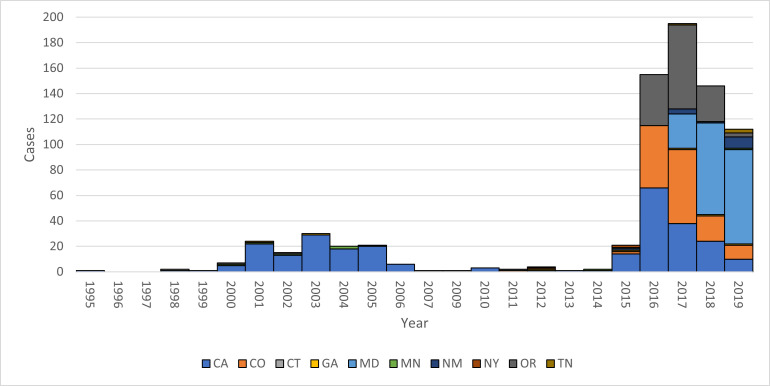 Figure 2
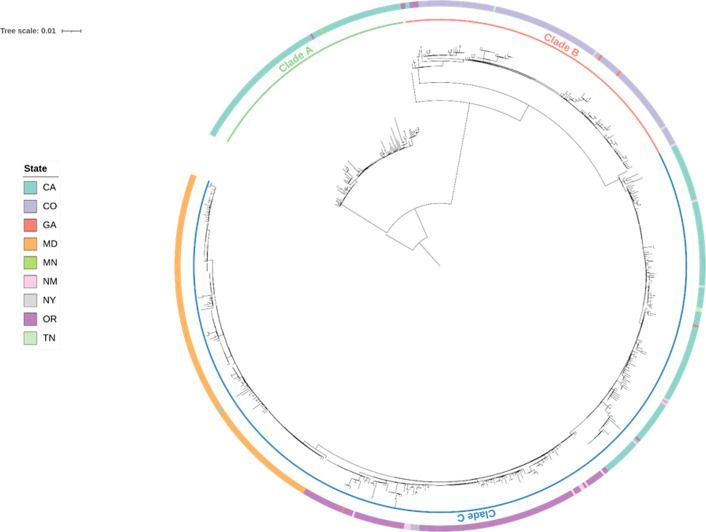 Figure 3
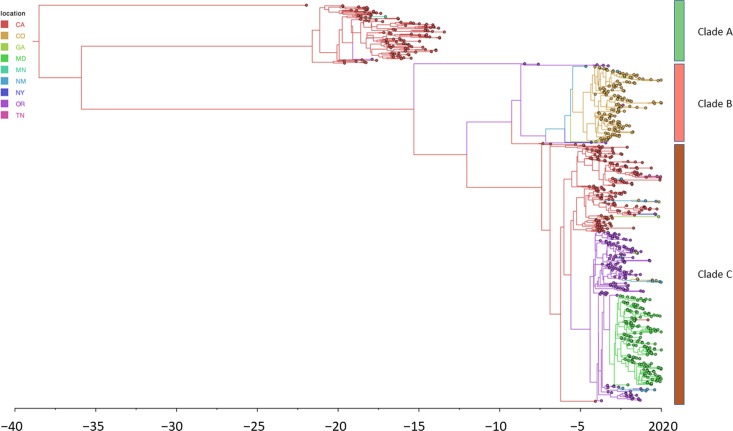 Figure 4
Peer Reviews
No public reviews on file for this paper yet. If you reviewed it on a platform where reviews are public (OpenReview, ICLR, NeurIPS, ICML), you can paste yours below so the community can read it here.
Videos
No videos yet. Explain this paper in a talk, walkthrough, or lecture? Add one.
Taxonomy
TopicsStreptococcal Infections and Treatments · Neonatal and Maternal Infections · Oral microbiology and periodontitis research