Enhancing crayfish sex identification with Kolmogorov-Arnold networks and stacked autoencoders
Yasin Atilkan, Berk Kirik, Eren Tuna Acikbas, Fatih Ekinci, Koray Acici, Tunc Asuroglu, Recep Benzer, Mehmet Serdar Guzel, Semra Benzer

TL;DR
This paper explores using advanced machine learning models to improve the accuracy of identifying the sex of crayfish using both tabular and image data.
Contribution
The study introduces a novel architecture based on stacked autoencoders and demonstrates the superior performance of Kolmogorov-Arnold networks in crayfish sex classification.
Findings
Kolmogorov-Arnold networks achieved 95-100% accuracy in tabular data sex classification.
A stacked autoencoder-based architecture improved model performance by an average of 3.5%.
Support vector machines and multilayer perceptrons achieved 84% and 82% accuracy on image data, respectively.
Abstract
Crayfish play an important role in freshwater ecosystems, and sex classification is crucial for analyzing their demographic structures. This study performed binary classification using traditional machine learning and deep learning models on tabular and image datasets with an imbalanced class distribution. For tabular classification, features related to crayfish weight and size were used. Missing values were handled using different methods to create various datasets. Kolmogorov-Arnold networks demonstrated the best performance across all metrics, achieving accuracy rates between 95 and 100%. Image data were generated by combining at least five images of each crayfish. Autoencoders were employed to extract meaningful features. In experiments conducted on these extracted features, support vector machines achieved 84% accuracy, and multilayer perceptrons achieved 82% accuracy,…
Genes, proteins, chemicals, diseases, species, mutations and cell lines named across the full text — each resolved to its canonical identifier and authoritative record.
Click any figure to enlarge with its caption.
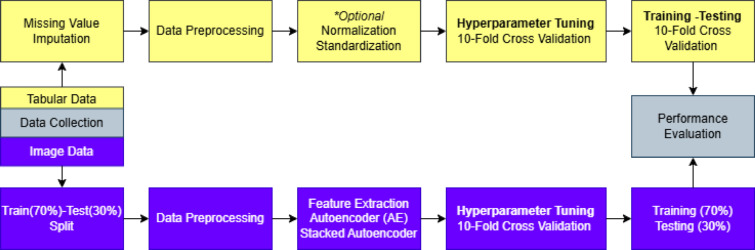 Figure 1
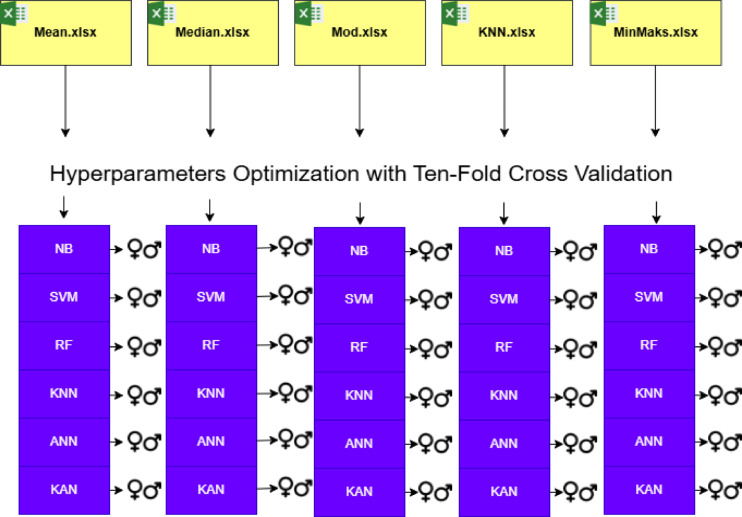 Figure 2
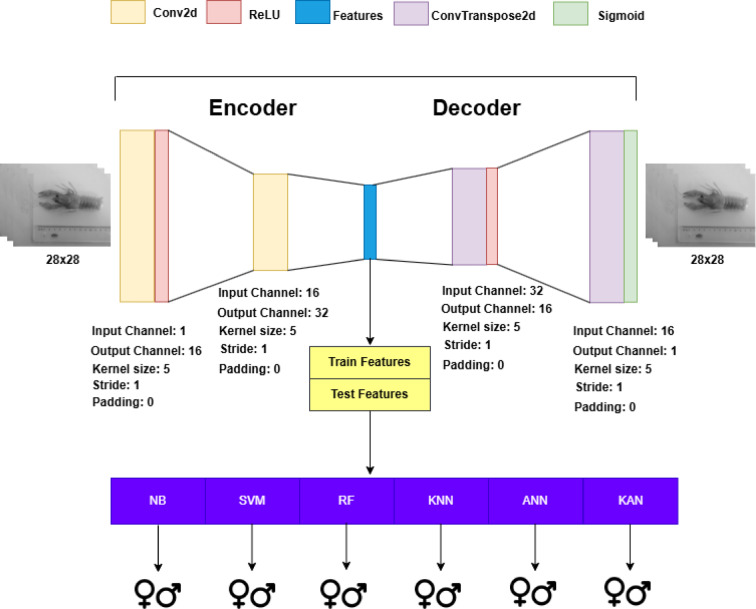 Figure 3
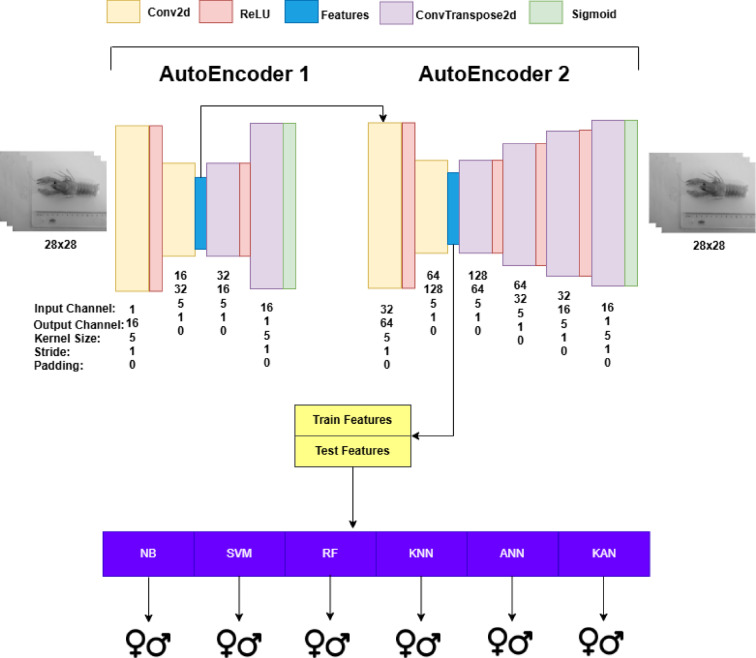 Figure 4
Peer Reviews
No public reviews on file for this paper yet. If you reviewed it on a platform where reviews are public (OpenReview, ICLR, NeurIPS, ICML), you can paste yours below so the community can read it here.
Videos
No videos yet. Explain this paper in a talk, walkthrough, or lecture? Add one.
Taxonomy
TopicsWater Quality Monitoring Technologies · Crustacean biology and ecology · Fish biology, ecology, and behavior