Harnessing multivalency and FcγRIIB engagement to augment anti-CD27 immunotherapy
Marcus A. Widdess, Anastasia Pakidi, Hannah J. Metcalfe, H. T. Claude Chan, Tatyana Inzhelevskaya, Chris A. Penfold, C. Ian Mockridge, Steven G. Booth, Sonya James, Sean H. Lim, Stephen A. Beers, Mark S. Cragg, Aymen Al-Shamkhani

TL;DR
Researchers improved anti-CD27 immunotherapy by engineering antibodies with higher valency and FcγRIIB engagement, leading to better T cell activation and tumor-fighting effects.
Contribution
A novel strategy for enhancing anti-CD27 immunotherapy through tetravalent antibodies and FcγRIIB engagement is introduced.
Findings
Tetravalent anti-CD27 antibodies show potent T cell stimulation and anti-tumor efficacy in pre-clinical models.
Enhanced CD27 clustering and receptor polarization at the cell interface are key mechanisms of action.
The tetravalent antibodies activate CD8⁺ T cells without depleting regulatory T cells.
Abstract
Despite significant clinical progress, checkpoint blockade remains limited by variable response rates, resistance, and toxicity. Activating costimulatory receptors offers a promising alternative to enhance anti-tumor immunity. However, there is insufficient understanding of how to mimic physiological membrane-anchored costimulatory ligands. Here, we describe a strategy for developing effective agonists of the costimulatory receptor CD27 by increasing both antibody valency and FcγRIIB engagement. Engineered anti-CD27 antibodies capable of tetravalent binding to CD27 and selective FcγRIIB association exhibit potent T cell stimulatory activity and anti-tumor efficacy in pre-clinical models, compared to bivalent counterparts. The anti-tumor effects of the tetravalent antibody are mediated through CD8⁺ T cell activation without evidence of regulatory T cell depletion. Mechanistically,…
Genes, proteins, chemicals, diseases, species, mutations and cell lines named across the full text — each resolved to its canonical identifier and authoritative record.
Click any figure to enlarge with its caption.
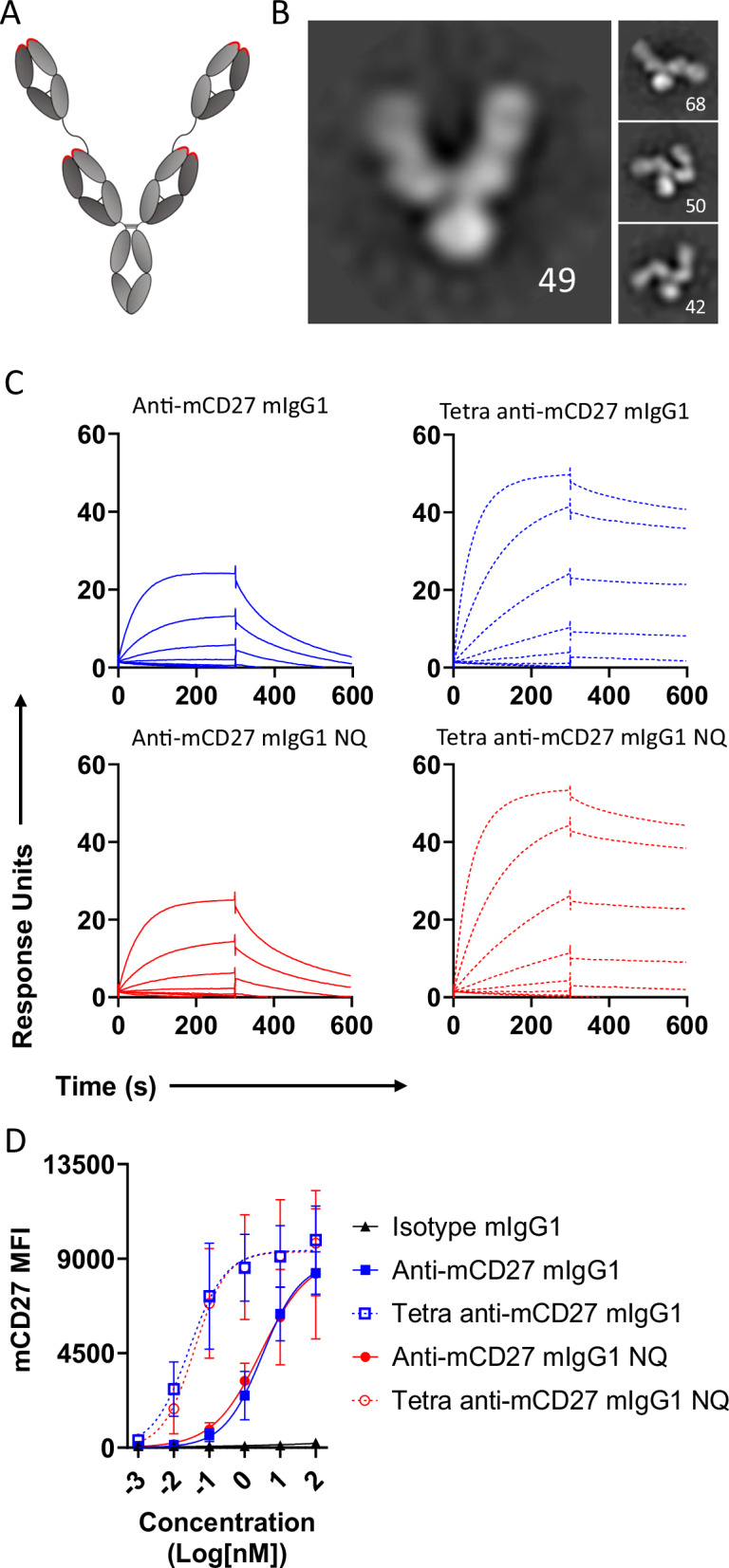 Figure 1
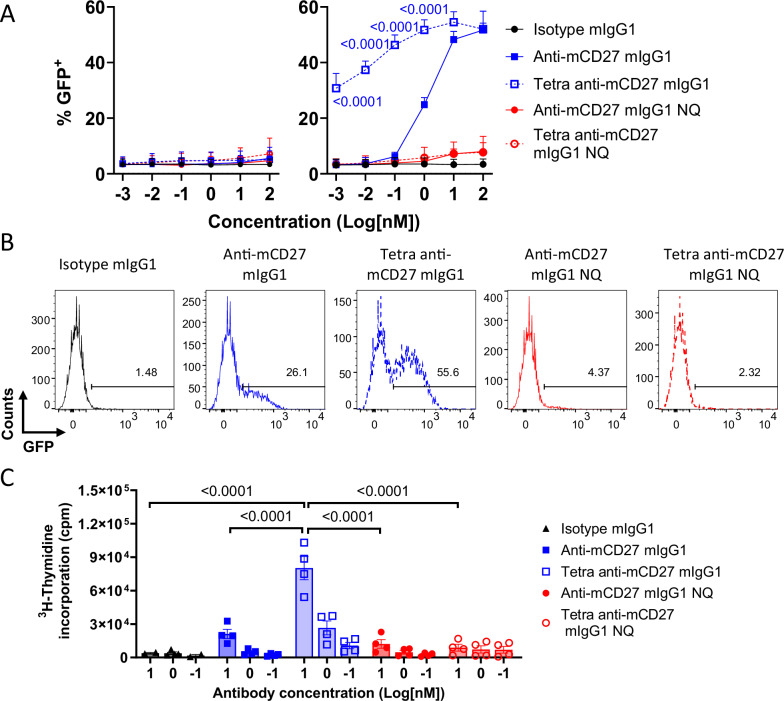 Figure 2
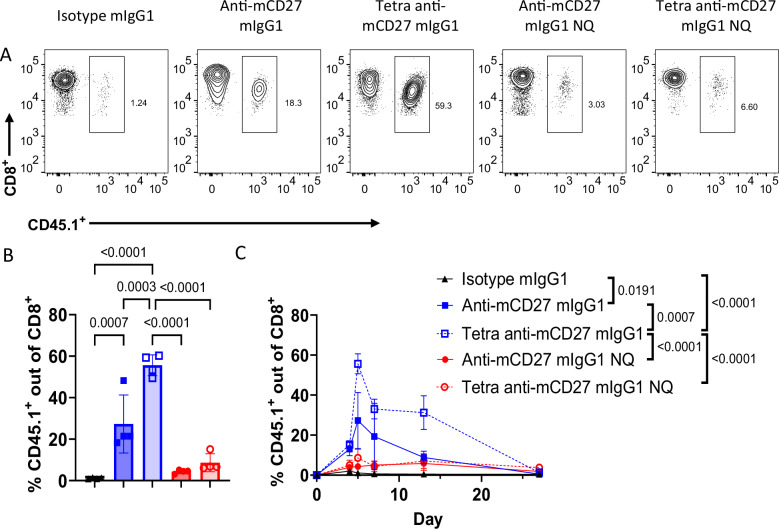 Figure 3
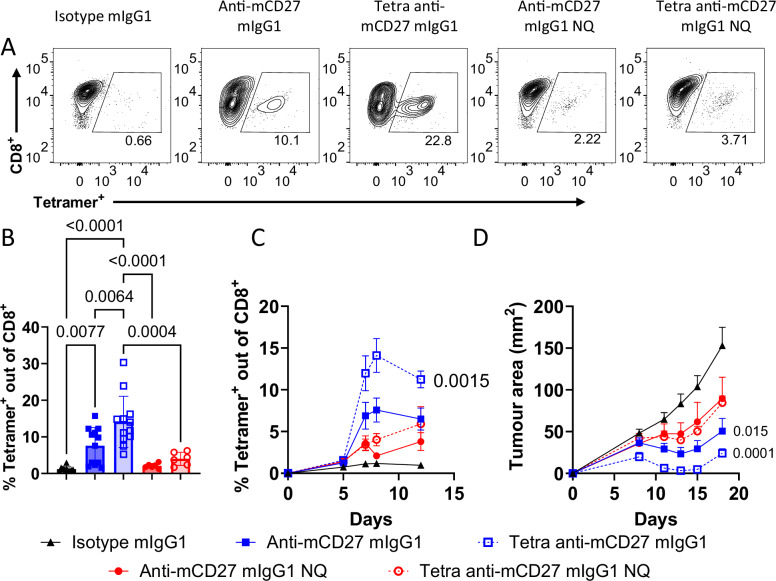 Figure 4
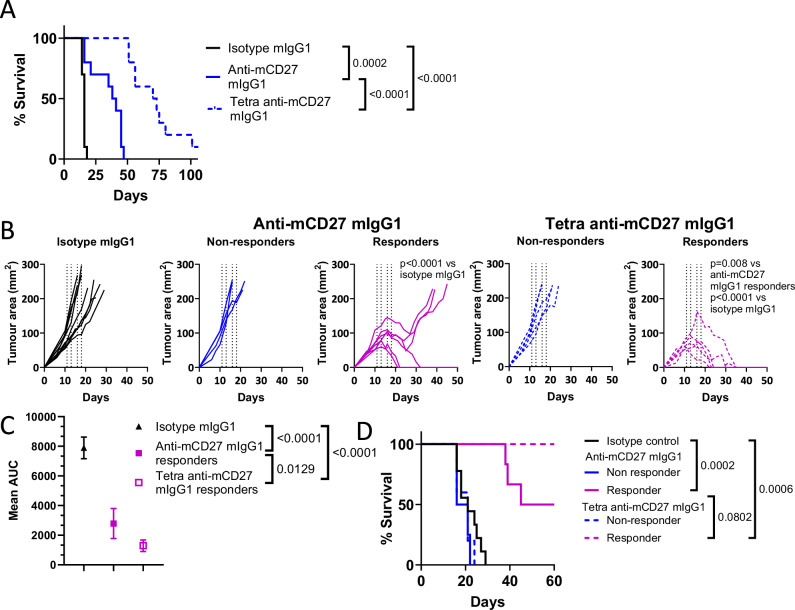 Figure 5
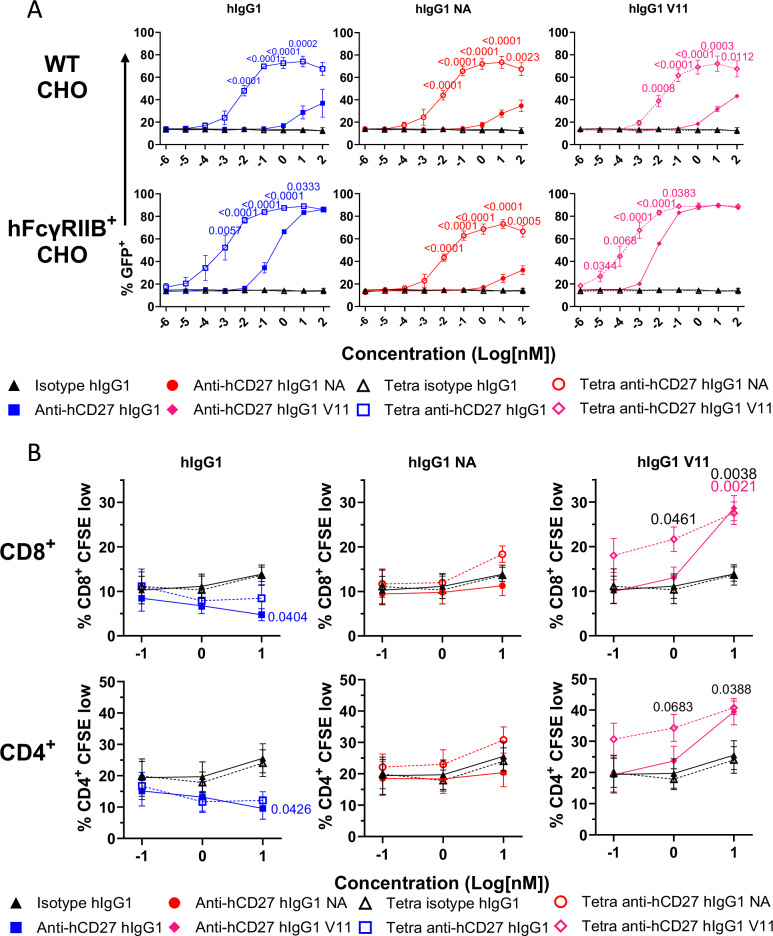 Figure 6
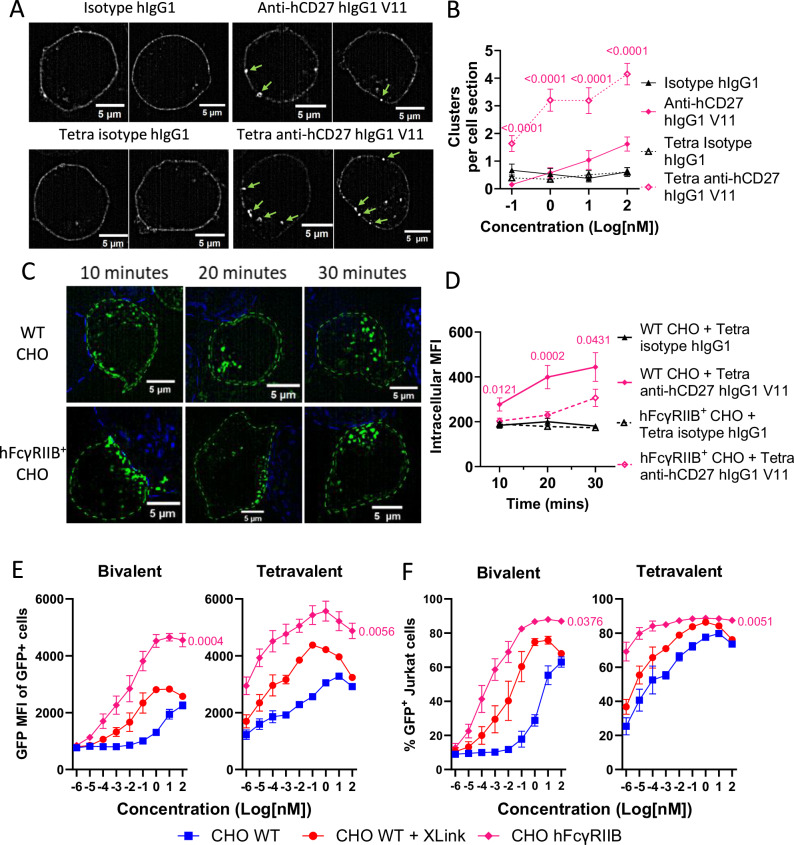 Figure 7
Peer Reviews
No public reviews on file for this paper yet. If you reviewed it on a platform where reviews are public (OpenReview, ICLR, NeurIPS, ICML), you can paste yours below so the community can read it here.
Videos
No videos yet. Explain this paper in a talk, walkthrough, or lecture? Add one.
Taxonomy
TopicsMonoclonal and Polyclonal Antibodies Research · Cancer Immunotherapy and Biomarkers · CAR-T cell therapy research