The dynamics of mutational selection in cutaneous squamous carcinogenesis
Greta Skrupskelyte, Joanna C. Fowler, Stefan Dentro, Carine Winkler, Irina Abnizova, Niklas Beumer, Roshan Sood, Thomas Quarrell, Charlotte King, Jivko Kamarashev, Emmanuella Guenova, Moritz Gerstung, Benjamin A. Hall, Liliane Michalik, Philip H. Jones

TL;DR
This study examines how mutations are selected during skin cancer development in mice, finding that only p53 mutants are consistently selected throughout the process.
Contribution
The study introduces a method to analyze mutational selection in normal tissue alongside tumors, revealing dynamic selection patterns in carcinogenesis.
Findings
Nonsynonymous Trp53 mutants were positively selected in both epidermis and tumors and present in 90% of tumors.
Ten mutant genes were under negative selection in normal skin, with one also negatively selected in tumors.
Other positively selected mutant genes lost their advantage in heavily mutated epidermis and tumors.
Abstract
Identifying the mutant genes that are selected during carcinogenesis is key to identifying candidates for intervention and understanding the processes that promote transformation. Here we applied two selection metrics to study the dynamics of mutational selection in a mouse model of ultraviolet light driven skin carcinogenesis in which multiple synchronous tumors develop in each animal. Sequencing normal skin and tumors over a time course revealed two genetic routes to squamous carcinoma. Nonsynonymous Trp53 mutants were positively selected in both epidermis and tumors and present in 90% of tumors. The remaining tumors carried other oncogenic mutants, including activating Kras mutations. However, other positively selected mutant genes lost their competitive advantage in heavily mutated epidermis and in tumors. We found ten mutant genes under negative selection in normal skin, one of…
Genes, proteins, chemicals, diseases, species, mutations and cell lines named across the full text — each resolved to its canonical identifier and authoritative record.
Click any figure to enlarge with its caption.
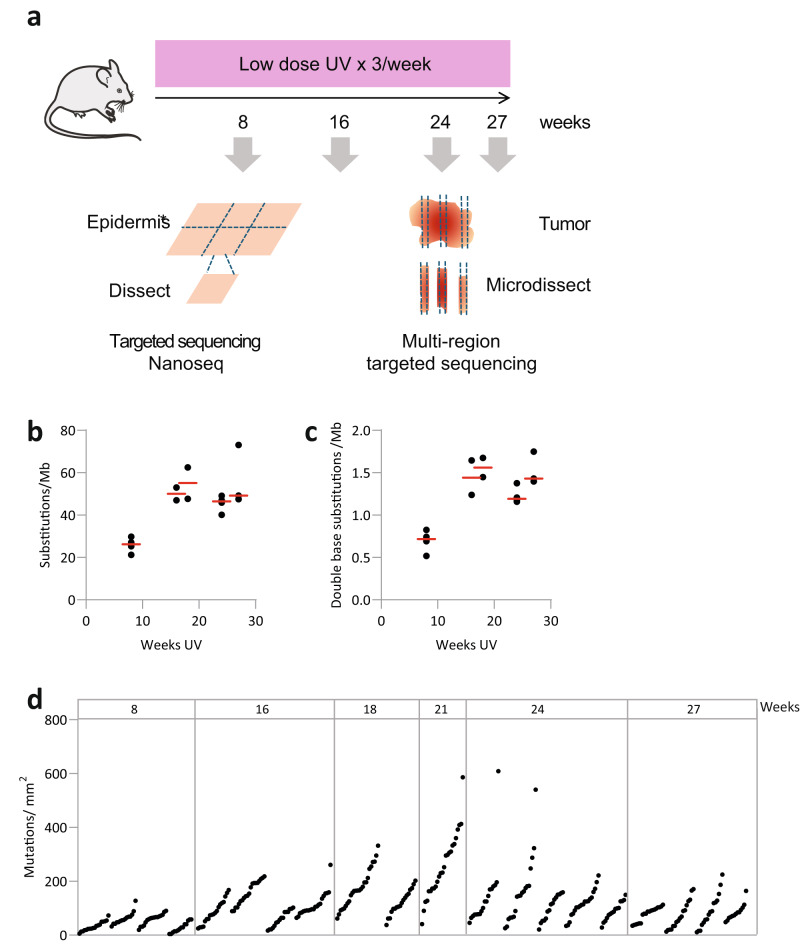 Figure 1
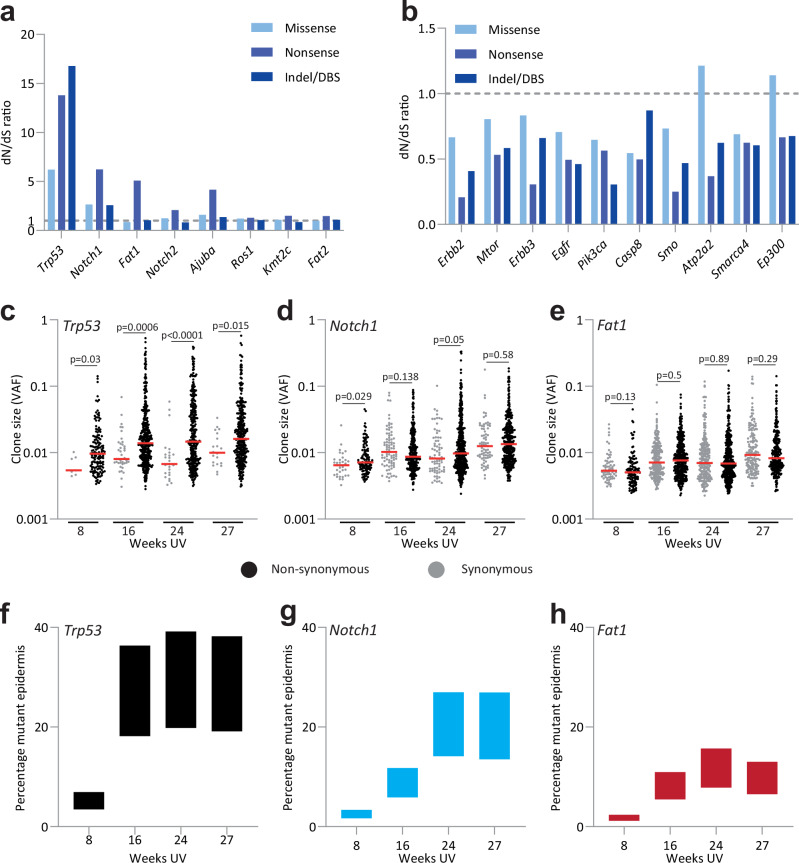 Figure 2
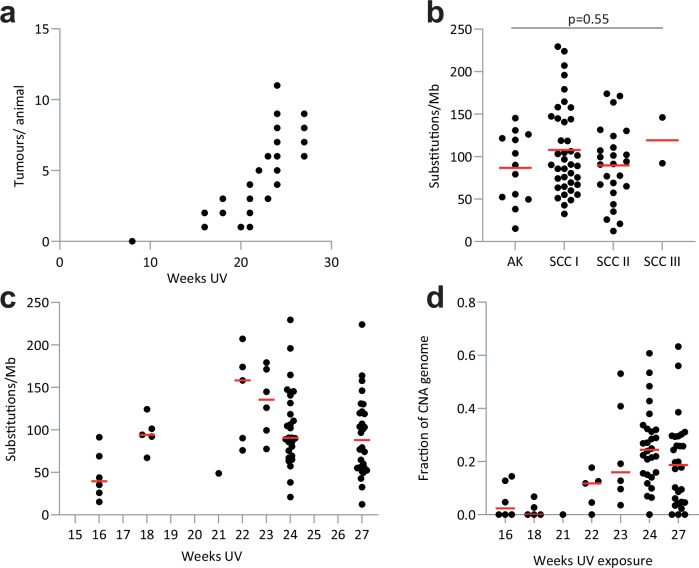 Figure 3
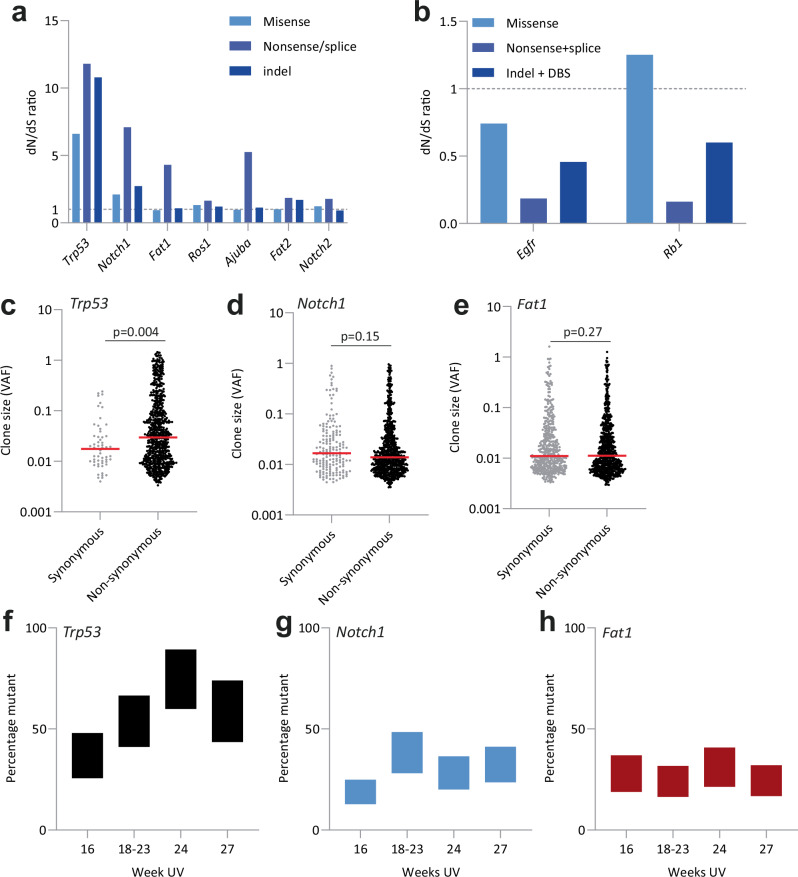 Figure 4
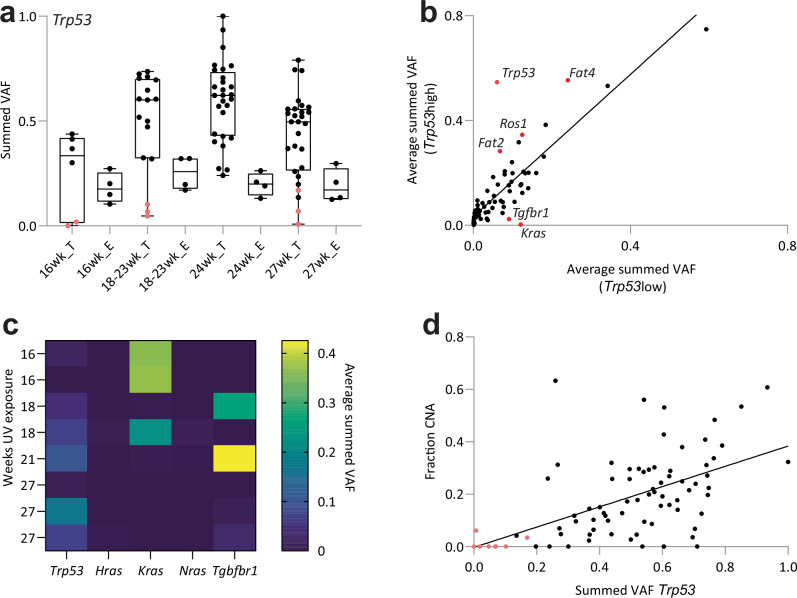 Figure 5
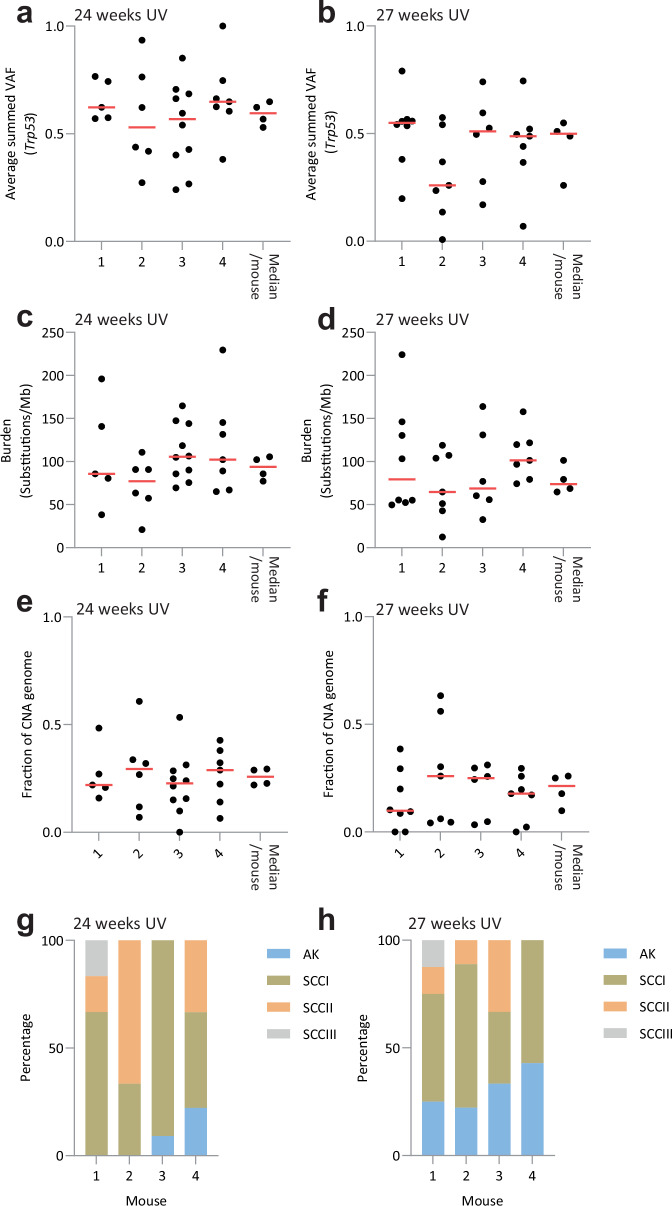 Figure 6
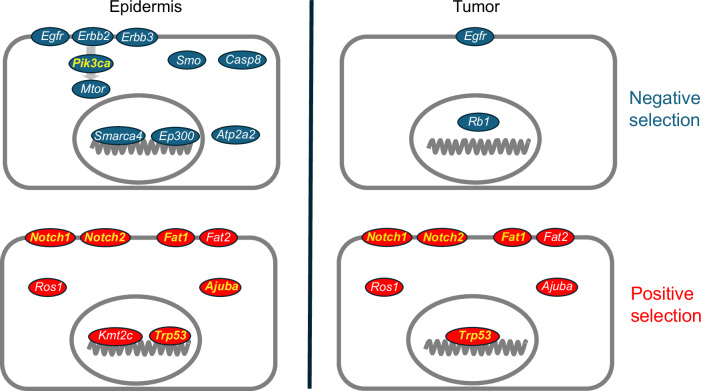 Figure 7
Peer Reviews
No public reviews on file for this paper yet. If you reviewed it on a platform where reviews are public (OpenReview, ICLR, NeurIPS, ICML), you can paste yours below so the community can read it here.
Videos
No videos yet. Explain this paper in a talk, walkthrough, or lecture? Add one.
Taxonomy
TopicsCancer Genomics and Diagnostics · Melanoma and MAPK Pathways · Skin Protection and Aging