Advancing quantum imaging through learning theory
Yunkai Wang, Changhun Oh, Junyu Liu, Liang Jiang, Sisi Zhou

TL;DR
This paper introduces a quantum-learning framework to improve superresolution imaging, especially for closely spaced objects, using a new method called orthogonalized SPADE.
Contribution
The novel orthogonalized SPADE method generalizes superresolution techniques to handle multiple compact sources beyond the Rayleigh limit.
Findings
The orthogonalized SPADE method outperforms existing techniques for closely spaced compact sources.
Quantum learning enables selective extraction of well-estimated features, improving complex imaging tasks.
The method relaxes the assumption that all sources must be within the Rayleigh limit.
Abstract
We study quantum imaging by applying the resolvable expressive capacity (REC) formalism developed for physical neural networks (PNNs). In this paradigm of quantum learning, the imaging system functions as a physical learning device that maps input parameters to measurable features, while complex practical tasks are handled by training only the output weights, enabled by the systematic identification of well-estimated features (eigentasks) and their corresponding sample thresholds. Using this framework, we analyze both direct imaging and superresolution strategies for compact sources, defined as sources with sizes bounded below the Rayleigh limit. In particular, we introduce the orthogonalized SPADE method—a nontrivial generalization of existing superresolution techniques—that achieves superior performance when multiple compact sources are closely spaced. This method relaxes the earlier…
Genes, proteins, chemicals, diseases, species, mutations and cell lines named across the full text — each resolved to its canonical identifier and authoritative record.
Click any figure to enlarge with its caption.
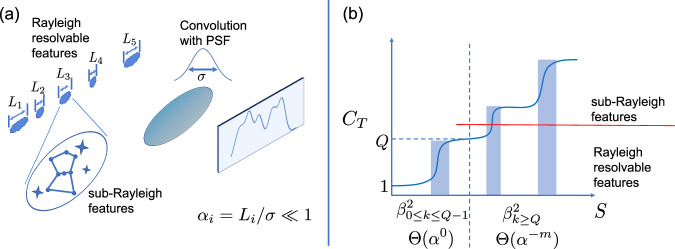 Figure 1
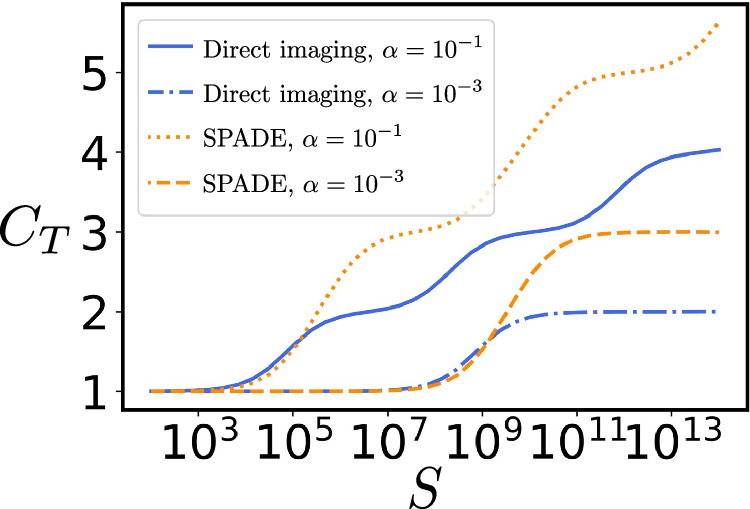 Figure 2
 Figure 3
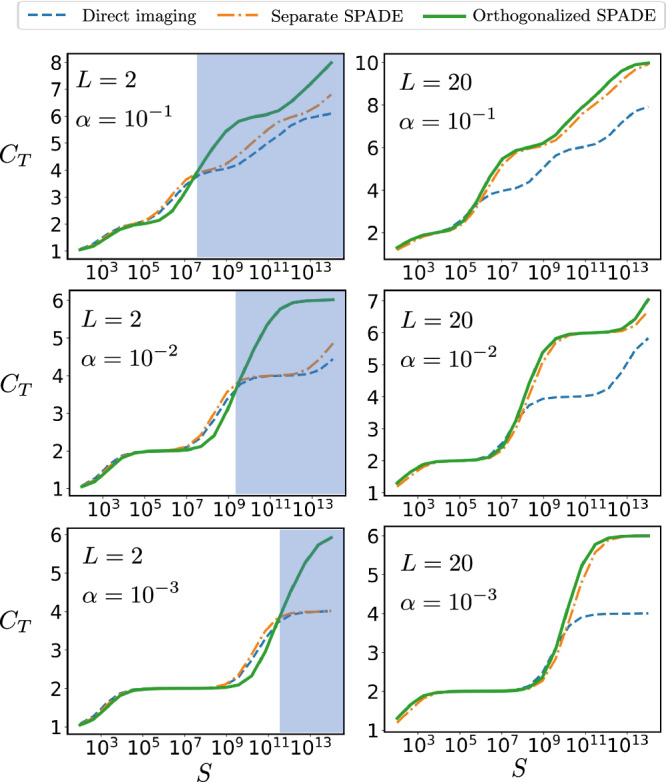 Figure 4
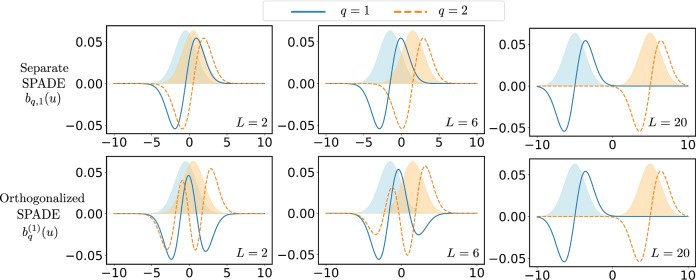 Figure 5
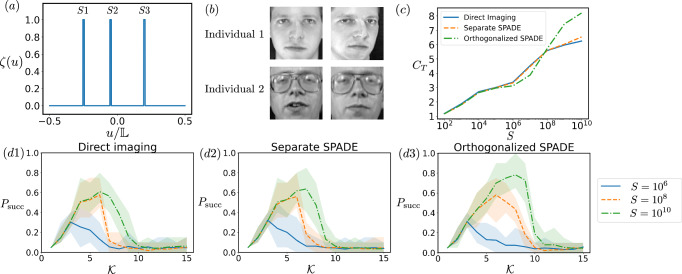 Figure 6
Peer Reviews
No public reviews on file for this paper yet. If you reviewed it on a platform where reviews are public (OpenReview, ICLR, NeurIPS, ICML), you can paste yours below so the community can read it here.
Videos
No videos yet. Explain this paper in a talk, walkthrough, or lecture? Add one.
Taxonomy
TopicsRandom lasers and scattering media · Quantum Information and Cryptography · Neural Networks and Reservoir Computing