Medial temporal lobe atrophy is associated with age and pathologies, especially small vessel disease
Danielle van Westen, Erik Stomrud, Luigi Lorenzini, Sebastian Palmqvist, Frederik Barkhof, Oskar Hansson, Nicola Spotorno

TL;DR
This study shows that age and small vessel disease are the main factors linked to medial temporal lobe atrophy, and suggests a new age-independent method for assessing it.
Contribution
The study introduces an age-independent cut-off for MTA that performs as well as traditional age-adjusted methods.
Findings
White matter hyperintensities (WMH) mediate 32–41% of the age-MTA association.
An age-independent MTA cut-off performed as well as age-adjusted methods in distinguishing cognitive states.
Age and WMH are the most prominent factors associated with MTA.
Abstract
Visual assessment of medial temporal lobe atrophy (MTA) in the clinical workup of cognitive impairment is traditionally corrected for age since MTA increases with age. In addition, common pathologies in the elderly such as amyloid, tau, alpha-synuclein and TDP-43 accumulation as well as white matter hyperintensities representing small vessel disease may affect the association between MTA and age. We investigated this in 949 cognitively unimpaired (CU) and 854 cognitively impaired (CI) individuals focusing on amyloid, tau and alpha-synuclein that at present can be measured in vivo in plasma, CSF or using PET. MTA was associated with age also when these aforementioned pathologies were accounted for. WMH was the strongest and most consistent predictor and mediated 32–41% of the association between age and MTA. Secondly, an age-independent cut-off for distinguishing between Aβ- CU and Aβ +…
Genes, proteins, chemicals, diseases, species, mutations and cell lines named across the full text — each resolved to its canonical identifier and authoritative record.
Click any figure to enlarge with its caption.
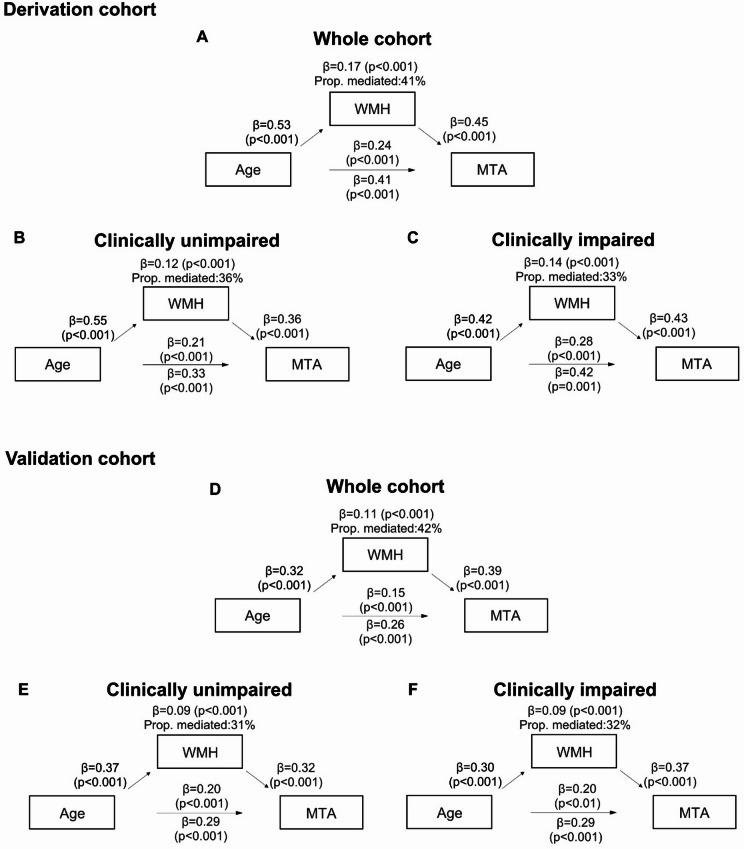 Figure 1
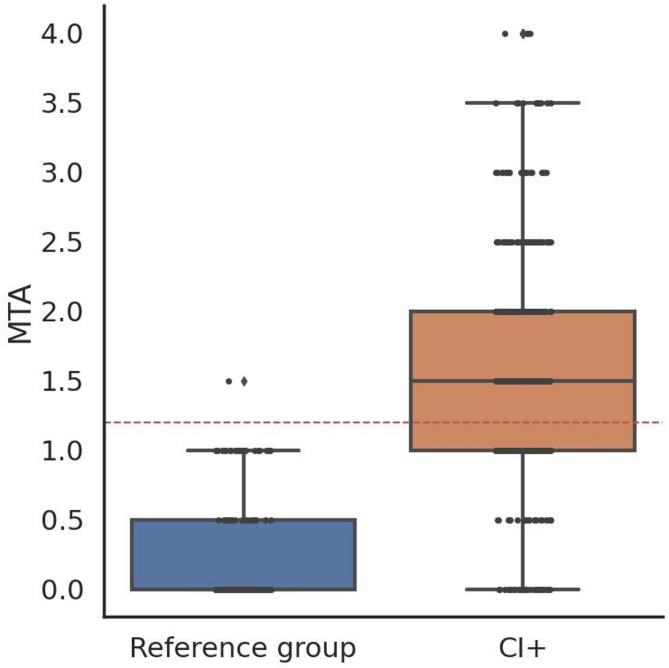 Figure 2
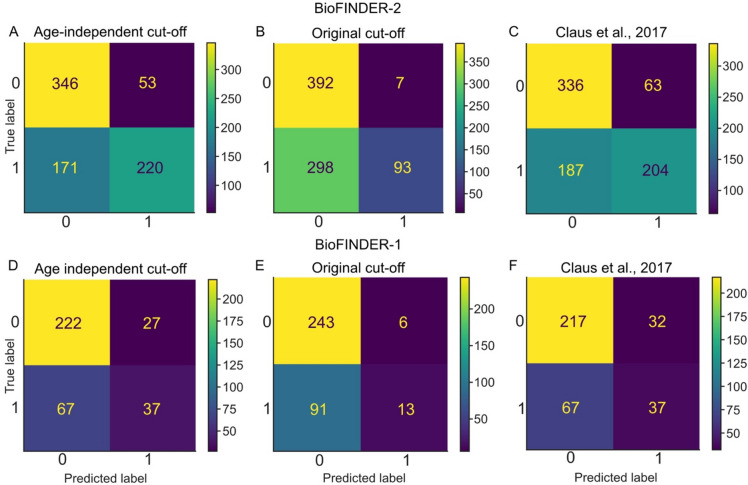 Figure 3
Peer Reviews
No public reviews on file for this paper yet. If you reviewed it on a platform where reviews are public (OpenReview, ICLR, NeurIPS, ICML), you can paste yours below so the community can read it here.
Videos
No videos yet. Explain this paper in a talk, walkthrough, or lecture? Add one.
Taxonomy
TopicsDementia and Cognitive Impairment Research · Neurological Disease Mechanisms and Treatments · Parkinson's Disease Mechanisms and Treatments