Enhancing anti-inflammatory activity of Eucalyptus camaldulensis by upregulating secondary metabolites using suspension cultures techniques
Mahrous H. Mahrous, Atef MK Nassar, Fathy K. EL-Fiky, Hala M. Hammoda, Amr El-Hawiet

TL;DR
This study shows that growing Eucalyptus camaldulensis in tissue culture increases its anti-inflammatory compounds and makes them more effective than natural leaves.
Contribution
The study demonstrates that tissue culture enhances secondary metabolite production and anti-inflammatory activity in Eucalyptus camaldulensis.
Findings
Callus extracts contain more phytoconstituents (54) than leaf extracts (32).
Callus volatile oil has higher levels of bioactive compounds like 1,8-cineole and α-terpineol.
Callus volatile oil shows greater anti-inflammatory activity than leaf oil and indomethacin.
Abstract
Eucalyptus camaldulensis Dehn (Family Myrtaceae) is among the most prominent Eucalyptus species, extensively exploited for its anti-inflammatory efficacy. The present study undertakes a comparative phytochemical and pharmacological evaluation of leaf and tissue culture (callus) extracts and their corresponding volatile oils. Methanolic extracts from both plant sources were subjected to liquid chromatography–mass spectrometry (LC/MS), revealing 32 phytoconstituents in leaf extracts and 54 in callus extracts. Identified chemical classes included flavonoids, tannins, coumarins, and phenolic acids, with higher relative abundance in callus-derived extracts. Volatile oil analysis using gas chromatography–mass spectrometry (GC/MS) identified 58 compounds in leaf oil and 52 in callus oil. Quantitative profiling demonstrated a significant elevation in bioactive volatiles within callus oil:…
Genes, proteins, chemicals, diseases, species, mutations and cell lines named across the full text — each resolved to its canonical identifier and authoritative record.
Click any figure to enlarge with its caption.
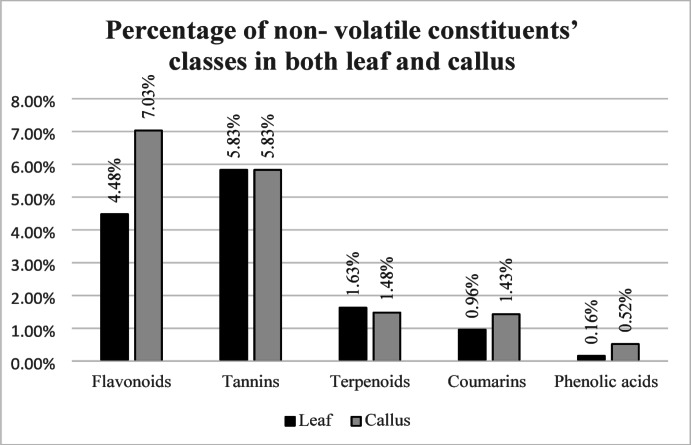 Figure 1
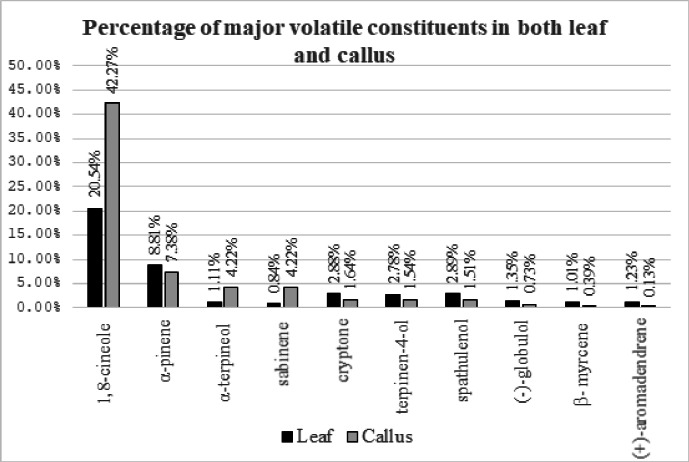 Figure 2
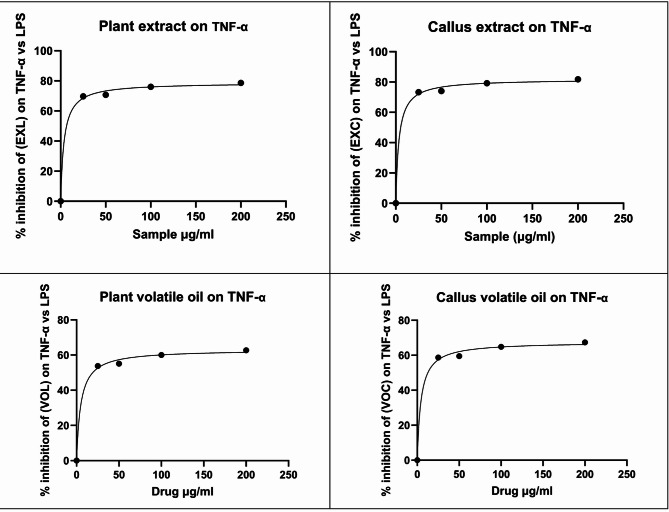 Figure 3
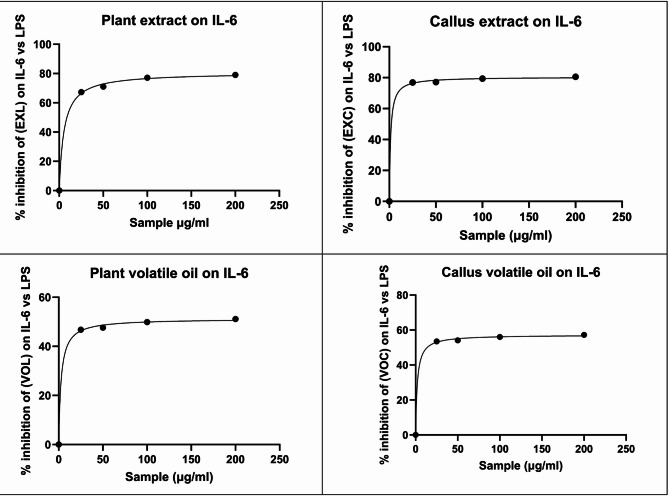 Figure 4
Peer Reviews
No public reviews on file for this paper yet. If you reviewed it on a platform where reviews are public (OpenReview, ICLR, NeurIPS, ICML), you can paste yours below so the community can read it here.
Videos
No videos yet. Explain this paper in a talk, walkthrough, or lecture? Add one.
Taxonomy
TopicsEssential Oils and Antimicrobial Activity · Plant tissue culture and regeneration · Bioactive Natural Diterpenoids Research