Willingness to trust is reduced by loneliness and paranoia
Gabriele Bellucci, Mehdi Keramati, Esther Hanssen, Anne-Kathrin Fett

TL;DR
Lonelier and more paranoid people are less likely to trust others, even when those others act kindly, which can harm their relationships.
Contribution
This study shows that loneliness and paranoia reduce trust by decreasing reliance on expectations of reciprocity in social interactions.
Findings
Loneliness and paranoia are strongly linked and associated with more distrustful behavior after trust breaches.
Lonelier individuals trust highly cooperative partners less due to reduced reliance on reciprocity expectations.
These effects were observed in both clinical and general populations, highlighting their broad relevance.
Abstract
Loneliness is associated with negative social behaviors, impairing social relationships. However, the underlying mechanisms are poorly understood. Here, we investigated the relationship between paranoid thoughts and lonely individuals’ willingness to rely on expectations of partner reciprocity in an investment game with individuals with and without psychosis (54 participants). We found that loneliness and paranoia were strongly correlated with each other and with more distrustful behavior after breaches of trust. Sensitivity to changes in partner reciprocity was higher in lonelier and more paranoid individuals. Lonelier individuals also trusted highly reciprocating partners less. Computational modeling revealed that lonelier and more paranoid individuals were less willing to rely on expectations of partner reciprocity. Importantly, these effects were observed in both patients and…
Genes, proteins, chemicals, diseases, species, mutations and cell lines named across the full text — each resolved to its canonical identifier and authoritative record.
Click any figure to enlarge with its caption.
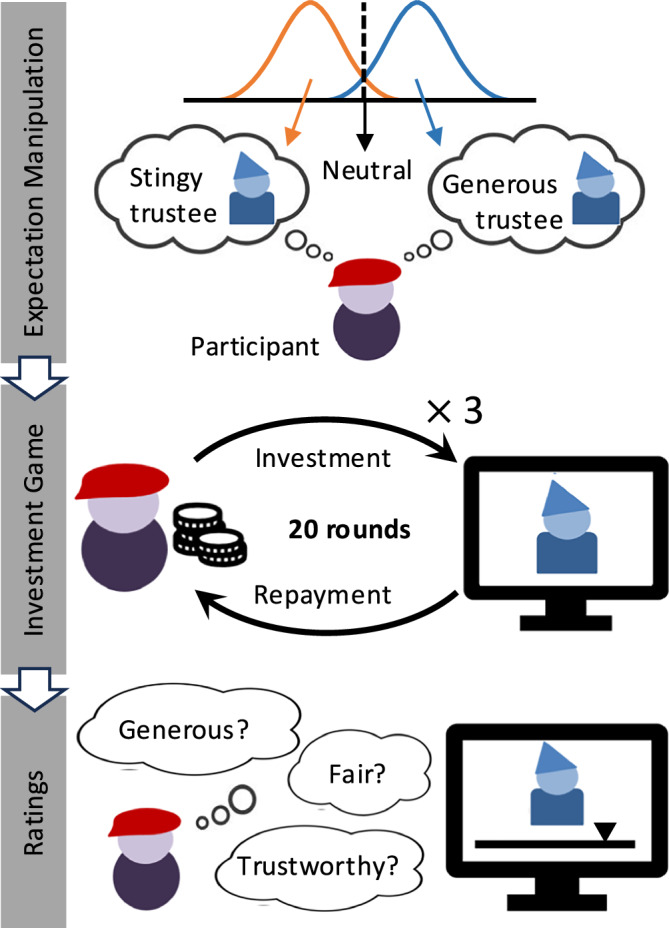 Figure 1
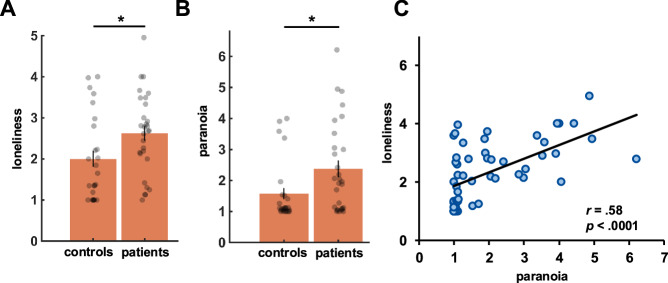 Figure 2
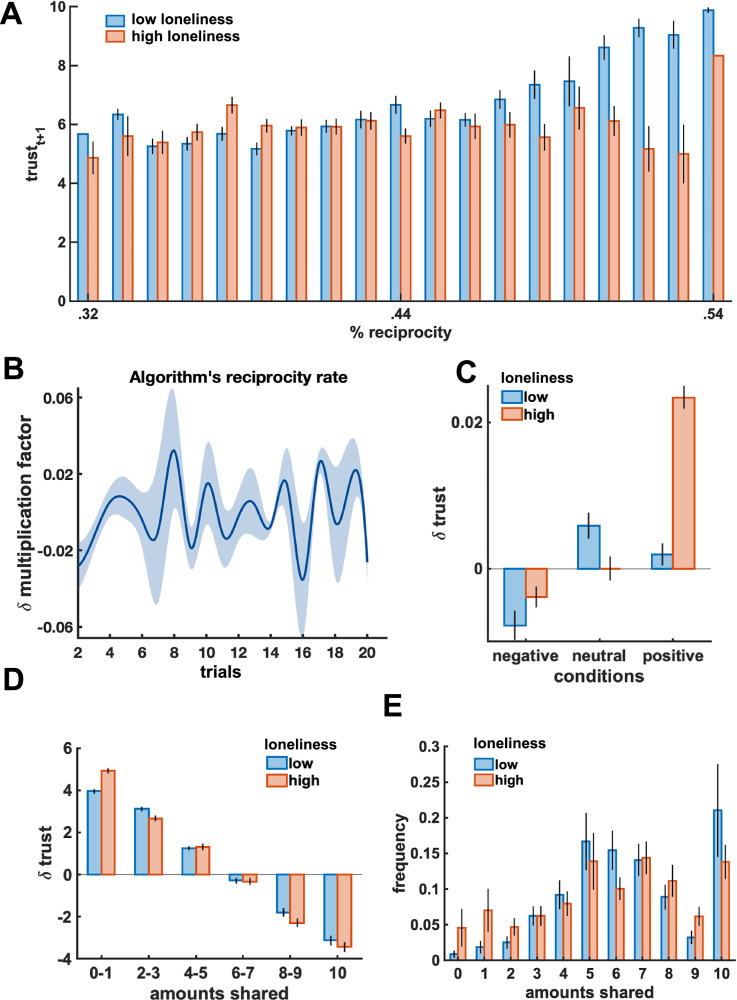 Figure 3
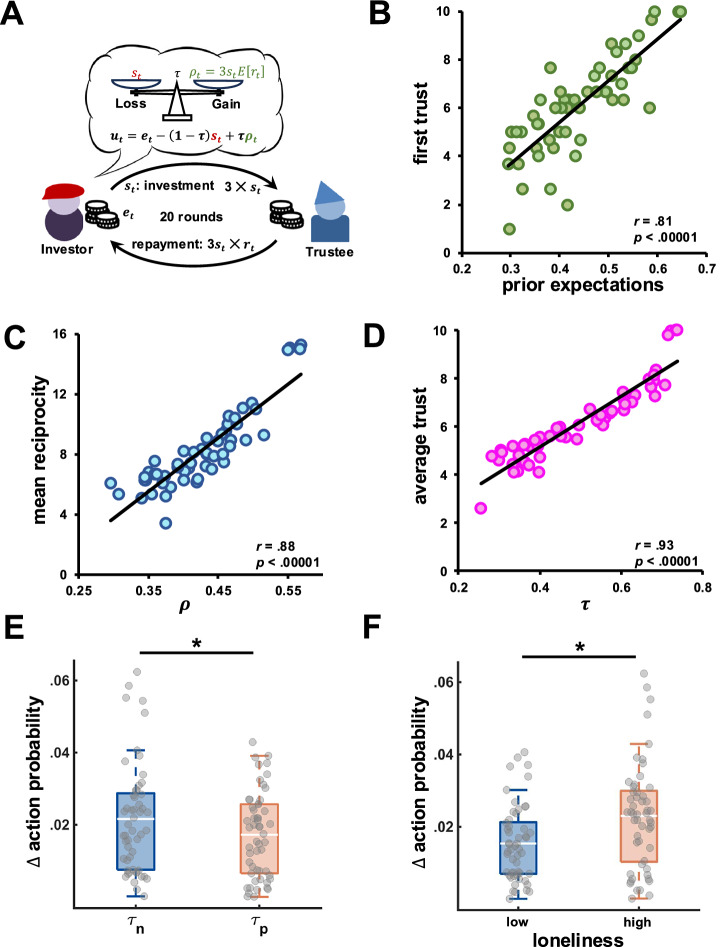 Figure 4
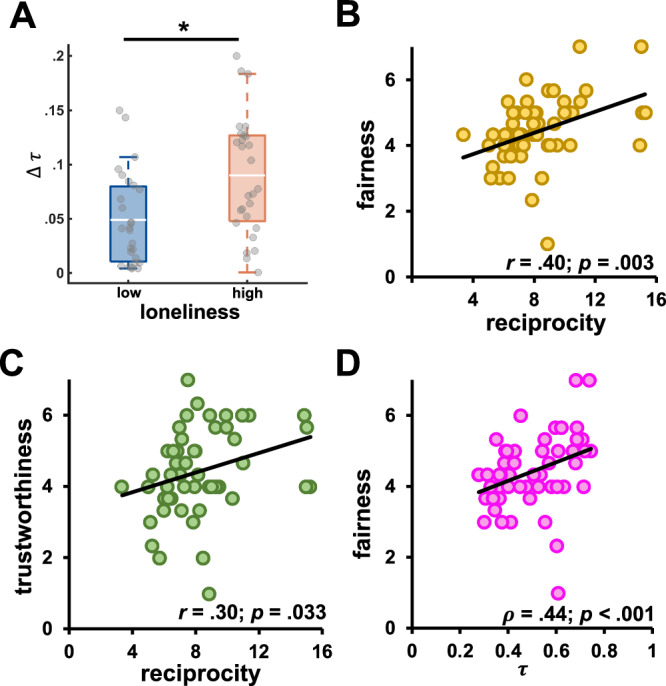 Figure 5
Peer Reviews
No public reviews on file for this paper yet. If you reviewed it on a platform where reviews are public (OpenReview, ICLR, NeurIPS, ICML), you can paste yours below so the community can read it here.
Videos
No videos yet. Explain this paper in a talk, walkthrough, or lecture? Add one.
Taxonomy
TopicsDeath Anxiety and Social Exclusion · Schizophrenia research and treatment · Attachment and Relationship Dynamics