High-resolution in situ imaging reveals size-specific moonlight responses in zooplankton diel vertical migration
Ashton L. Dickerson, Andreas Jechow, Michelle Nößler, Tim J. W. Walles, Stella A. Berger, Franz Hölker, Jens C. Nejstgaard

TL;DR
This study uses high-resolution imaging to show how zooplankton of different sizes respond to moonlight during their daily vertical migration in a lake.
Contribution
The study reveals size-specific behavioral responses to natural moonlight in zooplankton, providing a baseline for understanding artificial light impacts.
Findings
Larger zooplankton avoid illuminated layers at night to reduce predation risk.
Smaller zooplankton move into illuminated layers, possibly to forage and avoid predators.
Copepods track food-rich layers regardless of light, while cladocerans respond to both light and food.
Abstract
Light is the primary cue driving zooplankton diel vertical migration (DVM), a strategy that balances predation risk with resource access. However, DVM is often oversimplified, with limited consideration of how light-driven risks and resource needs vary across taxa and life stages. This simplification is partly due to constraints on collecting high-resolution, size-resolved data —especially at night, when subtle shifts in illumination reshape nocturnal risk landscapes. To overcome these limitations, we deployed a high-resolution in situ modular Deep-focus Plankton Imager and an image-recognition approach to quantify fine scale DVM and body sizes of Cladocerans and Copepods in Lake Stechlin, Germany. Data was collected from day into night and across moonrise and was compared with environmental data from vertical profiling sondes. Typical DVM patterns emerged, with deeper daytime…
Genes, proteins, chemicals, diseases, species, mutations and cell lines named across the full text — each resolved to its canonical identifier and authoritative record.
Click any figure to enlarge with its caption.
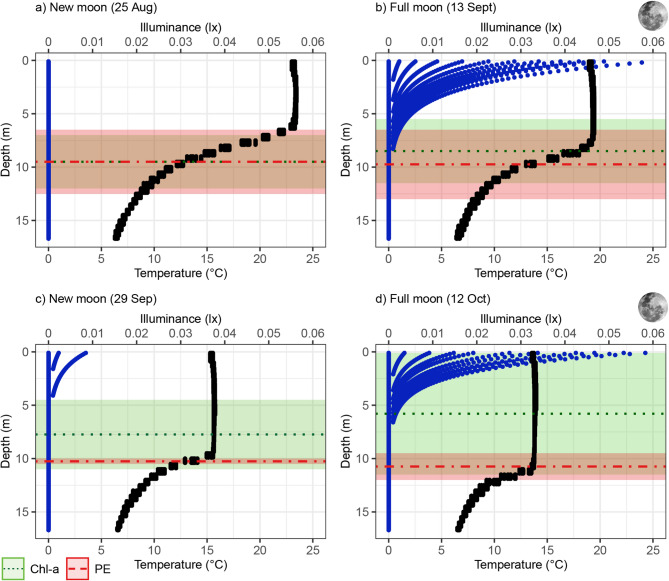 Figure 1
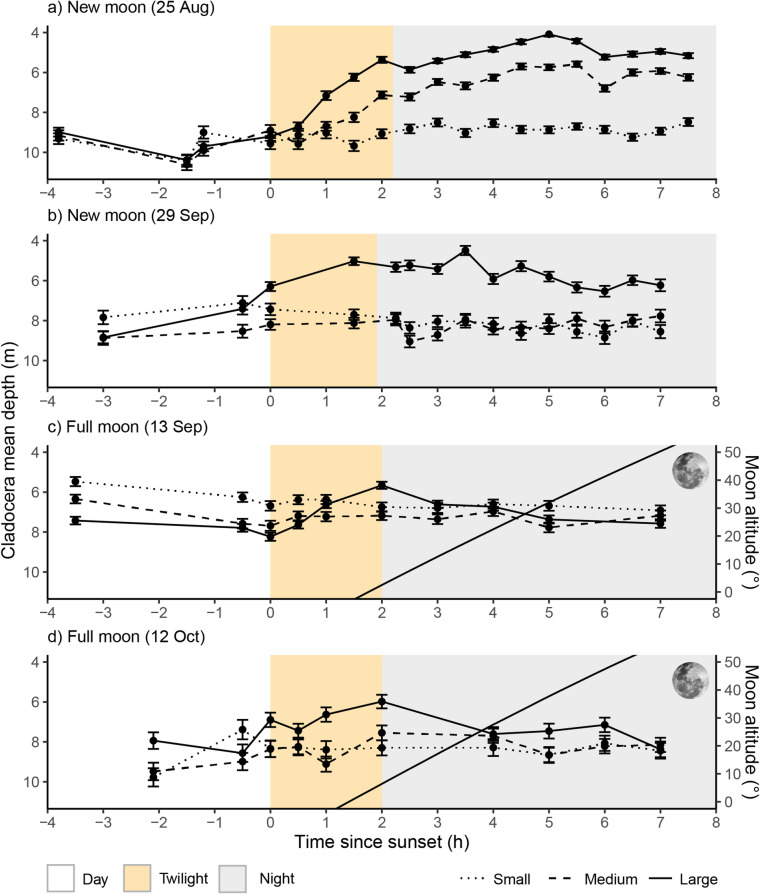 Figure 2
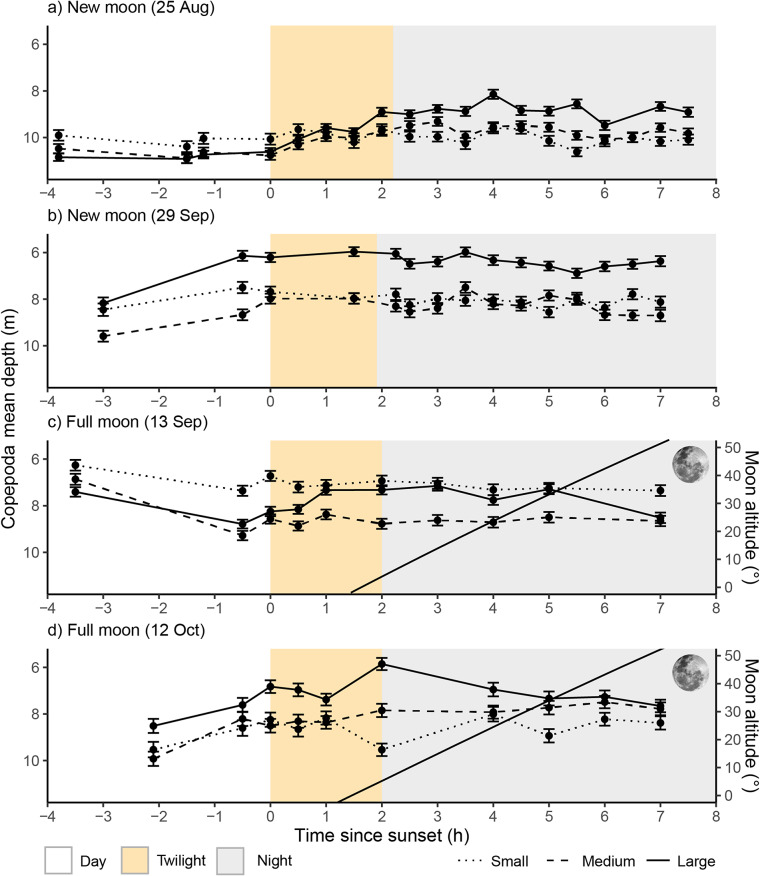 Figure 3
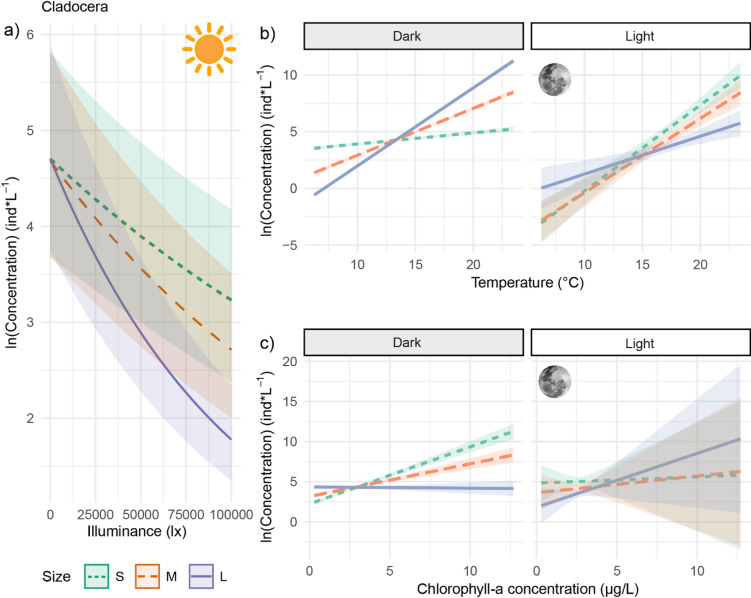 Figure 4
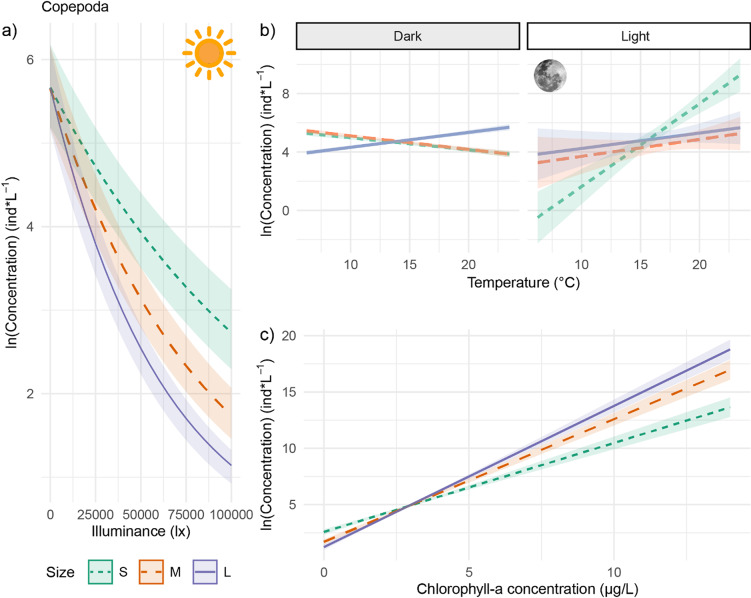 Figure 5
Peer Reviews
No public reviews on file for this paper yet. If you reviewed it on a platform where reviews are public (OpenReview, ICLR, NeurIPS, ICML), you can paste yours below so the community can read it here.
Videos
No videos yet. Explain this paper in a talk, walkthrough, or lecture? Add one.
Taxonomy
TopicsAquatic Ecosystems and Phytoplankton Dynamics · Marine and coastal ecosystems · Marine Ecology and Invasive Species