Unveiling key genetic loci and candidate genes for brown spot disease resistance in rice based on QTL analysis
Dan-Dan Zhao, Hyunjung Chung, Muhammad Farooq, Nam-Gu Kim, Soo Yeon Choi, Shinhwa Kim, Sang-Min Kim, Jang-Ho Lee, Xiao-Xuan Du, Kyung–Min Kim

TL;DR
Researchers identified a new gene linked to rice resistance against brown spot disease, which could help develop more disease-resistant rice varieties.
Contribution
A new major QTL and candidate gene OsRBSq3 for brown spot resistance in rice are identified through QTL analysis and gene expression profiling.
Findings
A new major locus on chromosome 3 is associated with brown spot resistance in rice.
The gene OsRBSq3, encoding a ribosome-inactivating protein, shows differential expression between resistant and susceptible rice varieties.
32 candidate genes were identified within the QTL interval using qRT-PCR-based expression profiling.
Abstract
Rice brown spot, a widespread disease caused by the fungus Bipolaris oryzae (teleomorph: Cochliobolus miyabeanus), significantly diminishes both grain yield and quality. Developing resistant rice cultivars remains the most sustainable and effective strategy for managing this disease. In this study, we conducted quantitative trait locus (QTL) analysis to identify genetic loci and candidate genes associated with brown spot resistance. A mapping population was generated from a cross between the resistant variety ‘Cheongcheong’ and the susceptible variety ‘Nagdong’. Disease evaluations were performed following inoculation with a mixture of six Cochliobolus miyabeanus isolates collected in 2023 to represent current field diversity, and disease severity was assessed seven days post-inoculation using a 0–9 scale. The QTL analysis revealed a new major locus on chromosome 3 linked to brown spot…
Genes, proteins, chemicals, diseases, species, mutations and cell lines named across the full text — each resolved to its canonical identifier and authoritative record.
Click any figure to enlarge with its caption.
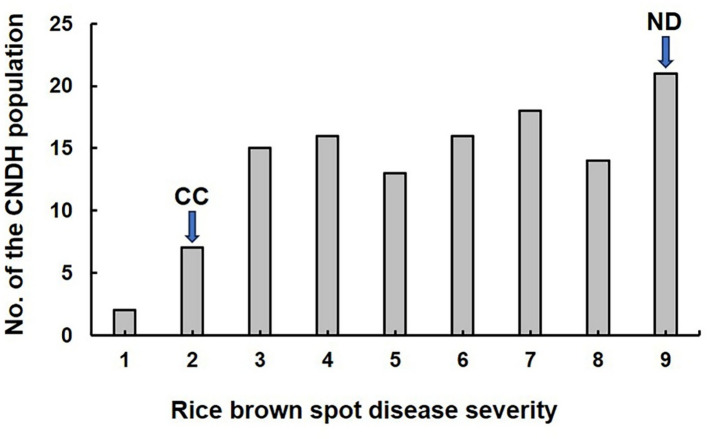 Figure 1
 Figure 2
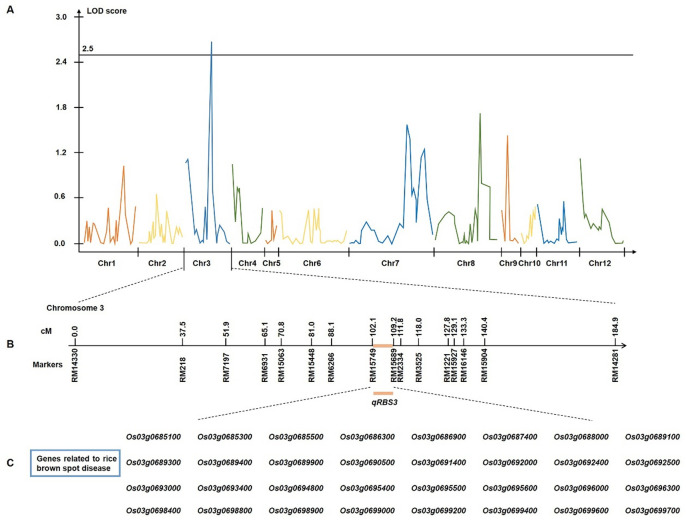 Figure 3
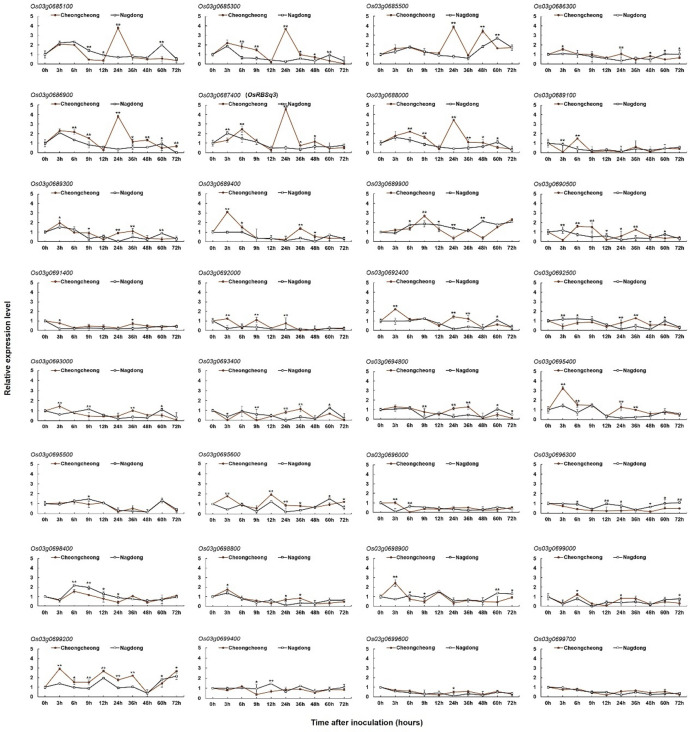 Figure 4
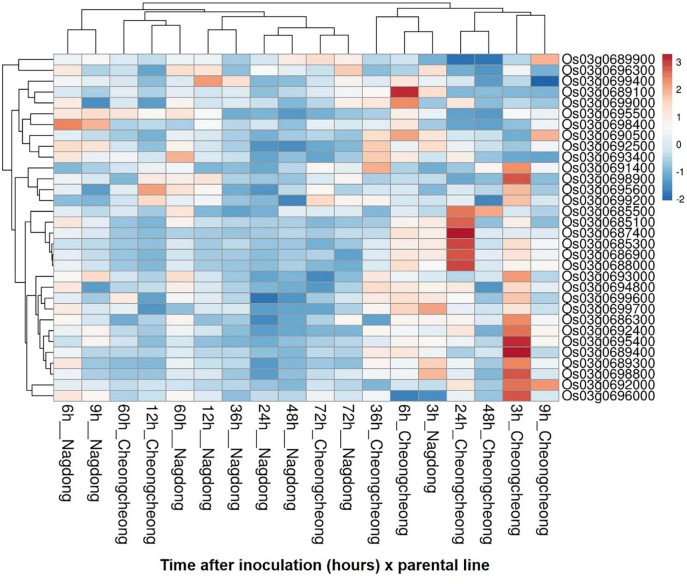 Figure 5
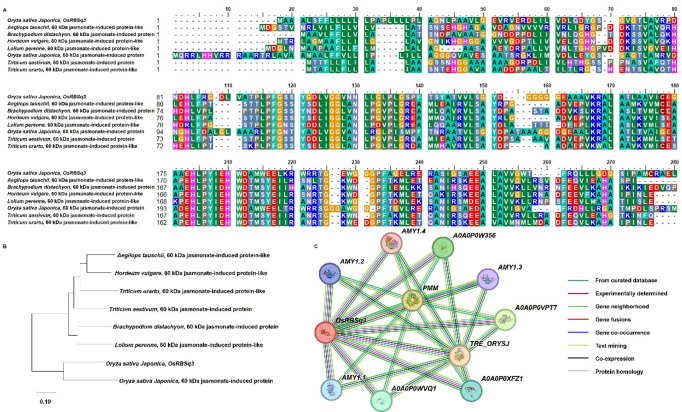 Figure 6
Peer Reviews
No public reviews on file for this paper yet. If you reviewed it on a platform where reviews are public (OpenReview, ICLR, NeurIPS, ICML), you can paste yours below so the community can read it here.
Videos
No videos yet. Explain this paper in a talk, walkthrough, or lecture? Add one.
Taxonomy
TopicsFungal and yeast genetics research · Plant-Microbe Interactions and Immunity · Plant Pathogens and Fungal Diseases