Aspiration, stent retriever, or combined approach for basilar artery occlusion: a three-way comparative analysis
Muhammad Jaffar, Kazi Ahmed, Samir Abu-Rumeileh, Markus Otto, Lorenzo Barba, Thanh N. Nguyen, Mohamad Abdalkader, Piers Klein, Kyriakos Lobotesis, Mariarosaria Valente, Gian Luigi Gigli, Liqun Zhang, Matteo Foschi, Soma Banerjee, Giovanni Merlino, Robert Simister, Lucio D’Anna

TL;DR
A study compared three clot-removal techniques for a life-threatening brainstem stroke, finding similar overall recovery but differences in success rates and bleeding risks.
Contribution
The study provides a three-way comparison of mechanical thrombectomy techniques for basilar artery occlusion, identifying subgroup-specific outcomes.
Findings
Stent retrievers achieved higher recanalization rates compared to aspiration.
The combined approach was associated with less haemorrhagic transformation.
Stent retrievers led to better outcomes in patients aged 80 or older compared to aspiration.
Abstract
Basilar artery occlusion (BAO) is a rare but devastating form of ischaemic stroke, with high rates of disability and mortality. While randomized trials have demonstrated the benefit of mechanical thrombectomy (MT) in BAO, the optimal first-line technique – aspiration, stent retriever, or a combined approach – remains undefined. This multicentre study aimed to provide a three-way comparison of MT techniques in terms of efficacy, safety and subgroup-specific outcomes. A retrospective observational study. We prospectively included 517 consecutive patients with acute isolated BAO treated with MT across seven comprehensive stroke centres between January 2019 and December 2023. Patients were grouped by first-line technique: aspiration (n = 200), stent retriever (n = 260), or combined approach (n = 57). The primary outcome was favourable functional outcome at 90 days (mRS 0–3). Inverse…
Genes, proteins, chemicals, diseases, species, mutations and cell lines named across the full text — each resolved to its canonical identifier and authoritative record.
Click any figure to enlarge with its caption.
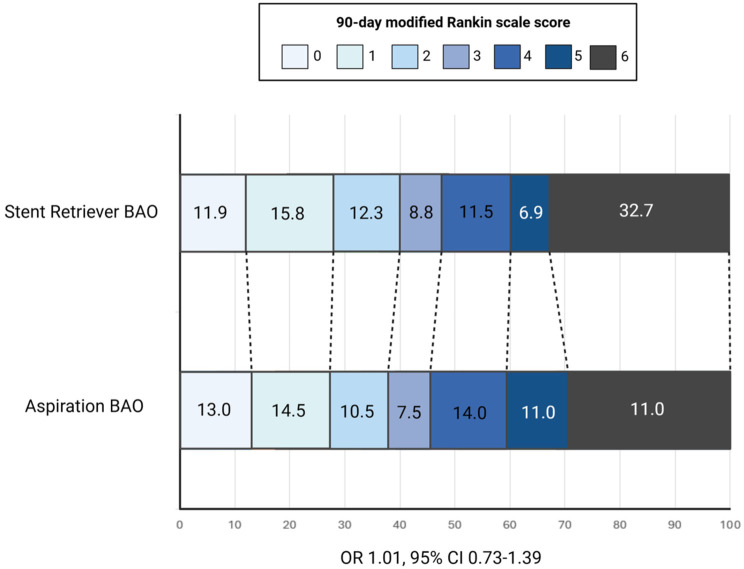 Figure 1
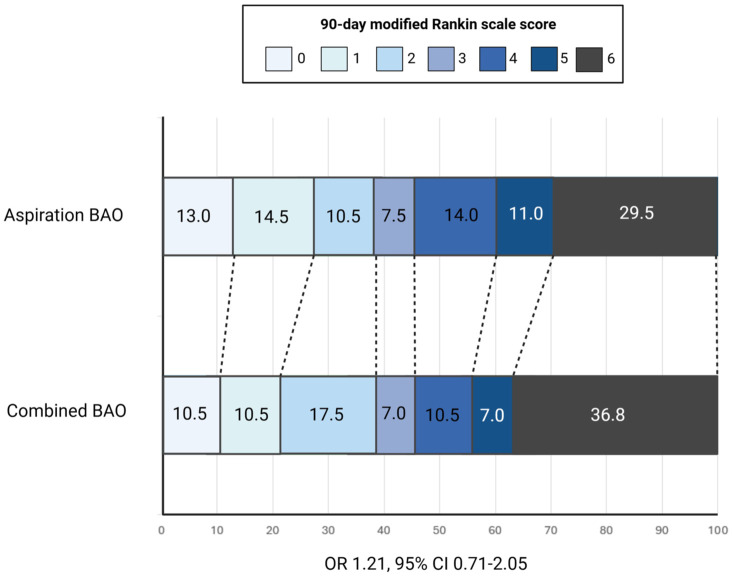 Figure 2
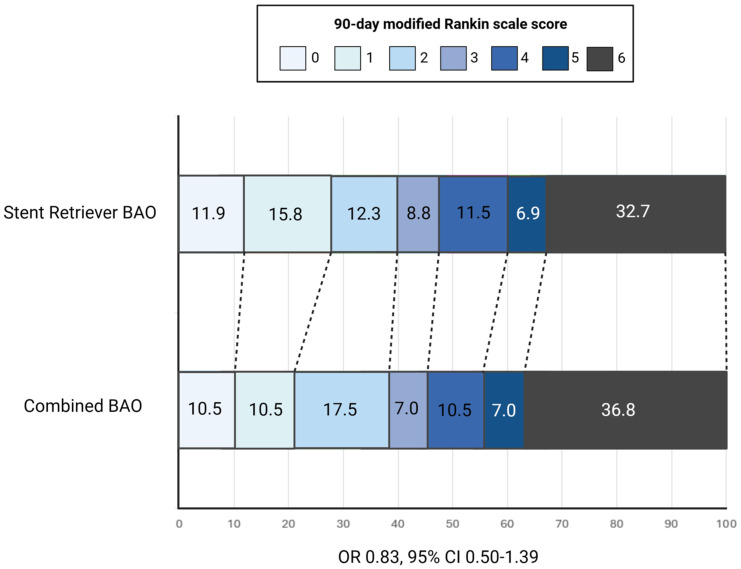 Figure 3
 Figure 4
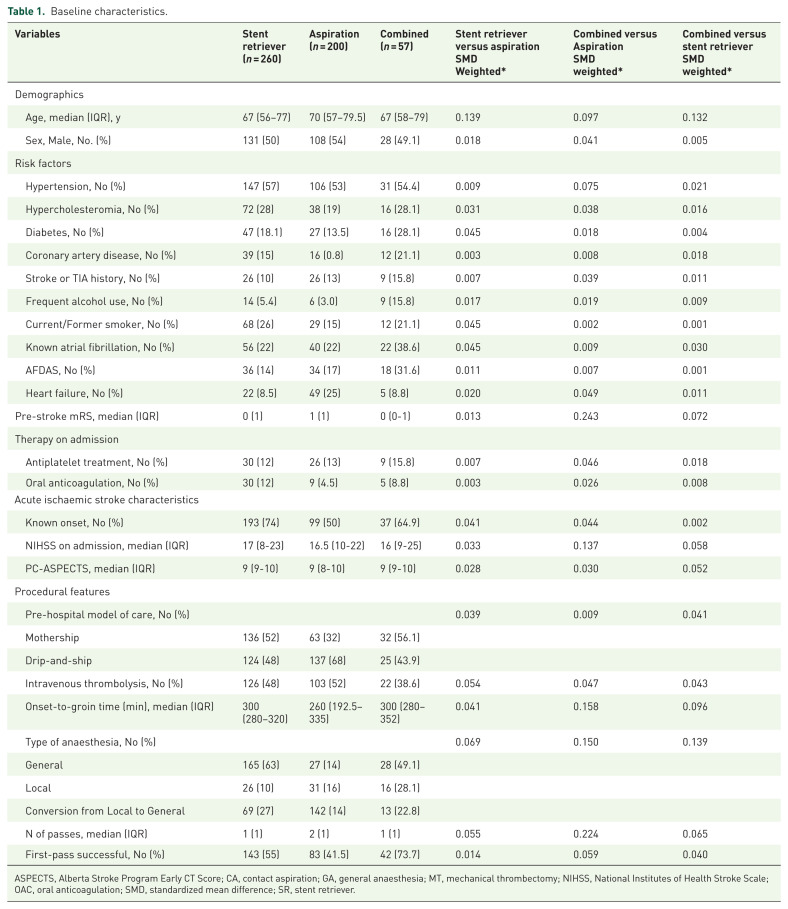 Figure 5
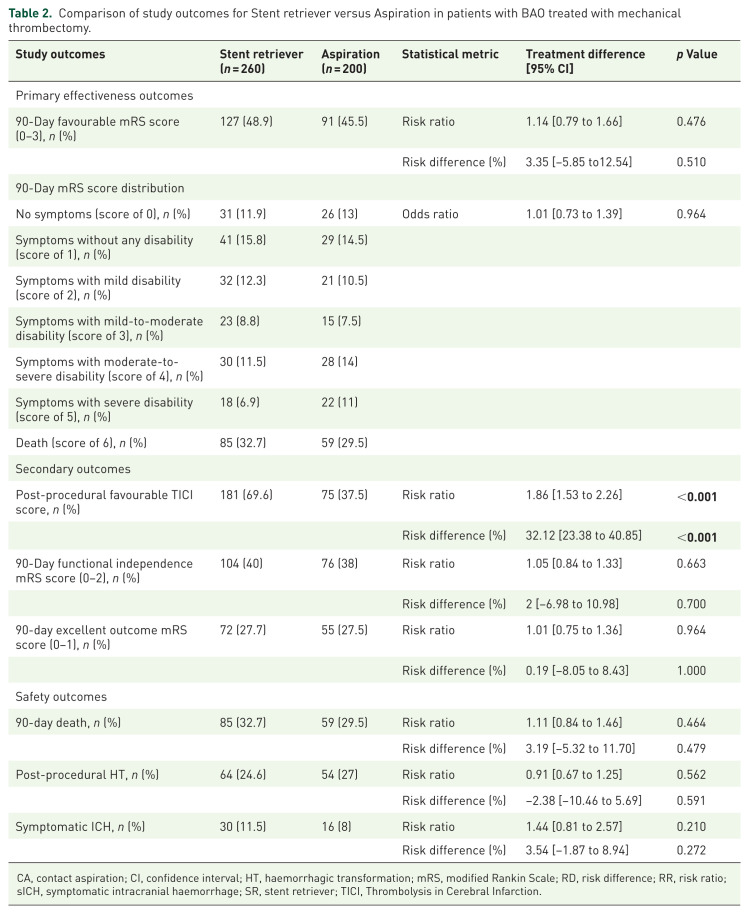 Figure 6
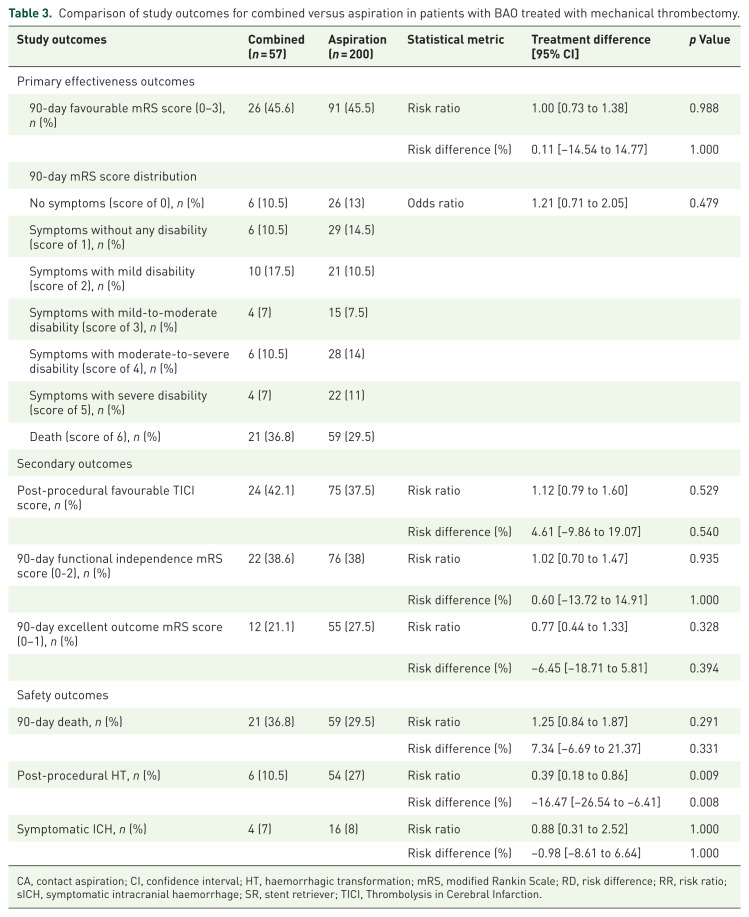 Figure 7
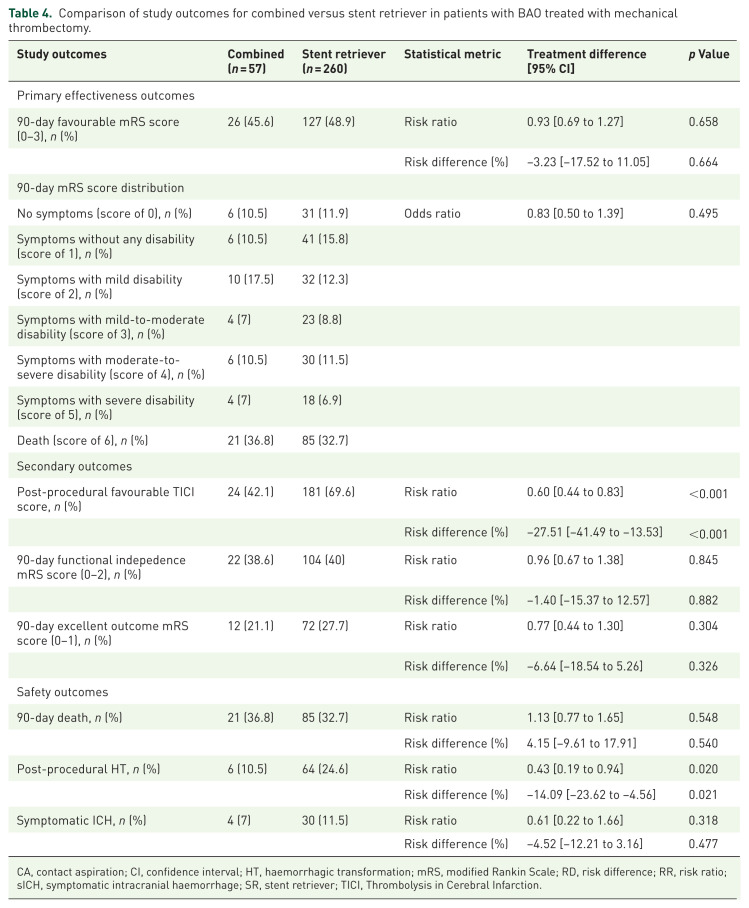 Figure 8
Peer Reviews
No public reviews on file for this paper yet. If you reviewed it on a platform where reviews are public (OpenReview, ICLR, NeurIPS, ICML), you can paste yours below so the community can read it here.
Videos
No videos yet. Explain this paper in a talk, walkthrough, or lecture? Add one.
Taxonomy
TopicsAcute Ischemic Stroke Management · Cerebrovascular and Carotid Artery Diseases · Peripheral Artery Disease Management