Translational insights from nonclinical studies of AAV gene therapies for hemophilia: mechanisms underpinning variability and durability of gene expression
Sylvia Fong, Laura L. Swystun, Paul Batty, David Lillicrap

TL;DR
This paper reviews how AAV gene therapy for hemophilia varies in effectiveness and longevity, focusing on factors like transcriptional efficiency and cellular stress.
Contribution
The paper integrates preclinical and clinical data to identify mechanisms behind variability and durability in AAV gene therapy for hemophilia.
Findings
Transcriptional efficiency, not vector genome copy number, is a key factor in treatment variability and durability.
Factor IX gene therapy shows more stable long-term expression compared to factor VIII due to differences in cellular stress.
Epigenetic modifications and protein-folding stress contribute to declines in transgene expression over time.
Abstract
Adeno-associated virus (AAV) gene therapy is a promising approach for hemophilia, offering the potential for sustained therapeutic expression of coagulation factors. However, both variability and durability of transgene expression remain a challenge, limiting treatment predictability. Comparative preclinical and human liver biopsy studies suggest that transcriptional efficiency, rather than vector genome copy number (VCN), is a primary determinant of variability and durability in treatment response. Despite the presence of vector genomes in hepatocytes, transcriptional output varies significantly across species and individuals, indicating that VCN alone is insufficient to predict therapeutic efficacy. This review synthesizes findings from preclinical models (mice, dogs, non-human primates (NHPs), and human hepatocytes) and clinical liver biopsy studies to examine mechanisms influencing…
Genes, proteins, chemicals, diseases, species, mutations and cell lines named across the full text — each resolved to its canonical identifier and authoritative record.
Click any figure to enlarge with its caption.
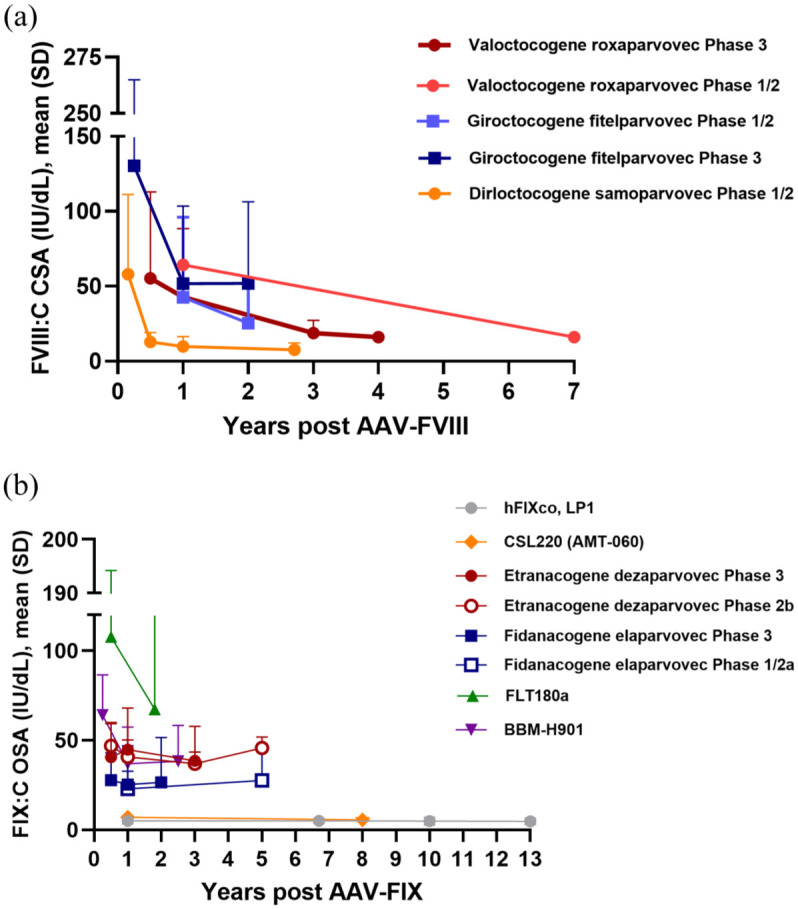 Figure 1
 Figure 2
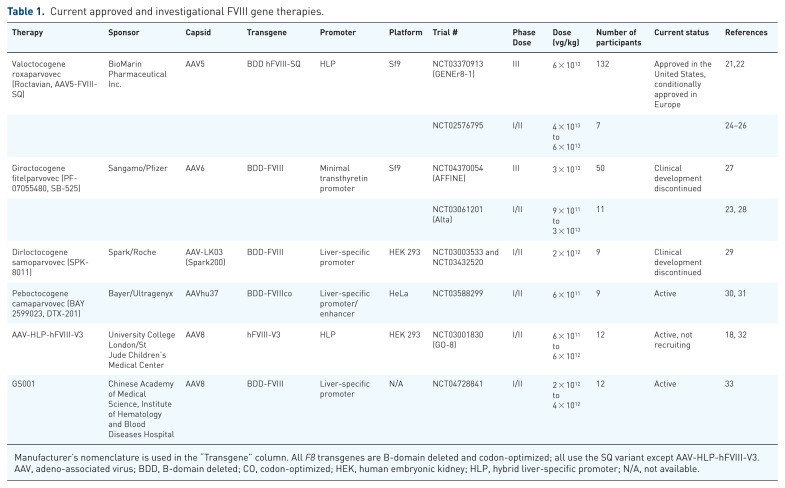 Figure 3
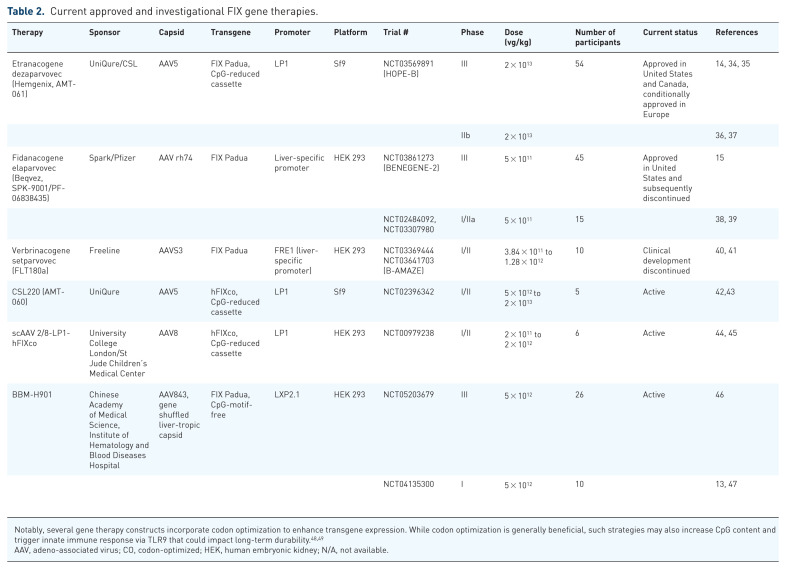 Figure 4
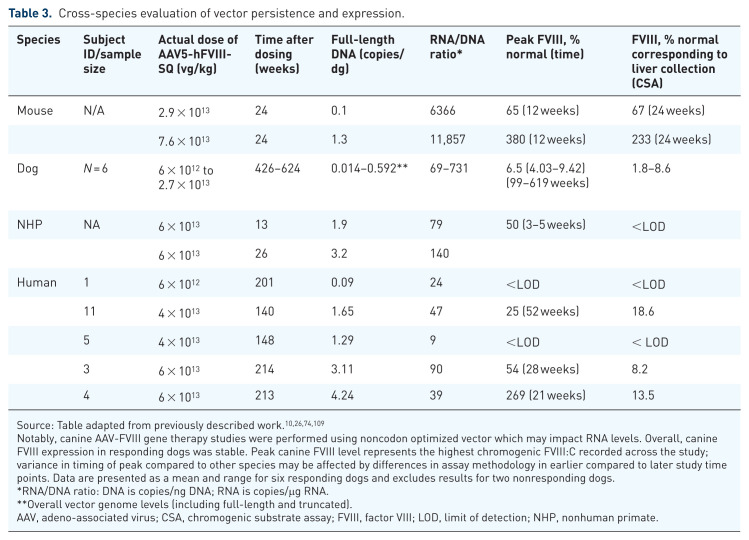 Figure 5
 Figure 6
Peer Reviews
No public reviews on file for this paper yet. If you reviewed it on a platform where reviews are public (OpenReview, ICLR, NeurIPS, ICML), you can paste yours below so the community can read it here.
Videos
No videos yet. Explain this paper in a talk, walkthrough, or lecture? Add one.
Taxonomy
TopicsVirus-based gene therapy research · Hemophilia Treatment and Research · Viral Infectious Diseases and Gene Expression in Insects