Thermal-Gated Self-Repairing Polyimide Separator for Dendrite-Suppressed Lithium Metal Batteries
Pengpeng Li, Xinluo Li, Yisong Zhou, Yingying Zhang, Nianyu Yue, Jiameng Li, Yumeng Xin, Lianlong Hou, Jiaji Yue, Xin Zhang, Guohua Sun, Nanjun Chen

TL;DR
A self-repairing separator for lithium metal batteries is developed to improve safety and performance by suppressing dendrite growth and enhancing thermal stability.
Contribution
A thermal-gated self-repairing separator is introduced with aperture restoration and high thermal shutdown temperature for safer lithium metal batteries.
Findings
The PAI@PEI separator achieves an aperture-closing temperature of 400°C, much higher than existing separators.
The R-PAI@PEI separator enables a Li+ transference number of 0.71 and cycling stability for over 750 hours at 1 mA cm−2.
The separator-based Li||NCM523 battery retains 90% of its capacity after 100 cycles at 5C.
Abstract
The self-repairing polyetherimide (PEI)-functionalized polyamide-imide (PAI@PEI) nanofiber membrane with a thermal-gated function was designed to enhance the thermal safety properties of lithium metal batteries.The PAI@PEI membrane with the polar amide and imide groups facilitates Li+ dissociation and transport, which is essential for suppressing dendrite growth.The aperture-restored PAI@PEI-based Li||Li cell exhibits an exceptional Li+ transference number of 0.71 and an excellent cycling stability at 1 mA cm−2 for over 750 h. The self-repairing polyetherimide (PEI)-functionalized polyamide-imide (PAI@PEI) nanofiber membrane with a thermal-gated function was designed to enhance the thermal safety properties of lithium metal batteries. The PAI@PEI membrane with the polar amide and imide groups facilitates Li+ dissociation and transport, which is essential for suppressing dendrite…
Genes, proteins, chemicals, diseases, species, mutations and cell lines named across the full text — each resolved to its canonical identifier and authoritative record.
Click any figure to enlarge with its caption.
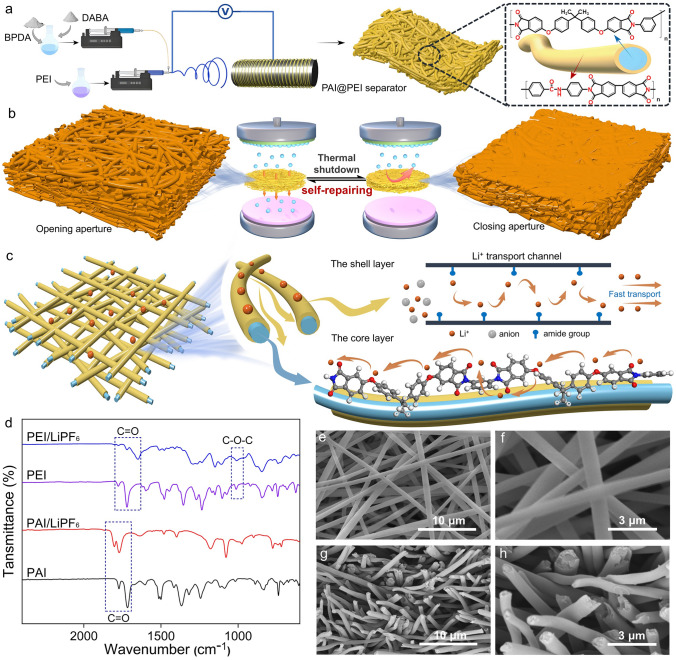 Figure 1
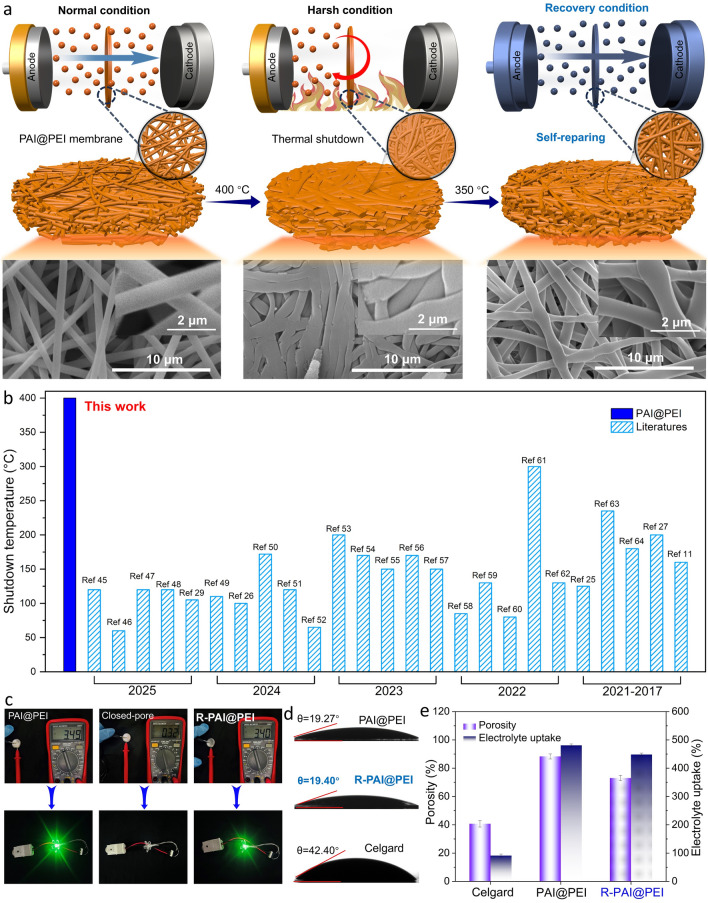 Figure 2
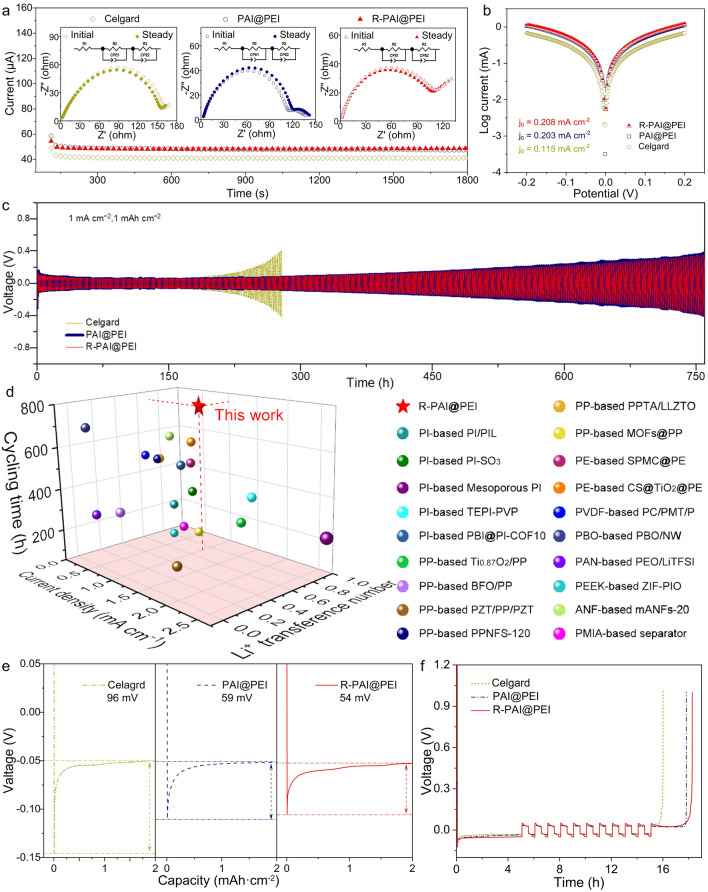 Figure 3
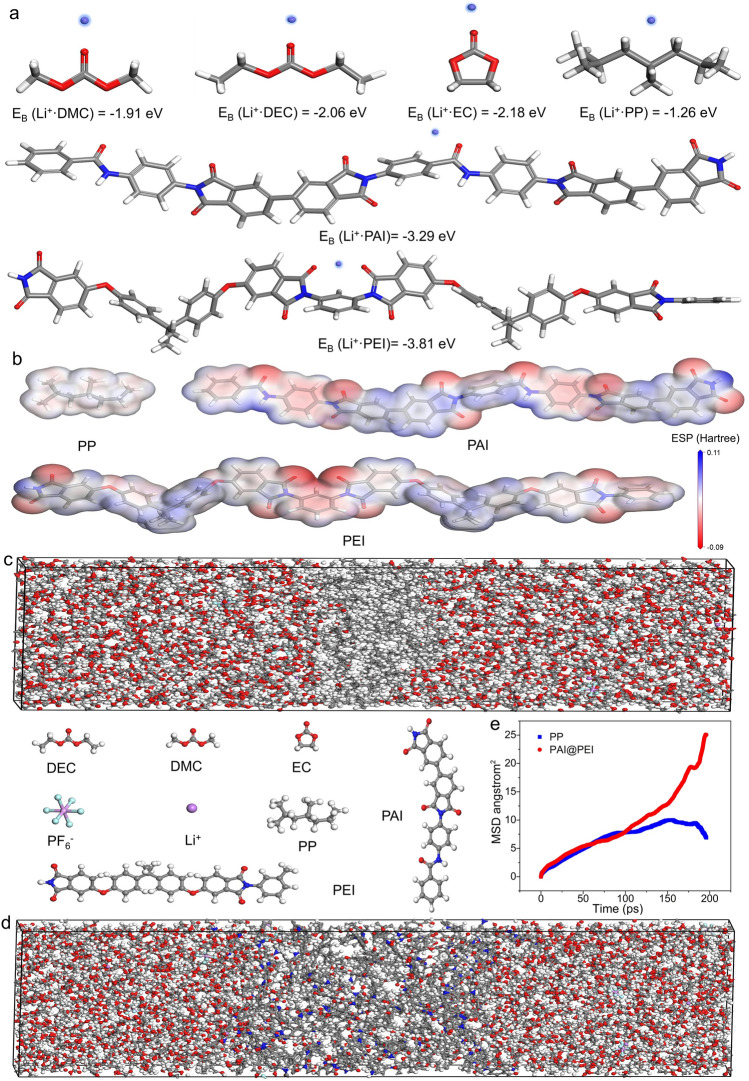 Figure 4
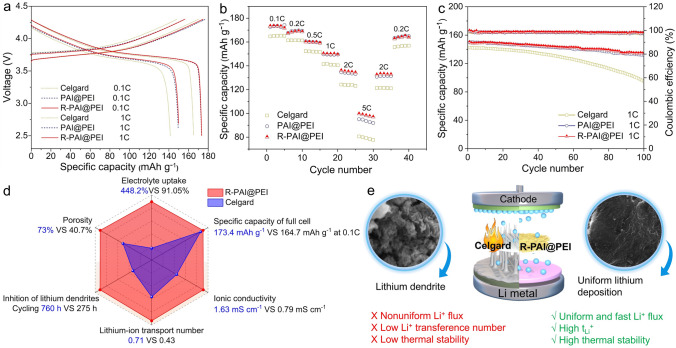 Figure 5
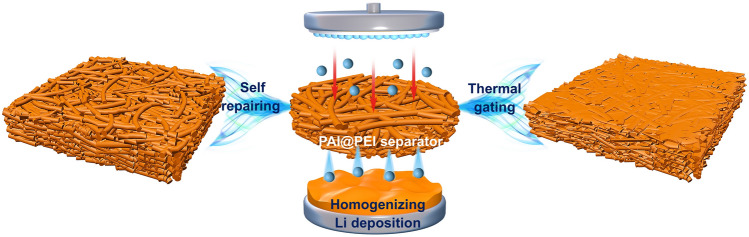 Figure 6
Peer Reviews
No public reviews on file for this paper yet. If you reviewed it on a platform where reviews are public (OpenReview, ICLR, NeurIPS, ICML), you can paste yours below so the community can read it here.
Videos
No videos yet. Explain this paper in a talk, walkthrough, or lecture? Add one.
Taxonomy
TopicsAdvanced Battery Materials and Technologies · Advancements in Battery Materials · Advanced Battery Technologies Research