Hepatotoxicity of new-generation ALK inhibitors versus crizotinib in patients with non-small cell lung cancer: A systematic review and meta-analysis
Xingxian Luo, Xin Du, Qi Chen, Cen Wang, Lizong Li, Xu He, Yiru Gong, Jiali Chen, Xue Zhong, Yi Liu, Xiaohong Zhang, Lin Huang

TL;DR
New-generation ALK inhibitors cause less liver damage than crizotinib in lung cancer patients, with some showing better survival outcomes.
Contribution
This study provides a meta-analysis comparing hepatotoxicity and efficacy of new-generation ALK inhibitors versus crizotinib.
Findings
New-generation ALK inhibitors significantly reduce all-grade ALT elevation risk compared to crizotinib.
Lorlatinib shows greater reduction in AST elevation and better progression-free survival than second-generation inhibitors.
New-generation inhibitors improve progression-free survival but do not reduce treatment discontinuation rates.
Abstract
Hepatotoxicity is a known side effect of ALK inhibitors in non-small cell lung cancer. This meta-analysis assessed the hepatotoxicity risk, measured by elevations in alanine aminotransferase (ALT) and aspartate aminotransferase (AST), for new-generation ALK inhibitors versus crizotinib through eight randomized controlled trials with 2,114 patients. The results suggested that new-generation ALK inhibitors were associated with a significantly reduced risk of all-grade ALT elevation (RR = 0.73, 95% confidence interval [CI] [0.58, 0.92]) and a trend toward reduced risk of grades 3–5 ALT elevation (RR = 0.55, 95% CI [0.29, 1.06]). Alectinib, lorlatinib, and brigatinib are associated with lower risks of hepatotoxicity when compared with crizotinib. New-generation ALK inhibitors improved progression-free survival but not in discontinuation rates. Lorlatinib conferred a greater reduction in any…
Genes, proteins, chemicals, diseases, species, mutations and cell lines named across the full text — each resolved to its canonical identifier and authoritative record.
Click any figure to enlarge with its caption.
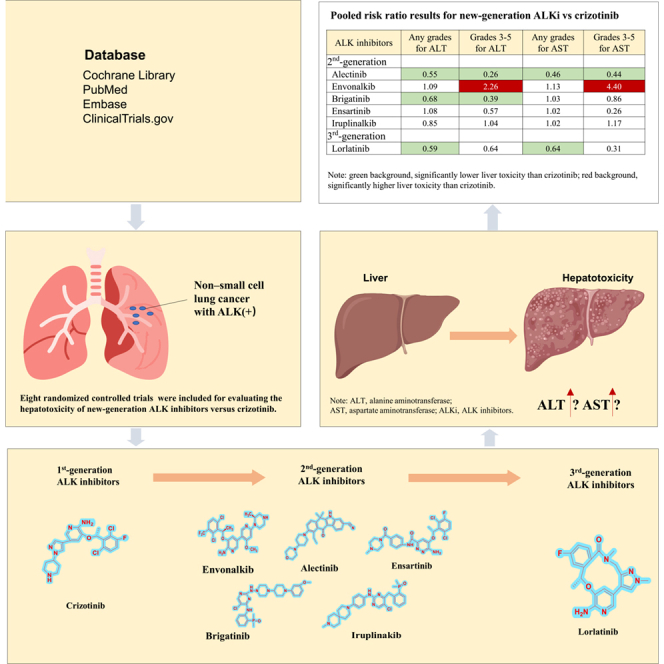 Figure 1
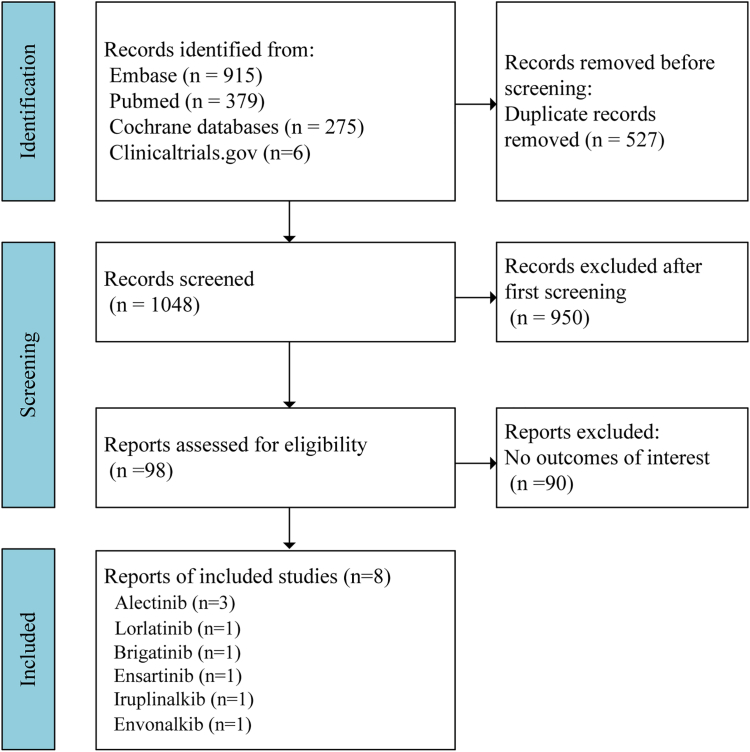 Figure 2
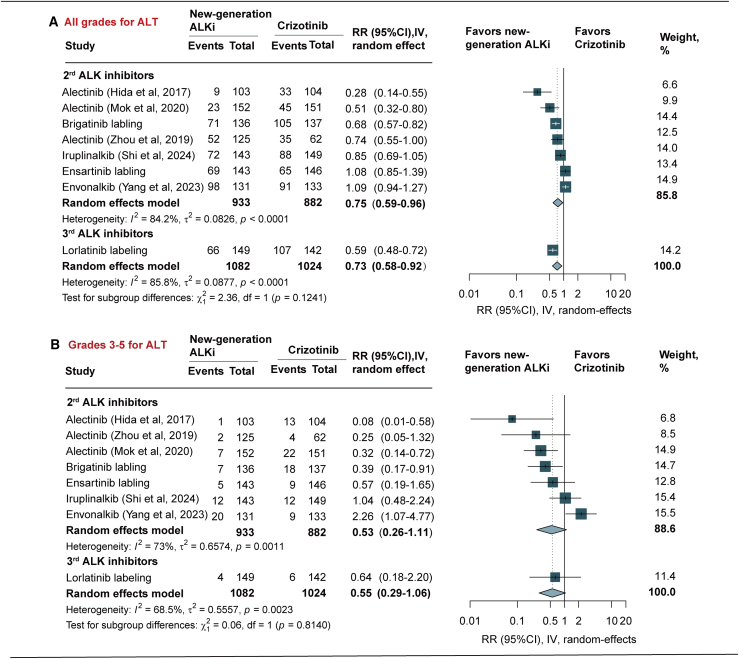 Figure 3
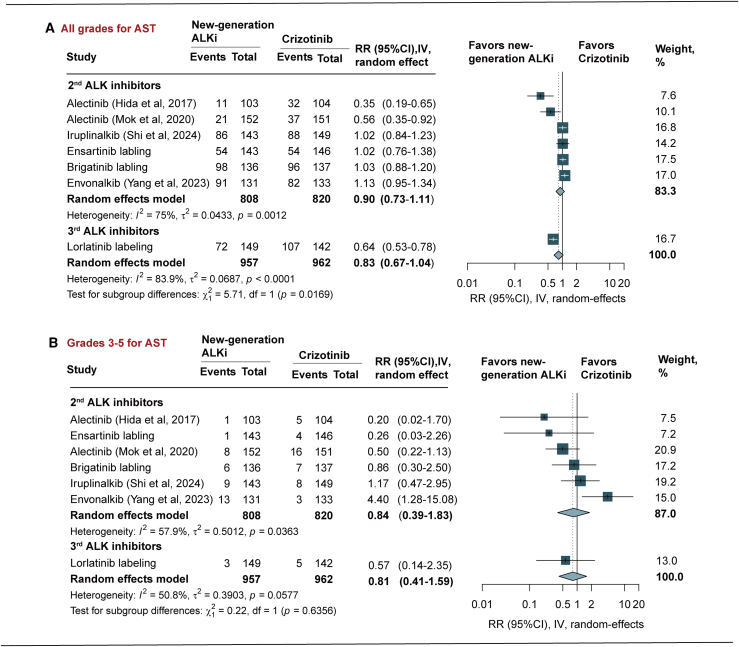 Figure 4
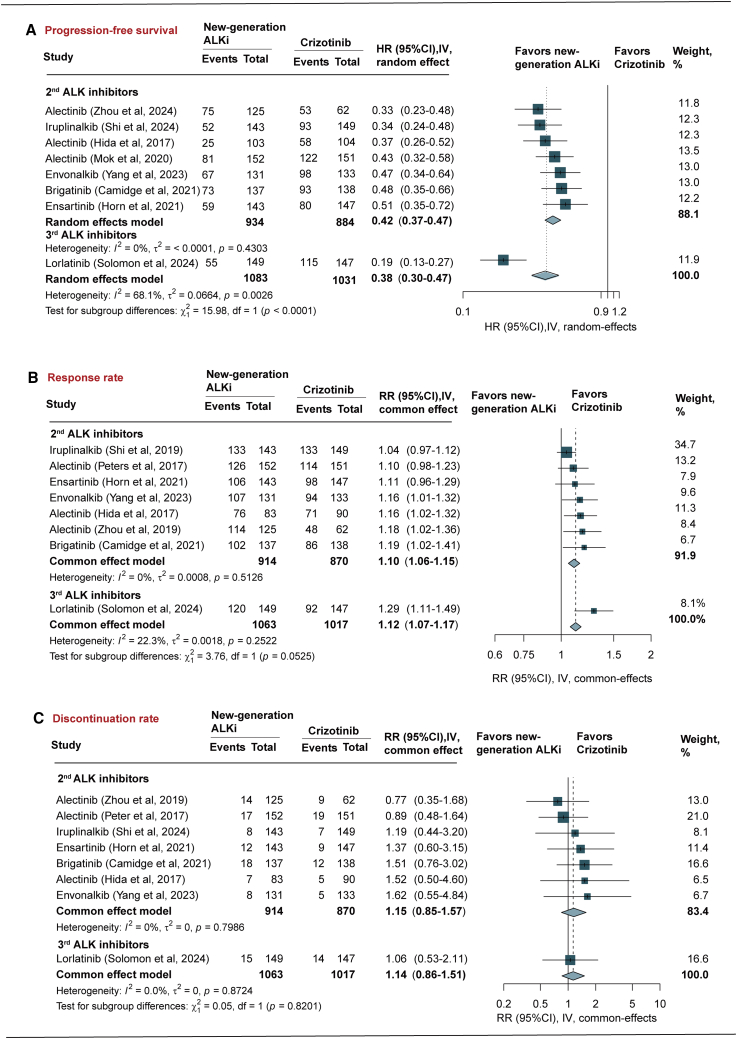 Figure 5
Peer Reviews
No public reviews on file for this paper yet. If you reviewed it on a platform where reviews are public (OpenReview, ICLR, NeurIPS, ICML), you can paste yours below so the community can read it here.
Videos
No videos yet. Explain this paper in a talk, walkthrough, or lecture? Add one.
Taxonomy
TopicsLung Cancer Treatments and Mutations · Lung Cancer Diagnosis and Treatment · Lung Cancer Research Studies