Omnidirectional tele-perception enabled by nano-architectured electret skin
Yan Du, Zhiwei Zhang, Zhong Lin Wang, Di Wei

TL;DR
A new nano-architectured electret skin enables omnidirectional tele-perception for better human-machine interaction.
Contribution
The development of an omnidirectional nano-architectured electret skin with enhanced spatial perception and adaptive interaction.
Findings
Eight NAES units enable omnidirectional electrostatic tele-perception.
CTL–CBL charge trapping ensures stable and high-fidelity electrostatic sensing.
Directional signal patterns allow accurate target orientation recognition.
Abstract
The environmental perception capability of embodied intelligent systems is highly dependent on their physical interactions with the surrounding environment, where tele-perception serves as a key technology enabling adaptive interaction and real-time human-machine interaction (HMI). However, existing tele-perception systems are fundamentally constrained by their underlying physical mechanisms and environmental disturbances, resulting in limited sensing directionality, poor spatial resolution, and inadequate environmental robustness. To address these challenges, this study develops an omnidirectional nano-architectured electret skin (NAES) by precisely tuning charge-trapping units within the established heterogeneous interface of the charge transport layer (CTL) and charge blocking layer (CBL). The proposed architecture arranges NAES units along 0°, 45°, 90°, 135°, and four diagonal…
Genes, proteins, chemicals, diseases, species, mutations and cell lines named across the full text — each resolved to its canonical identifier and authoritative record.
Click any figure to enlarge with its caption.
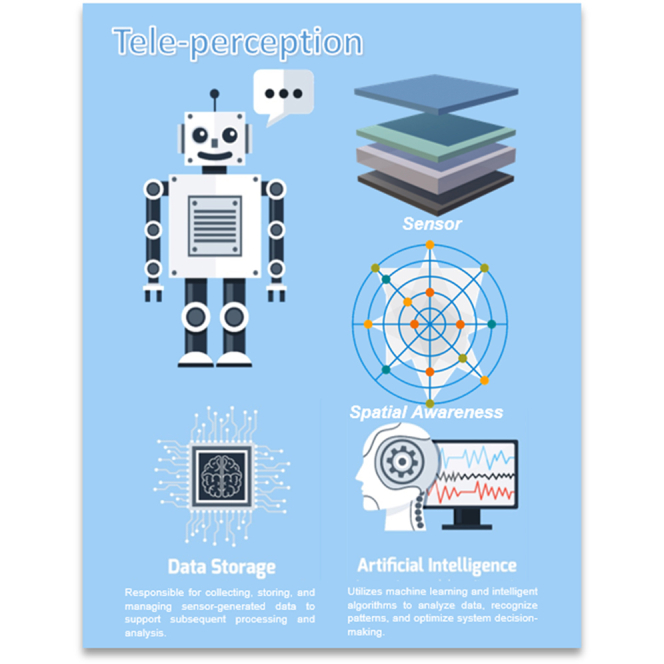 Figure 1
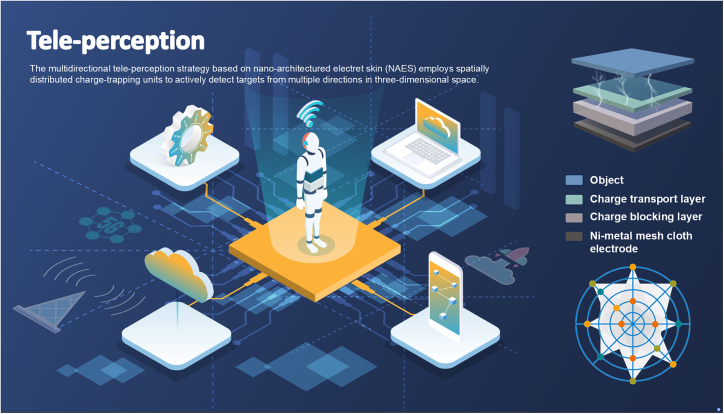 Figure 2
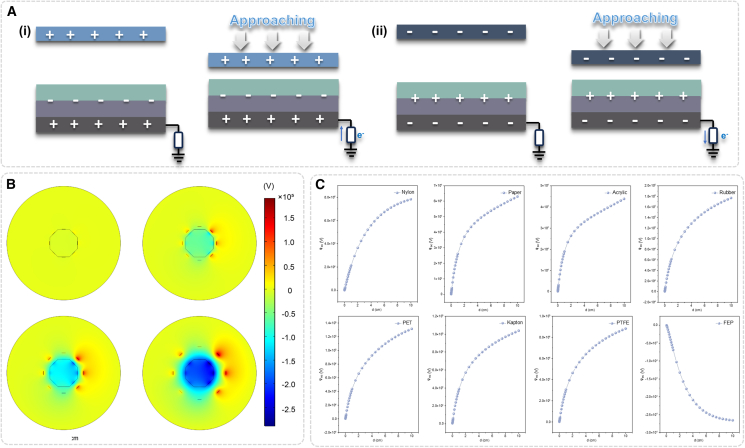 Figure 3
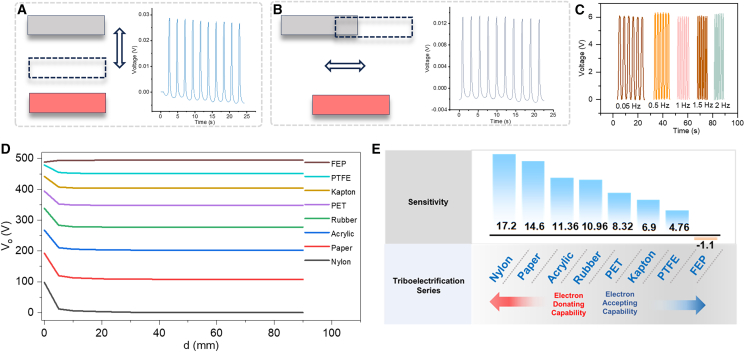 Figure 4
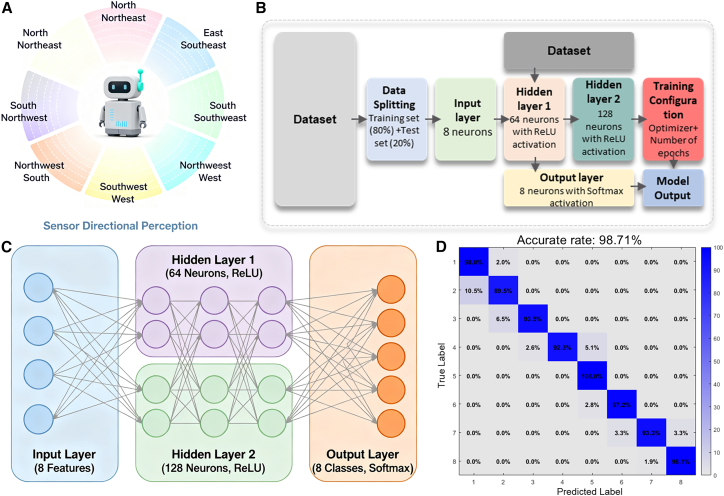 Figure 5
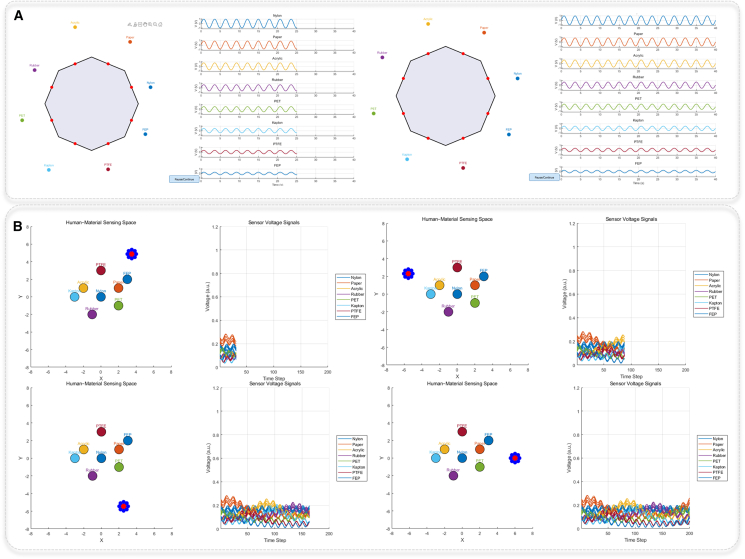 Figure 6
Peer Reviews
No public reviews on file for this paper yet. If you reviewed it on a platform where reviews are public (OpenReview, ICLR, NeurIPS, ICML), you can paste yours below so the community can read it here.
Videos
No videos yet. Explain this paper in a talk, walkthrough, or lecture? Add one.
Taxonomy
TopicsAdvanced Sensor and Energy Harvesting Materials · Dielectric materials and actuators · Tactile and Sensory Interactions