Psychological determinants of participation in the sharing economy: a cross-cultural study of the U.S. and China
Jia Song, Sami Kajalo

TL;DR
This study compares how psychological factors influence sharing economy participation in the U.S. and China, highlighting cultural differences in consumer behavior.
Contribution
The study clarifies how values and norms shape collaborative consumption in distinct cultural contexts.
Findings
Utilitarian and hedonic values positively affect attitudes in both the U.S. and China.
Symbolic value does not influence attitudes in either country.
Subjective norms predict intentions in the U.S., while personal norms are more influential in China.
Abstract
This study explores the psychological drivers of participation in the sharing economy through a cross-cultural lens, comparing consumer behavior in the United States and China. Drawing on the value–attitude–behavior hierarchy theory and the theory of reasoned action, we investigate how utilitarian, hedonic, and symbolic values shape attitudes, norms, and behavioral intentions in the context of collaborative consumption. Data were collected through online surveys from 302 participants in the U.S. and 305 in China and analyzed using Structural Equation Modelling (SEM). Our findings reveal both similarities and differences in how personal values influence consumer decision-making. While utilitarian and hedonic values positively affect attitudes in both countries, symbolic value does not. Norms play culturally distinct roles: in the U.S., subjective norms are more predictive of intention,…
Click any figure to enlarge with its caption.
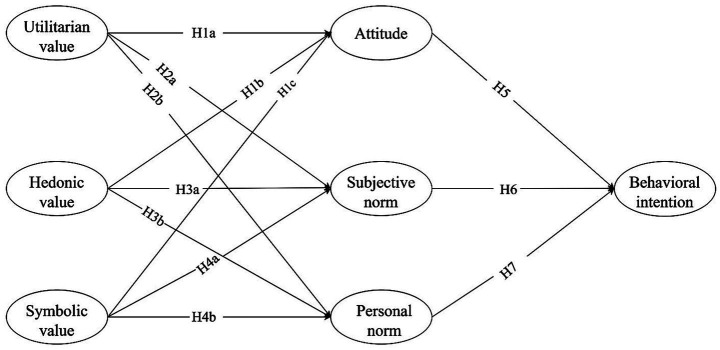 Figure 1
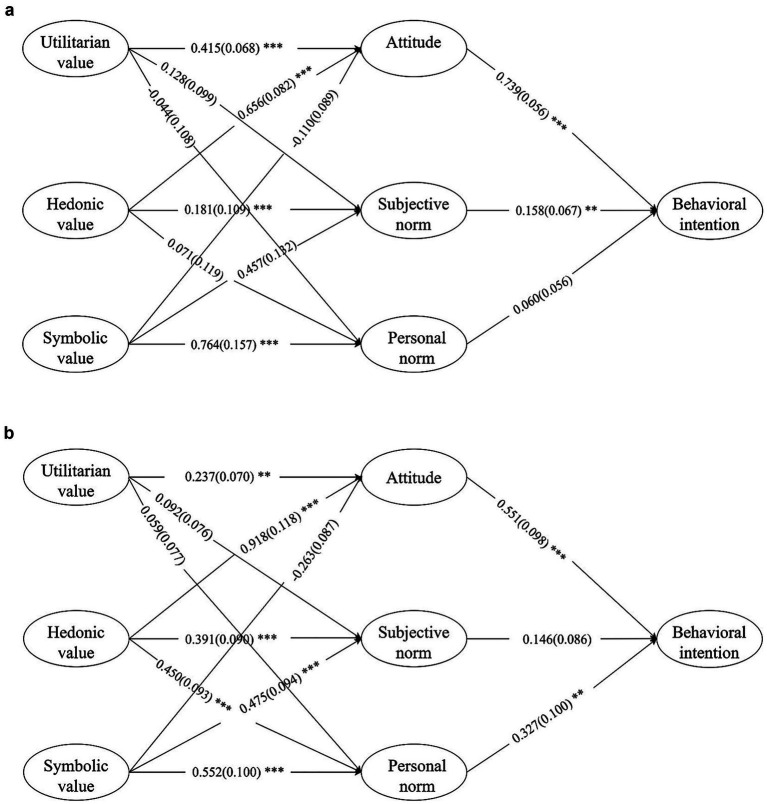 Figure 2
Peer Reviews
No public reviews on file for this paper yet. If you reviewed it on a platform where reviews are public (OpenReview, ICLR, NeurIPS, ICML), you can paste yours below so the community can read it here.
Videos
No videos yet. Explain this paper in a talk, walkthrough, or lecture? Add one.
Taxonomy
TopicsSharing Economy and Platforms · Digital Marketing and Social Media · Digital Economy and Work Transformation