Integrated biosynthesis of the lignan (-)-pluviatolide in resting and growing E. coli cells
Ronja Knöfel, Jonas Barsig, Philipp A. Bechtold, Cigdem Günes, U. Joost Luelf, Vlada B. Urlacher

TL;DR
Scientists developed a sustainable way to produce the lignan (-)-pluviatolide in E. coli cells, which is a key step in making important antitumor drugs.
Contribution
The study integrates lignan biosynthesis genes into the E. coli chromosome, enabling plasmid-free production of (-)-pluviatolide.
Findings
Plasmid-free E. coli cells produced (-)-pluviatolide as effectively as plasmid-based systems.
Adding glycerol and glucose improved the productivity of (-)-pluviatolide.
LC-MS analysis showed high conversion efficiency of substrate to (-)-pluviatolide in both resting and growing cells.
Abstract
Lignans exhibit a wide range of useful bioactivities. A key intermediate in their biosynthesis in plants is (−)-pluviatolide, which directs the pathway towards various high-value lignans like (−)-podophyllotoxin - the precursor of the clinically relevant antitumor drugs etoposide and teniposide. In an attempt to develop more sustainable ways for the production of lignans, which are traditionally isolated from plants, we previously established a heterologous biosynthesis of (−)-pluviatolide in Escherichia coli, in which recombinant genes were expressed from multiple plasmids. In this study, the genes encoding the four-enzyme, four-step reaction cascade from (+)-pinoresinol to (−)-pluviatolide were integrated into the chromosome of E. coli C41(DE3). The plasmid-based and plasmid-free E. coli strains were compared in resting and growing cell approaches. The performance of the plasmid-free…
Genes, proteins, chemicals, diseases, species, mutations and cell lines named across the full text — each resolved to its canonical identifier and authoritative record.
Click any figure to enlarge with its caption.
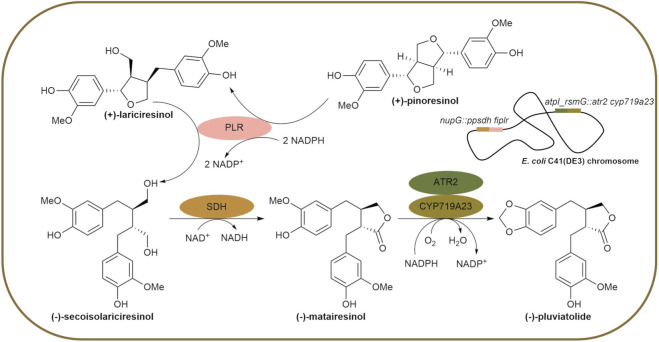 Figure 1
 Figure 2
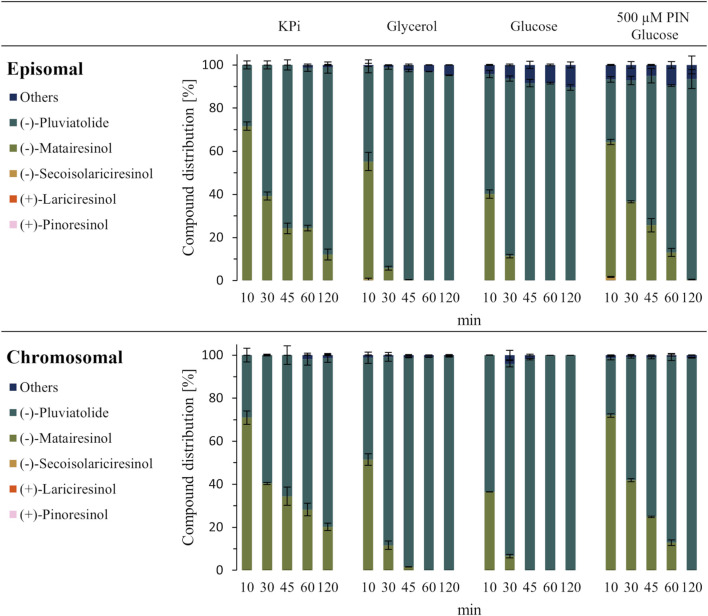 Figure 3
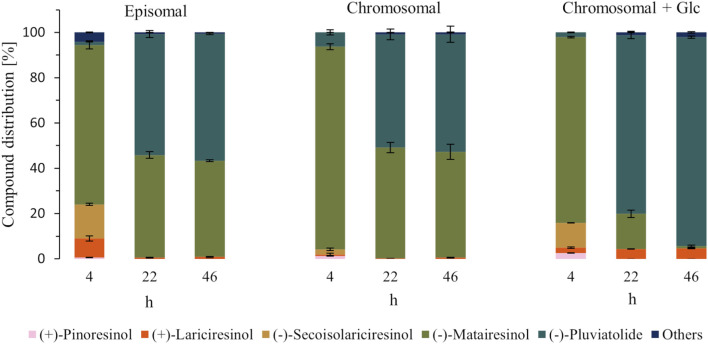 Figure 4
Peer Reviews
No public reviews on file for this paper yet. If you reviewed it on a platform where reviews are public (OpenReview, ICLR, NeurIPS, ICML), you can paste yours below so the community can read it here.
Videos
No videos yet. Explain this paper in a talk, walkthrough, or lecture? Add one.
Taxonomy
TopicsPlant-derived Lignans Synthesis and Bioactivity · Magnolia and Illicium research · Phytochemistry and Biological Activities