Application of artificial intelligence in diagnosis and management of fetal growth disorders: a comprehensive review
Franciszek Ługowski, Julia Babińska, Paweł Jan Stanirowski

TL;DR
This paper reviews how artificial intelligence can improve the diagnosis and management of fetal growth disorders, offering more accurate and efficient prenatal care.
Contribution
The paper provides a comprehensive review of AI applications in fetal growth disorders, highlighting their potential to enhance diagnostic accuracy and accessibility.
Findings
AI models combining maternal, fetal, and imaging data match clinician accuracy while improving efficiency.
AI applications like automated biometry and deep learning on ultrasound scans improve diagnostic precision.
AI has potential to expand access to prenatal care in low-resource settings.
Abstract
Fetal growth disorders, including both fetal growth restriction and macrosomia, remain major contributors to perinatal morbidity and long-term health risks in adulthood. While ultrasound is the most frequently employed technique for the diagnosis of intrauterine growth abnormalities, its efficacy is constrained by the operator’s experience and variable accuracy. This review explores the role of artificial intelligence (AI) in advancing the detection and management of fetal growth disorders. We conducted a comprehensive literature search of major databases to identify original and review articles addressing the use of AI in fetal growth restriction, small-for-gestational-age and large-for-gestational-age fetuses, as well as fetal macrosomia. The available evidence indicates that AI models combining maternal, fetal, and imaging data exhibit a level of accuracy comparable to that of…
Genes, proteins, chemicals, diseases, species, mutations and cell lines named across the full text — each resolved to its canonical identifier and authoritative record.
Click any figure to enlarge with its caption.
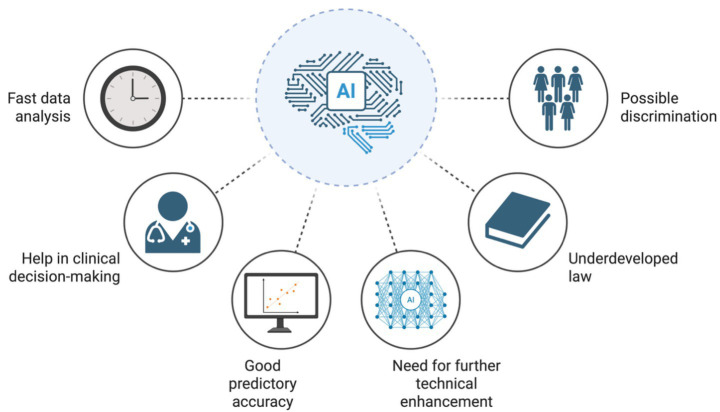 Figure 1
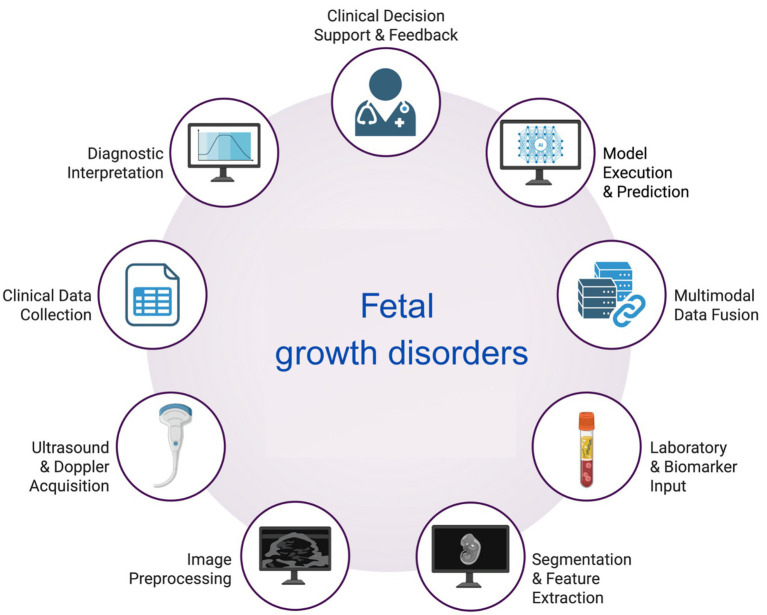 Figure 2
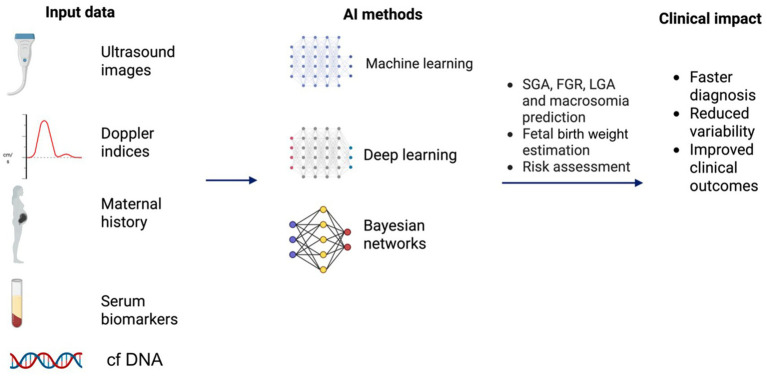 Figure 3
Peer Reviews
No public reviews on file for this paper yet. If you reviewed it on a platform where reviews are public (OpenReview, ICLR, NeurIPS, ICML), you can paste yours below so the community can read it here.
Videos
No videos yet. Explain this paper in a talk, walkthrough, or lecture? Add one.
Taxonomy
TopicsPregnancy and preeclampsia studies · Neonatal and fetal brain pathology · Prenatal Screening and Diagnostics