Beyond pruritus in Alagille syndrome: potential effects of maralixibat on fibrosis and portal hypertension–insights from two case studies
Jesús Quintero-Bernabeu, Cristina Padrós-Fornieles, Maria Mercadal-Hally, Mauricio Larrarte-King, Simone Mameli, Mar Miserachs-Barba, Lis Vidal-Valdivia, José Andrés Molino-Gahete, Antonio Moreno-Galdo

TL;DR
Maralixibat treatment in two Alagille syndrome patients improved pruritus and showed potential benefits on liver fibrosis and portal hypertension.
Contribution
Demonstrates maralixibat's potential to improve fibrosis and portal hypertension in Alagille syndrome beyond pruritus relief.
Findings
Maralixibat led to fibrosis regression from cirrhosis to stage F2 in a newborn with Alagille syndrome.
Treatment improved portal hypertension, liver stiffness, and splenomegaly in both patients.
Pruritus resolved completely in one patient and significantly improved in another.
Abstract
Alagille syndrome (ALGS) is a genetic disorder primarily affecting the liver, often leading to cholestasis and pruritus. Ileal Bile Acid Transporter inhibitors (IBATi), such as maralixibat, have shown promise in controlling pruritus and potentially modifying disease progression. We report two patients with ALGS treated with maralixibat. Case 1 involved a 10-days-old newborn presenting with cholestasis, jaundice, and acholic stools. Genetic testing confirmed a pathogenic JAG1 mutation. Despite preserved liver function, the patient was evaluated for liver transplantation (LT) due to severe pruritus and portal hypertension. Maralixibat initiation led to marked improvement in pruritus, serum bile acids, bilirubin, and cholesterol. Liver biopsies performed 13 months apart demonstrated fibrosis regression from cirrhosis to stage F2. Elastography showed decreased liver stiffness, reduced…
Genes, proteins, chemicals, diseases, species, mutations and cell lines named across the full text — each resolved to its canonical identifier and authoritative record.
Click any figure to enlarge with its caption.
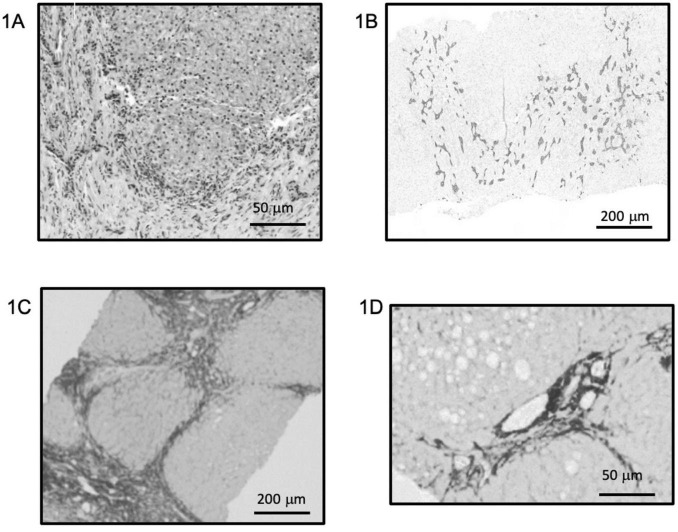 Figure 1
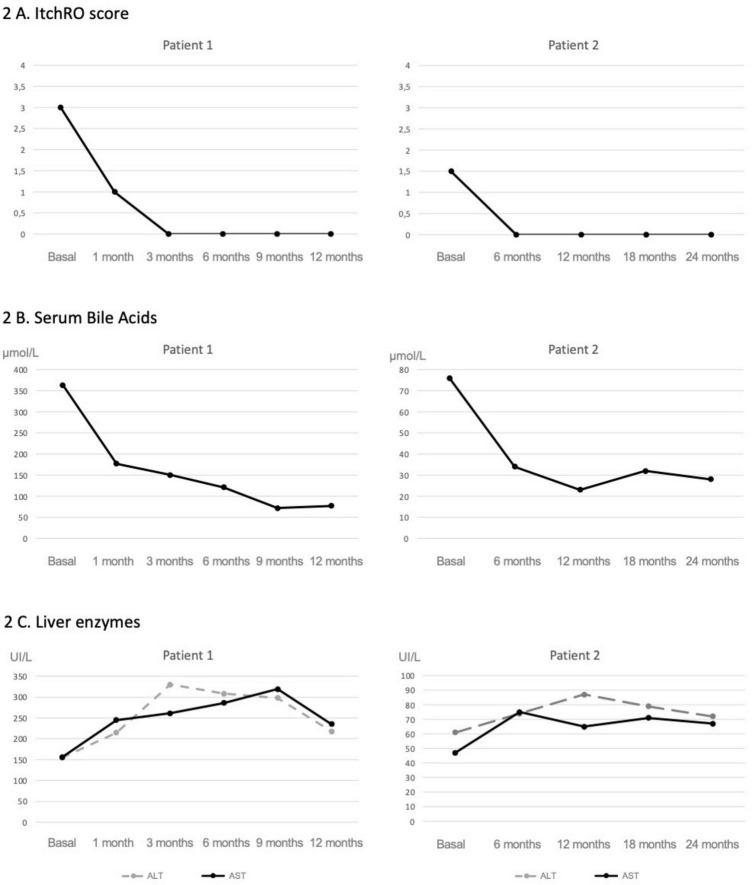 Figure 2
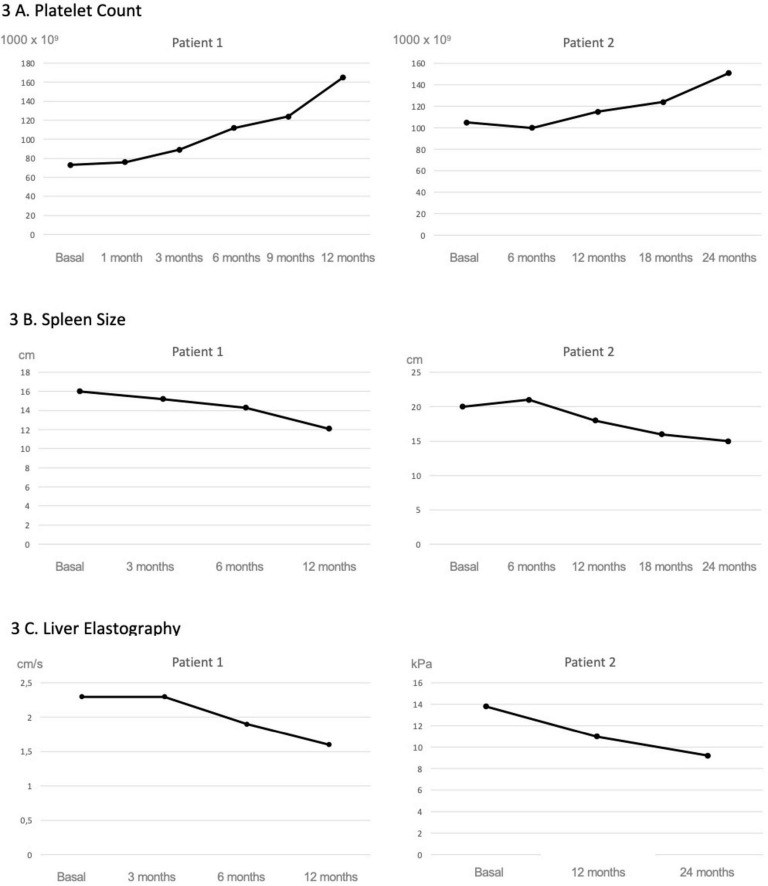 Figure 3
Peer Reviews
No public reviews on file for this paper yet. If you reviewed it on a platform where reviews are public (OpenReview, ICLR, NeurIPS, ICML), you can paste yours below so the community can read it here.
Videos
No videos yet. Explain this paper in a talk, walkthrough, or lecture? Add one.
Taxonomy
TopicsPediatric Hepatobiliary Diseases and Treatments · Drug Transport and Resistance Mechanisms · Gallbladder and Bile Duct Disorders