Combining plasma biomarkers, clinical parameters, and neuroimaging features for differential diagnosis of Parkinson’s disease and atypical parkinsonian syndromes: a multidimensional modeling approach
Jian Yao, Jiajia Ma, Peng Li, Xianglian Liao, Jie Zan, Liangshan Hu, Guihua Li

TL;DR
This study combines blood biomarkers, clinical data, and brain imaging to better distinguish Parkinson’s disease from similar conditions, improving diagnostic accuracy.
Contribution
The first multidimensional model integrating plasma biomarkers, clinical parameters, and radiomic features for PD-APS differentiation with high precision.
Findings
Plasma GFAP and NFL levels showed a significant gradient across PD, APS, and healthy controls.
A combined model achieved an AUC of 0.874, outperforming single biomarkers like NFL alone.
The model was validated for stability with cross-validation yielding an AUC of 0.843.
Abstract
The early differential diagnosis of Parkinson’s disease (PD) and atypical parkinsonian syndromes (APSs) poses challenges. The current methods, which rely on clinical assessments and single-modal biomarkers, lack sufficient sensitivity and specificity. This study aims to develop a multidimensional model integrating plasma biomarkers, clinical parameters, and neuroimaging radiomic features to improve the accuracy of differentiating PD from APS. A total of 150 participants were enrolled in the study, including 56 healthy controls (HC), 54 patients with PD, and 40 patients with APSs. Plasma biomarkers (NFL, GFAP, α-syn, and tau), clinical indicators (e.g., disease duration and UPDRS-III scores), and radiomic features (1,316 IBSI-standardized features) from magnetic resonance imaging scans of the midbrain and pons were collected. Core variables were screened using LASSO regression and…
Genes, proteins, chemicals, diseases, species, mutations and cell lines named across the full text — each resolved to its canonical identifier and authoritative record.
Click any figure to enlarge with its caption.
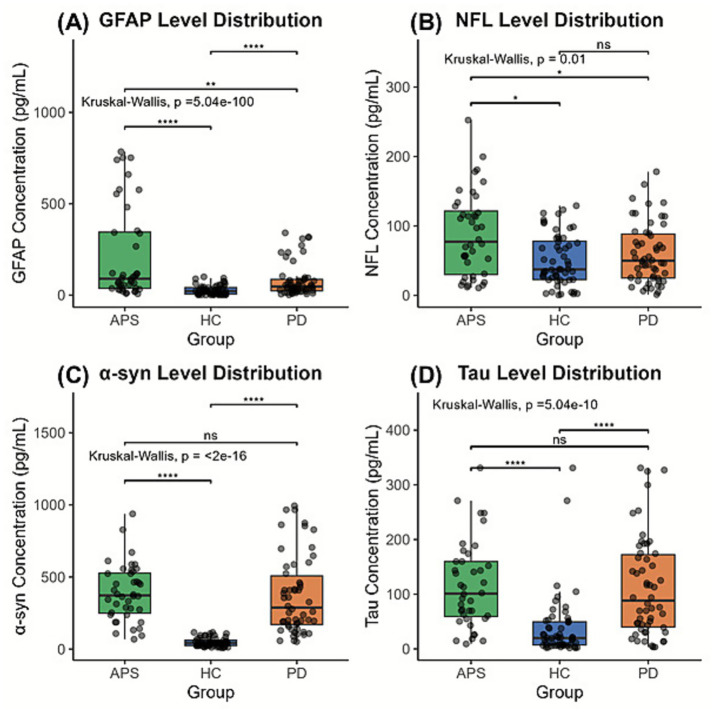 Figure 1
 Figure 2
 Figure 3
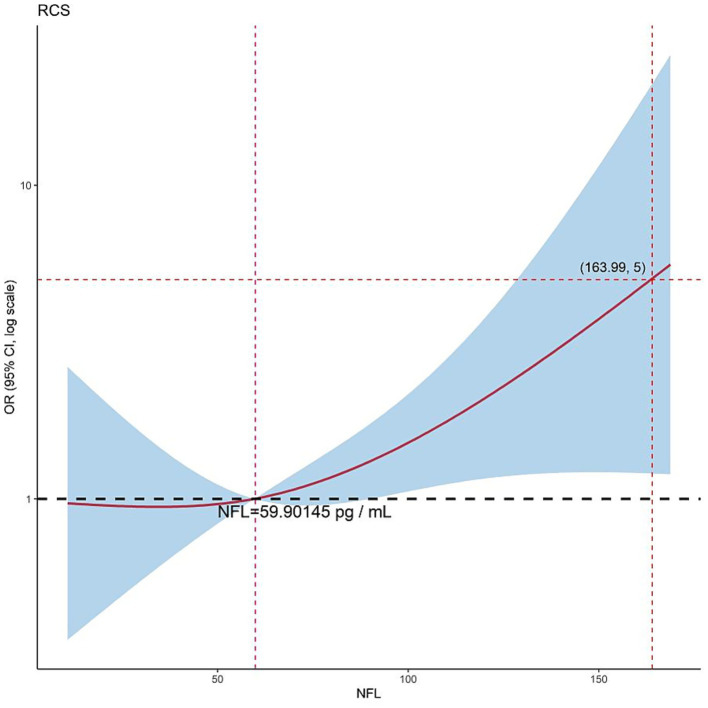 Figure 4
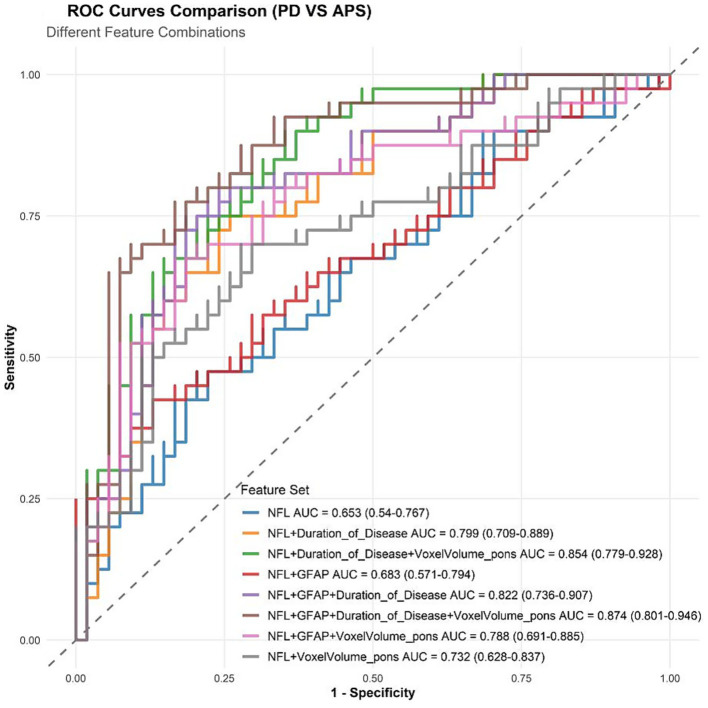 Figure 5
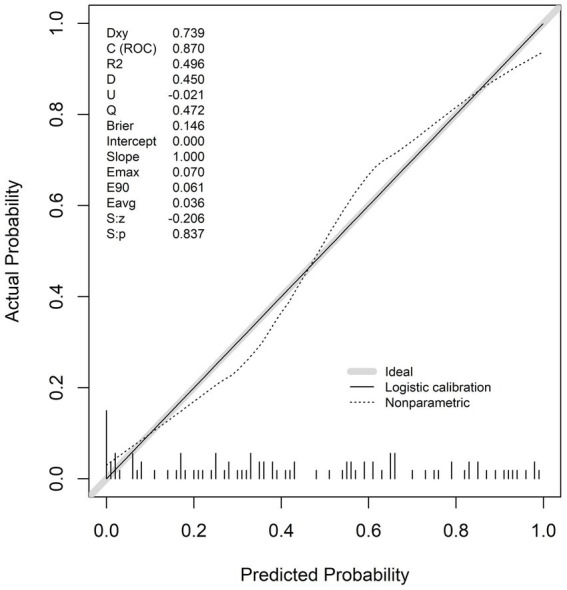 Figure 6
Peer Reviews
No public reviews on file for this paper yet. If you reviewed it on a platform where reviews are public (OpenReview, ICLR, NeurIPS, ICML), you can paste yours below so the community can read it here.
Videos
No videos yet. Explain this paper in a talk, walkthrough, or lecture? Add one.
Taxonomy
TopicsParkinson's Disease Mechanisms and Treatments · Radiomics and Machine Learning in Medical Imaging · Voice and Speech Disorders