Development of a recombinase-aided isothermal amplification method coupled with a lateral flow dipstick assay for the diagnosis of powdery scab in potatoes
Jiahui Yang, Honghao Li, Yajie Wang, Yingqing Tang, Fengqi Lan, Yue Sun, Huanhuan Shao, Xiaojie Cheng, Xinyi He, Dongyan Liu, Yusong Jiang, Bin Yong, Xiang Tao

TL;DR
A new rapid and field-deployable test was developed to detect potato powdery scab, a soilborne disease caused by a non-culturable fungus.
Contribution
A recombinase-aided isothermal amplification method coupled with a lateral flow dipstick assay was developed for field diagnosis of potato powdery scab.
Findings
The RAA-LFD assay detected Spongospora subterranea in all tuber and soil samples when amplified at 37°C for 20 min.
The RAA-LFD outperformed PCR in soil sample detection, showing higher sensitivity and specificity.
PCR assays detected the pathogen in 41/41 tubers and 25-28/31 soil samples depending on the primer pair.
Abstract
Potato powdery scab is a soilborne disease caused by the fungus Spongospora subterranea, which belongs to the class of Plasmodiophorids and cannot be cultured. In this study, a species-specific genomic DNA fragment of Spongospora subterranea (2494 bp) was identified using comparative genomics methods. Polymerase chain reaction (PCR) and recombinase-aided amplification-lateral flow dipstick (RAA-LFD) base assays were then developed for the specific detection of this pathogen. Both detection methods effectively distinguished Spongospora subterranea from other common potato pathogens, and Polymyxa graminis and Plasmodiophora brassicae, the primary pathogens of the intercropping cruciferous and gramineous plants. The detection sensitivity of the three PCR primer pairs (SsF1/R1, SsF2/R2, and SsF3/R3) under the optimal conditions (60.5 °C; 40 cycles in a 20 μL reaction system) were 10.8…
Genes, proteins, chemicals, diseases, species, mutations and cell lines named across the full text — each resolved to its canonical identifier and authoritative record.
Click any figure to enlarge with its caption.
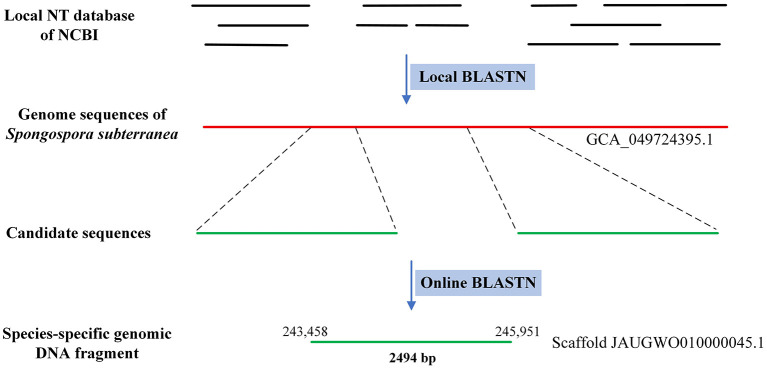 Figure 1
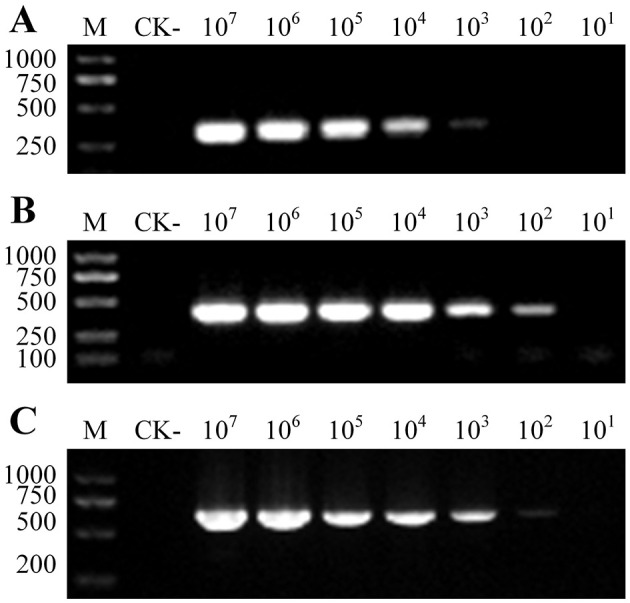 Figure 2
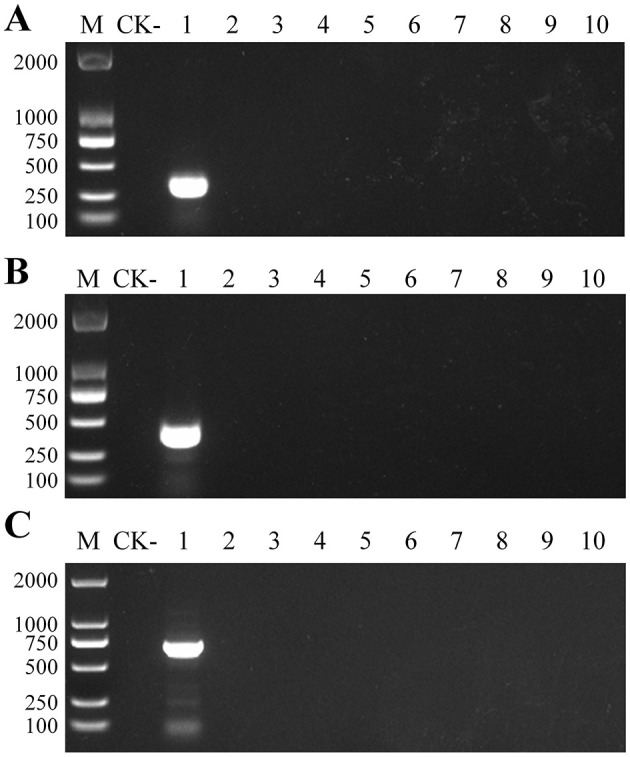 Figure 3
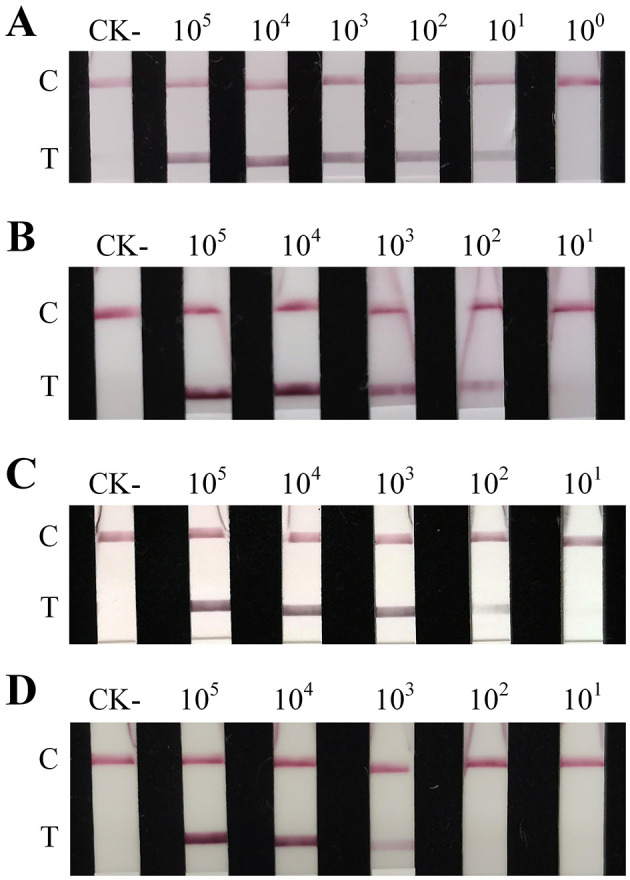 Figure 4
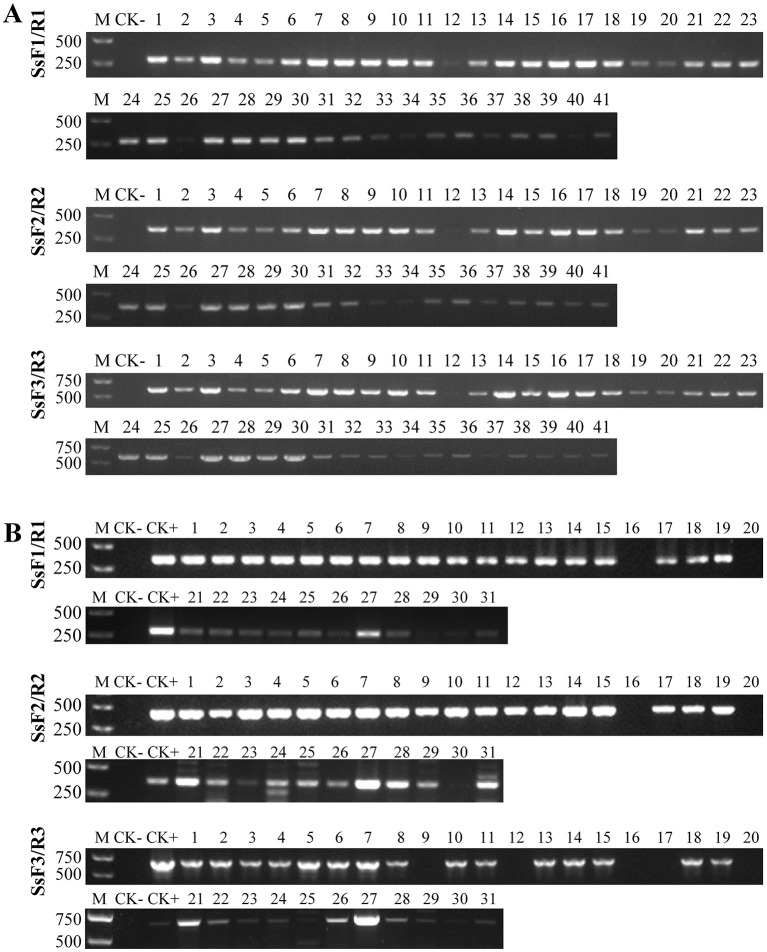 Figure 5
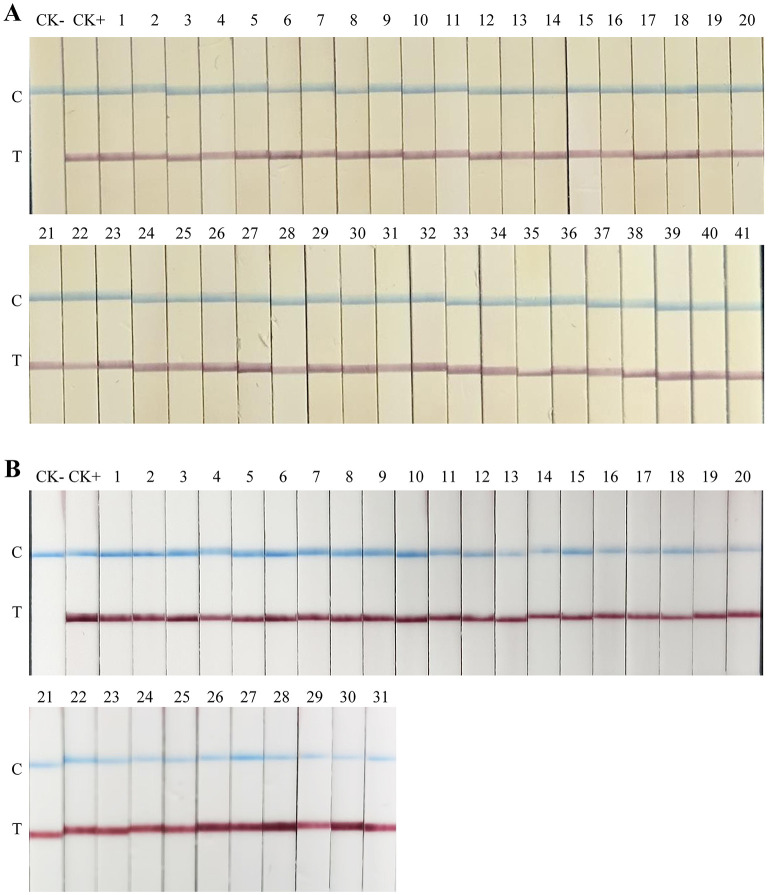 Figure 6
Peer Reviews
No public reviews on file for this paper yet. If you reviewed it on a platform where reviews are public (OpenReview, ICLR, NeurIPS, ICML), you can paste yours below so the community can read it here.
Videos
No videos yet. Explain this paper in a talk, walkthrough, or lecture? Add one.
Taxonomy
TopicsPlant Disease Resistance and Genetics · Fungal Plant Pathogen Control · Plant Pathogens and Resistance