The social context in bark beetle – fungus bioassays: a case study in European fir engraver bark beetles and their fungal associates
Sifat Munim Tanin, Jon Andreja Nuotclà, Peter H. W. Biedermann

TL;DR
This study examines how the social context affects the behavior of European fir engraver beetles when interacting with fungi, identifying key fungal species and highlighting the importance of considering beetle sex in bioassays.
Contribution
The study introduces a two-tier bioassay and demonstrates the impact of social context and beetle sex on fungal cue responses in Pityokteines beetles.
Findings
Pityokteines beetles responded more to physical contact with fungi than to volatiles alone.
Geosmithia sp. and Ophiostoma piceae were attractive to beetles, while Graphilbum fragrans repelled them.
Same-sex beetle groups showed the strongest response to fungal cues, while mixed-sex groups showed the weakest.
Abstract
Certain species of bark beetles (Curculionidae: Scolytinae) are among the most aggressive herbivorous forest insects due to their mass aggregation behavior and symbiosis with filamentous fungi. These characteristics help them overwhelm the natural defenses of the healthy trees they attack, and consequently, they are classified as primary pest species. Despite their important role in the beetles’ success, the community of fungal symbionts and their key mutualist taxa are only well understood for a few symbionts in a small number of bark beetle species. Recent developments have shown that key mutualists can be identified using in vitro olfactory or gustatory bioassays. However, these assays have only tested mixed-sex groups of beetles. This introduces potential biases compared to individual assays due to the known tendency of these beetles to aggregate. This study focuses on the poorly…
Genes, proteins, chemicals, diseases, species, mutations and cell lines named across the full text — each resolved to its canonical identifier and authoritative record.
Click any figure to enlarge with its caption.
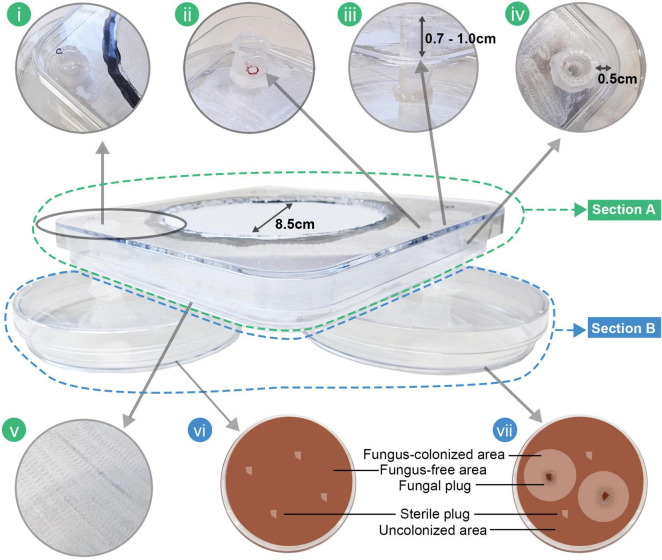 Figure 1
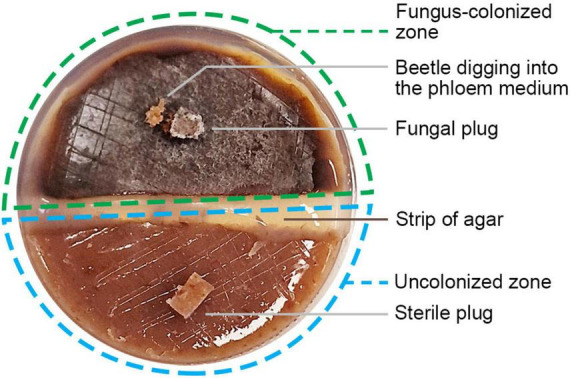 Figure 2
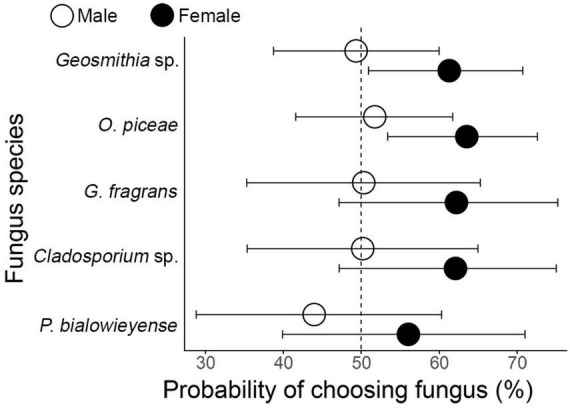 Figure 3
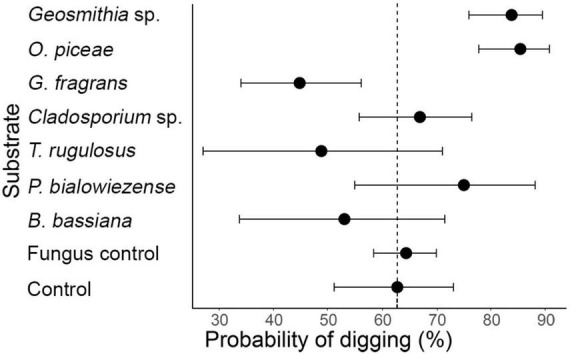 Figure 4
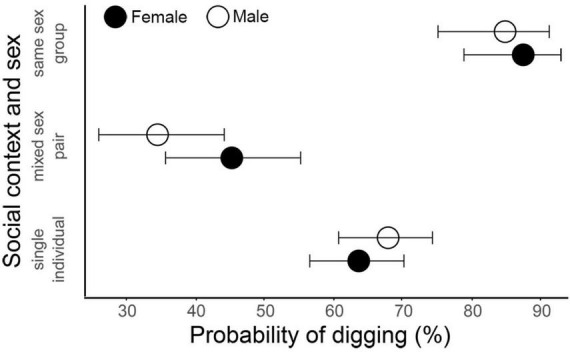 Figure 5
Peer Reviews
No public reviews on file for this paper yet. If you reviewed it on a platform where reviews are public (OpenReview, ICLR, NeurIPS, ICML), you can paste yours below so the community can read it here.
Videos
No videos yet. Explain this paper in a talk, walkthrough, or lecture? Add one.
Taxonomy
TopicsForest Insect Ecology and Management · Plant and Fungal Interactions Research · Forest Ecology and Biodiversity Studies