Effectiveness and Safety of STYLAGE® L Lidocaine in the Treatment of Nasolabial Folds (NICE Study): A Randomized, Double-Blind, Split-Face Controlled Study
Sophie Converset-Viethel, Magdalena Dobosz, Martine Baspeyras, Kamila Skretkowicz-Szarmach, Kai-Uwe Schlaudraff

TL;DR
This study compared the effectiveness and safety of two hyaluronic acid fillers for reducing nasolabial folds, finding them to be similarly effective and well-tolerated.
Contribution
Demonstrated non-inferiority of STYLAGE® L Lidocaine compared to Juvéderm® ULTRA 3 in treating nasolabial folds.
Findings
Non-inferiority of STYLAGE® L Lidocaine to Juvéderm® ULTRA 3 was confirmed at 6 months.
Both treatments showed comparable reductions in nasolabial fold depth and high patient satisfaction.
Low pain and good tolerance were reported for both fillers over 12 months.
Abstract
Prominent nasolabial folds (NLFs) are a typical manifestation of aging. Hyaluronic acid (HA)-based injectable fillers are commonly used for correction. The NICE Study primarily evaluated non-inferiority of STYLAGE® L Lidocaine (STYL-L), a cross-linked HA filler with lidocaine, versus the similar product Juvéderm® ULTRA 3 (JUV-3) in correcting moderate to severe NLFs. This was a double-blind, randomized, controlled, within-subject (split-face) study with 12 months follow-up. The primary endpoint was mean change in Wrinkle Severity Rating Scale (WSRS) score from baseline to 6 months after treatment initiation. Secondary endpoints included differences in NLF depth using interference fringe projection profilometry, Global Aesthetic Improvement Scale (GAIS), subject satisfaction, pain during injection, and tolerance. Of the 50 subjects randomized, 47 were analyzed. In the primary endpoint…
Genes, proteins, chemicals, diseases, species, mutations and cell lines named across the full text — each resolved to its canonical identifier and authoritative record.
Click any figure to enlarge with its caption.
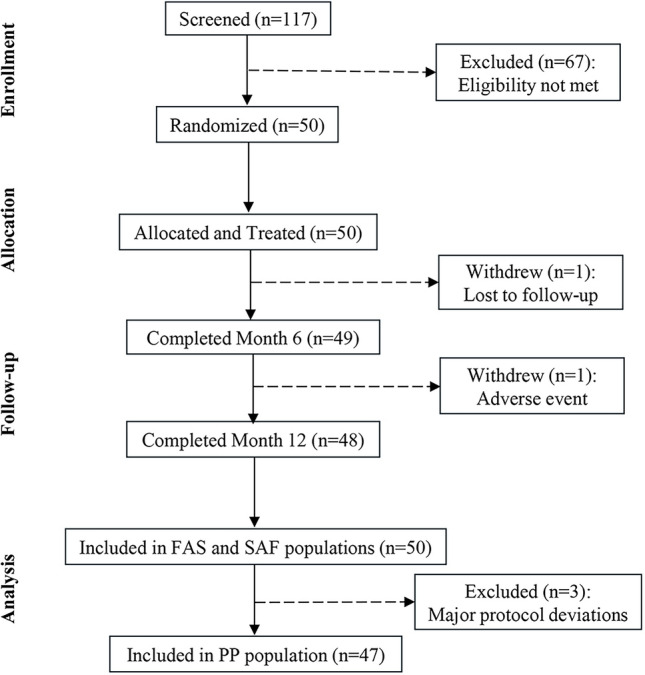 Figure 1
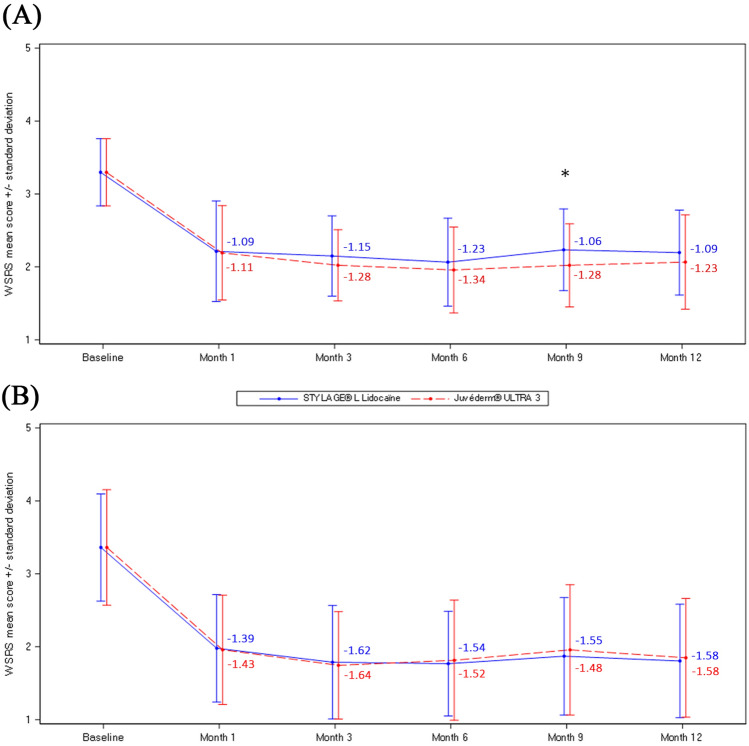 Figure 2
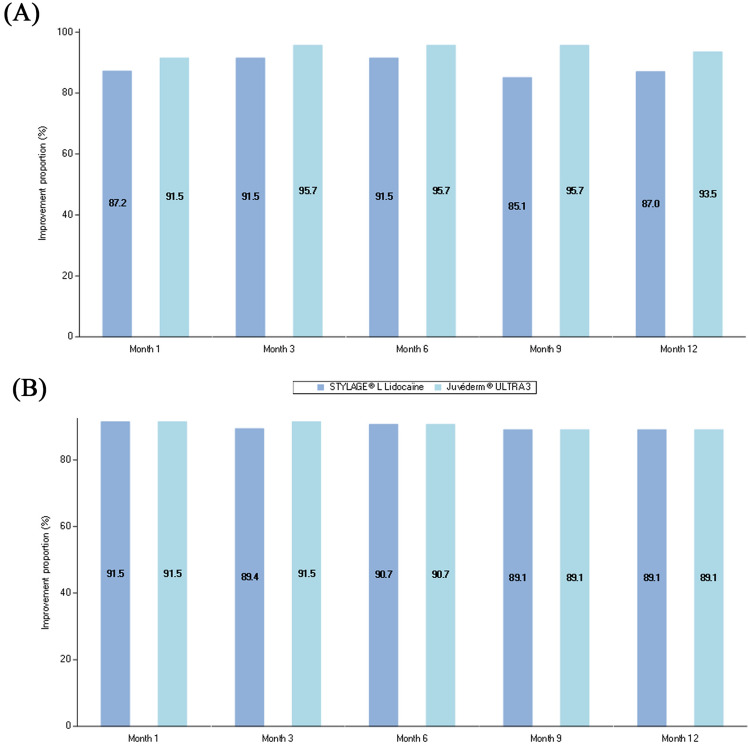 Figure 3
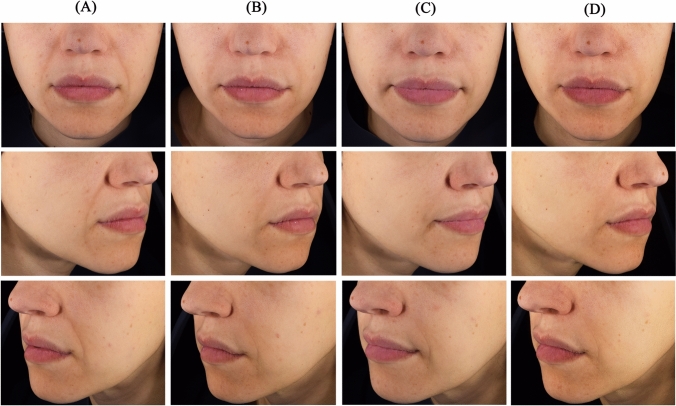 Figure 4
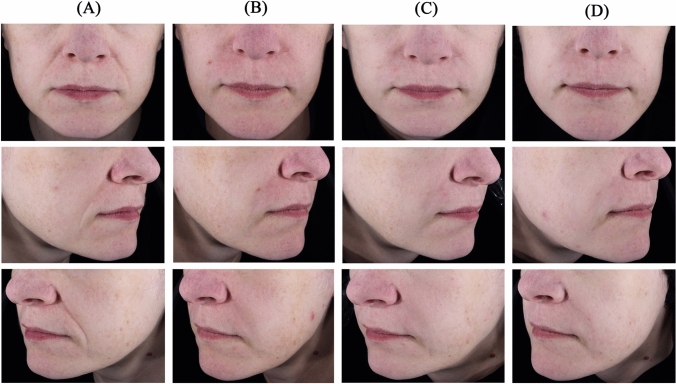 Figure 5
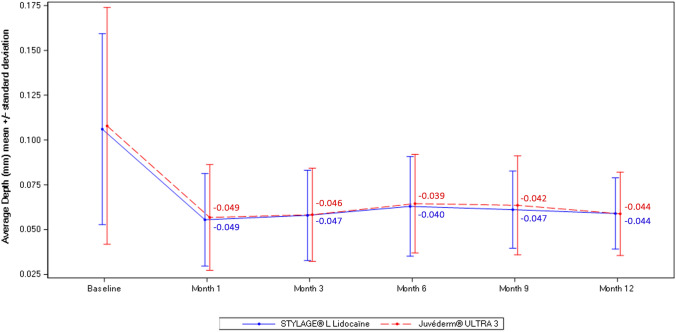 Figure 6
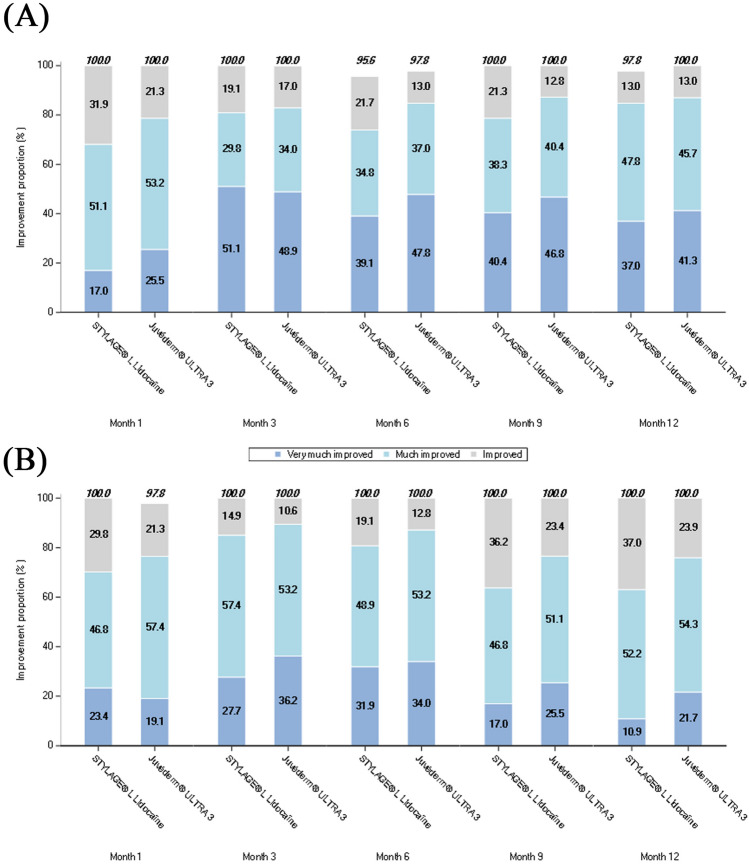 Figure 7
Peer Reviews
No public reviews on file for this paper yet. If you reviewed it on a platform where reviews are public (OpenReview, ICLR, NeurIPS, ICML), you can paste yours below so the community can read it here.
Videos
No videos yet. Explain this paper in a talk, walkthrough, or lecture? Add one.
Taxonomy
TopicsFacial Rejuvenation and Surgery Techniques · Botulinum Toxin and Related Neurological Disorders · Dermatologic Treatments and Research