Aberrant right posterior hepatic artery originating from the gastroduodenal artery with a concomitant replaced left hepatic artery: a rare clinical variant
Murat Emre Reis, Yavuz Selim Angın, Orxhan Ulfanov, Murat Ulaş, Mehmet Kılıç, Elif Gündoğdu

TL;DR
This paper reports a rare variation in liver blood vessels that could impact surgical outcomes.
Contribution
The study identifies a rare hepatic arterial variant involving an aberrant right posterior artery and a replaced left artery.
Findings
An aberrant right posterior hepatic artery originated from the gastroduodenal artery.
A replaced left hepatic artery was also present in the case.
Such variants are critical to recognize during pancreatic surgery to avoid complications.
Abstract
Variations in the hepatic arterial system, observed in up to 22% of the population, significantly influence the outcomes of hepatobiliary and pancreatic procedures. This study describes an extremely rare variant involving an aberrant right posterior hepatic artery (aRPHA) originating from the gastroduodenal artery (GDA) alongside a replaced left hepatic artery (LHA). Awareness of such variants is critical during pancreaticoduodenectomy to prevent ischemic complications.
Genes, proteins, chemicals, diseases, species, mutations and cell lines named across the full text — each resolved to its canonical identifier and authoritative record.
Click any figure to enlarge with its caption.
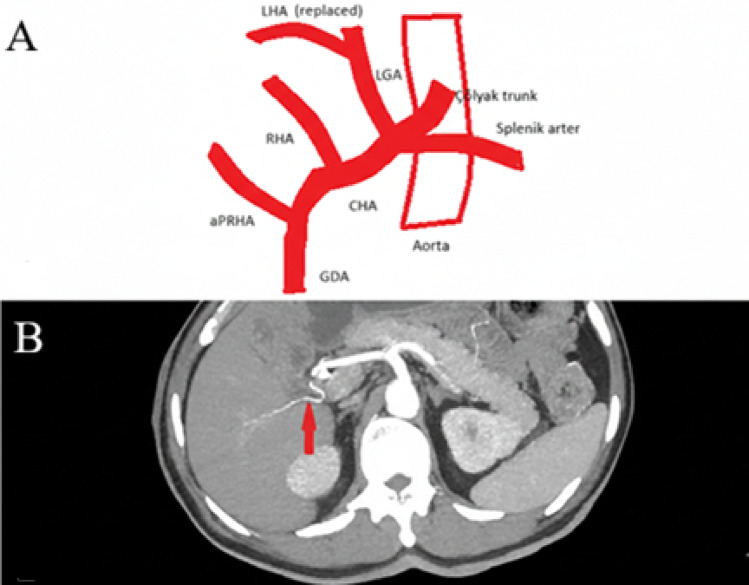 Figure 1
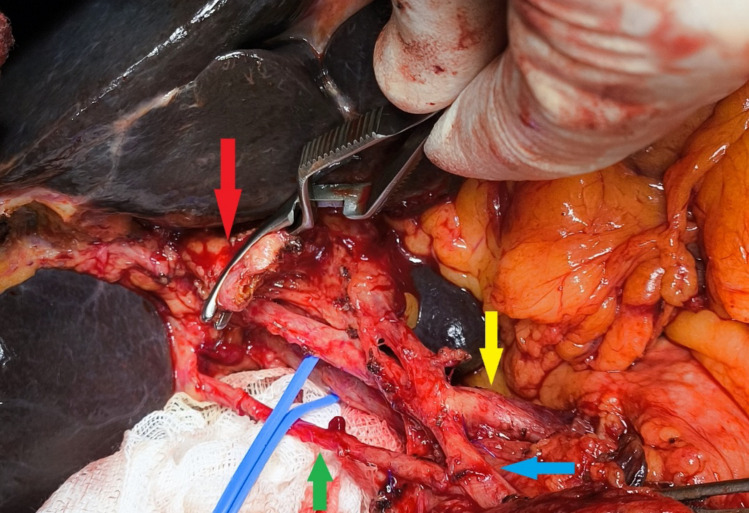 Figure 2
Peer Reviews
No public reviews on file for this paper yet. If you reviewed it on a platform where reviews are public (OpenReview, ICLR, NeurIPS, ICML), you can paste yours below so the community can read it here.
Videos
No videos yet. Explain this paper in a talk, walkthrough, or lecture? Add one.
Taxonomy
TopicsOrgan Transplantation Techniques and Outcomes · Gallbladder and Bile Duct Disorders · Liver physiology and pathology