Psychological resilience trajectories after the COVID-19 pandemic: the role of lifestyle and psychosocial factors in a cohort at increased alzheimer’s disease risk
Israel Contador, Müge Akinci, Eleni Palpatzis, Pablo Aguilar-Domínguez, Carme Deulofeu, Sherezade Fuentes-Julian, Karine Fauria, Carolina Minguillón, Oriol Grau-Rivera, Gonzalo Sánchez-Benavides, Eider M. Arenaza-Urquijo

TL;DR
This study shows that physical activity, social interactions, and good sleep help older adults at risk of Alzheimer's maintain mental resilience during the pandemic.
Contribution
The study identifies lifestyle and psychosocial factors that mediate psychological resilience through reduced perceived stress during the pandemic.
Findings
Most participants (66.1%) showed psychological resilience during the pandemic.
Physical activity, social interactions, and sleep duration were linked to better resilience.
Perceived stress mediated the relationship between these factors and resilience.
Abstract
This longitudinal cohort study evaluates whether lifestyle and psychosocial factors are associated with psychological resilience at two time points of COVID-19 pandemic. Moreover, we investigated the mediating role of perceived stress on these associations. A total of 677 cognitively unimpaired (CU) older adults at increased risk of Alzheimer’s disease (AD) completed the Hospital Anxiety and Depression Scale (HADS). Based on the Reliable Change Index (RCI), HADS trajectories were defined at two intervals: (1) pre-pandemic-confinement (follow-up = 2,28 ± 0,84 years); (2) confinement-post-confinement (follow-up = 1,49 ± 0,12 years). Then, 4 trajectory groups were defined: Psychological Resilience (n = 448, stable or improve at both intervals), Descending (n = 84, stable/improve [interval 1]-worsen [interval 2]), Recovery (n = 59, worsening [interval 1], improvement [interval 2] ) and…
Genes, proteins, chemicals, diseases, species, mutations and cell lines named across the full text — each resolved to its canonical identifier and authoritative record.
Click any figure to enlarge with its caption.
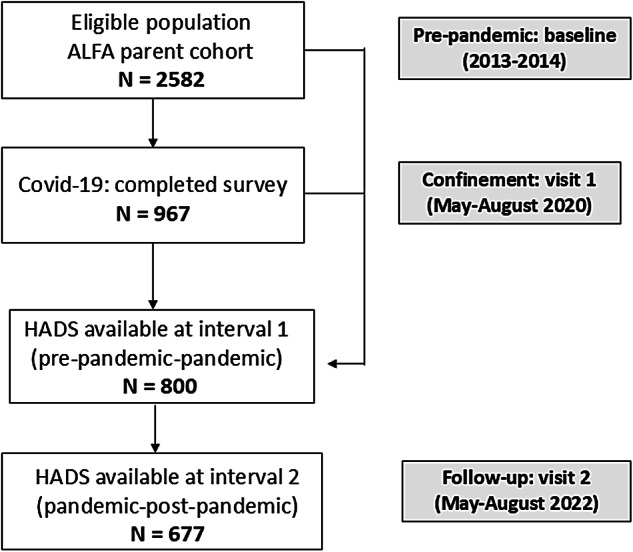 Figure 1
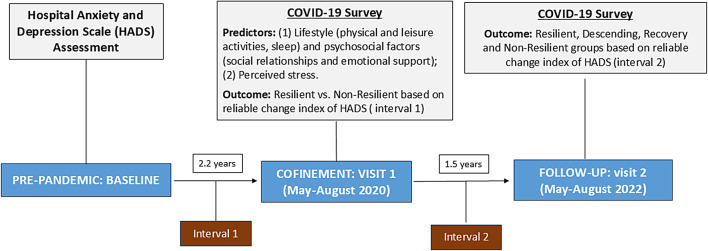 Figure 2
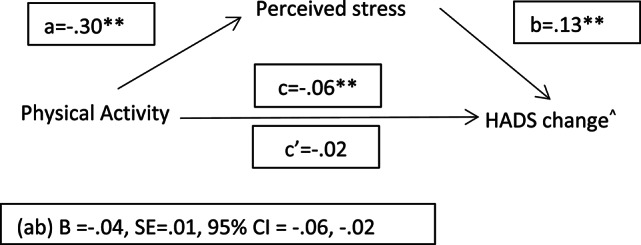 Figure 3
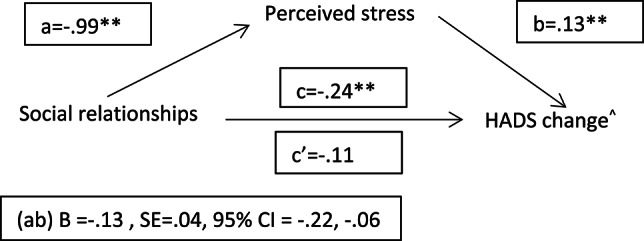 Figure 4
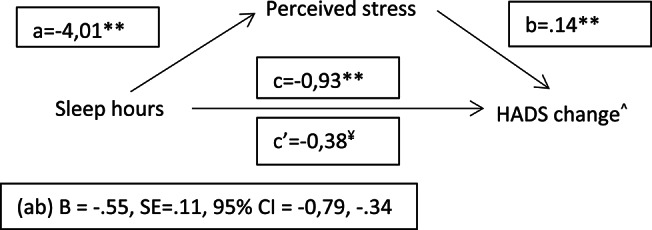 Figure 5
Peer Reviews
No public reviews on file for this paper yet. If you reviewed it on a platform where reviews are public (OpenReview, ICLR, NeurIPS, ICML), you can paste yours below so the community can read it here.
Videos
No videos yet. Explain this paper in a talk, walkthrough, or lecture? Add one.
Taxonomy
TopicsLong-Term Effects of COVID-19 · Resilience and Mental Health · Optimism, Hope, and Well-being