Exceptionally selective voltage-sensor trapping of NaV1.5 channels by Mg-protoporphyrin impairs cancer cell migration
Mahdi Jamili, Marwa Ahmed, Alisa Bernert, Johann Rößler, Guido Gessner, Roland Schönherr, Toshinori Hoshi, Stefan H. Heinemann

TL;DR
A compound called Mg-protoporphyrin selectively inhibits a sodium channel linked to cancer cell migration, offering a potential new anti-cancer drug target.
Contribution
Mg-protoporphyrin is identified as an exceptionally specific and potent inhibitor of the hNaV1.5 sodium channel in cancer cells.
Findings
Mg-protoporphyrin inhibits hNaV1.5 with an IC50 of 1 nM and does not affect other sodium channel isoforms.
Mg-protoporphyrin stabilizes the voltage sensor of hNaV1.5 in a deactivated state via residues E795 and N803.
Mg-protoporphyrin suppresses cell migration in breast and colorectal cancer cell lines.
Abstract
The human voltage-gated sodium channel hNaV1.5 is essential for cardiac excitability. Though underrecognized, NaV1.5 is also expressed in multiple cancers, promoting cell migration and malignancy. hNaV1.5 is a therapeutic target but limited pharmacological isoform specificity presents a risk of side effects via neuronal and skeletal muscle NaV channels. Here we identify Mg2+-protoporphyrin IX (MgPpIX), a Mg-containing tetrapyrrole and intermediate in chlorophyll biosynthesis, as a potent inhibitor of hNaV1.5 (IC50 of 1 nM). The activity profile of various metal protoporphyrins correlates with the electrostatic potential at the metal center of the compounds. MgPpIX is specific to hNaV1.5, as no inhibition of other hNaV isoforms (hNaV1.2, 1.4, 1.7, 1.8) was detected. A mutagenesis study and structural modeling reveals that MgPpIX stabilizes the domain-II voltage sensor in the deactivated…
Genes, proteins, chemicals, diseases, species, mutations and cell lines named across the full text — each resolved to its canonical identifier and authoritative record.
Click any figure to enlarge with its caption.
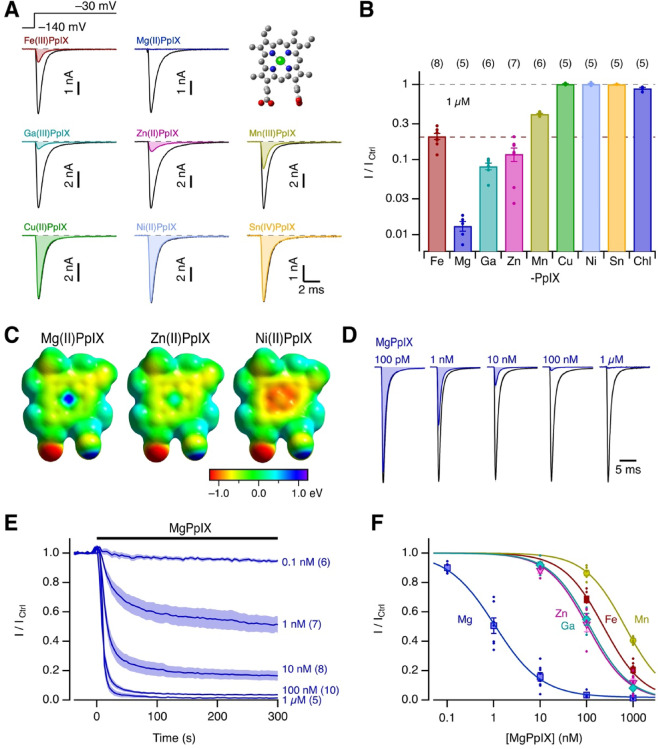 Figure 1
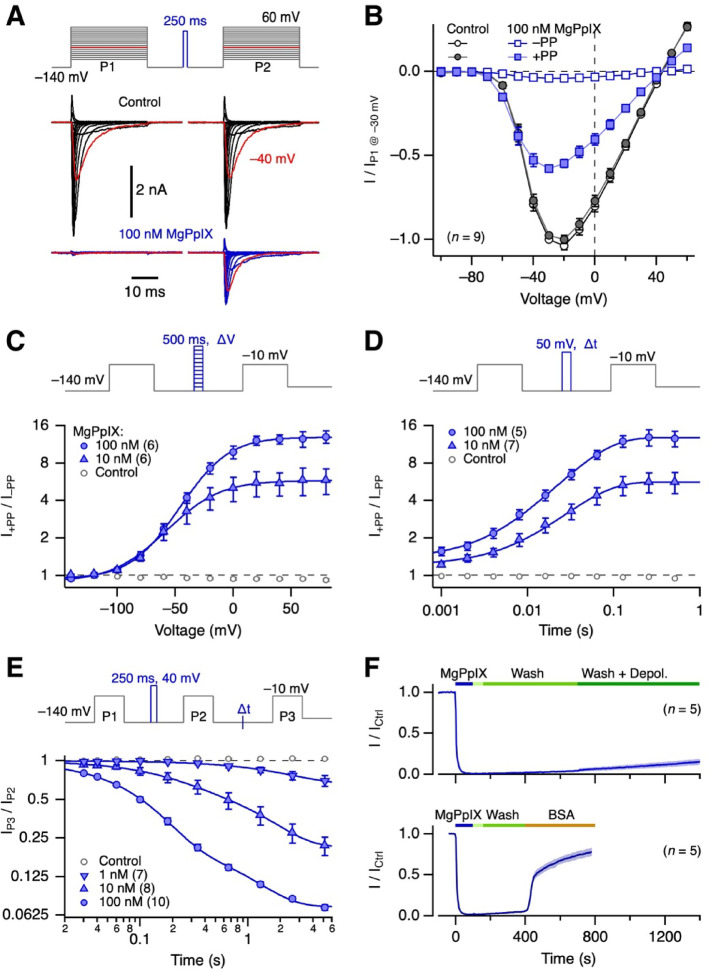 Figure 2
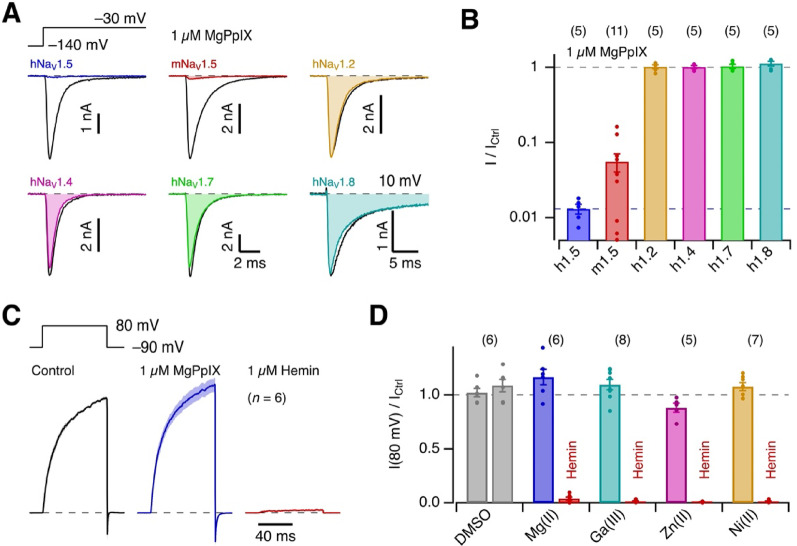 Figure 3
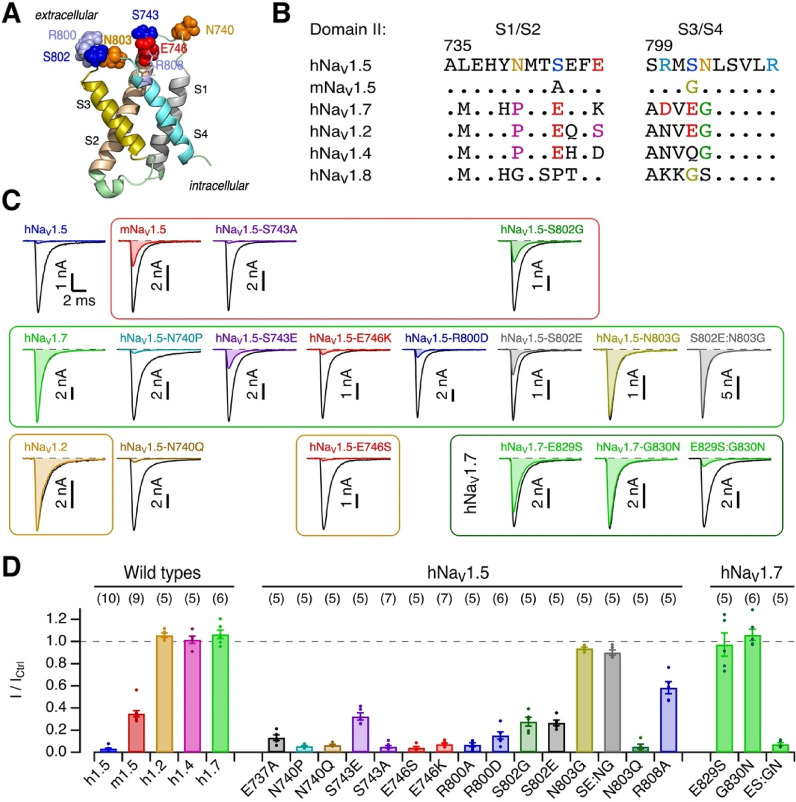 Figure 4
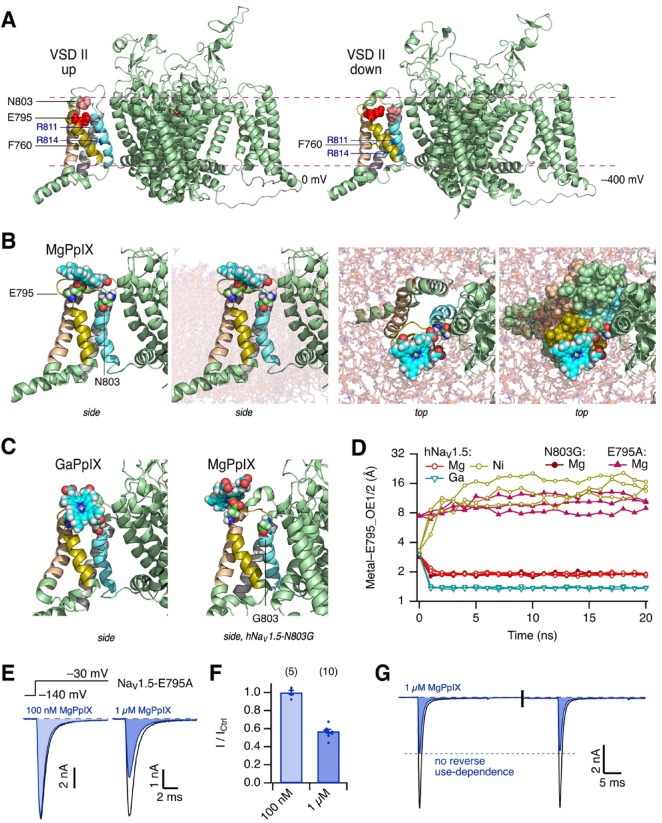 Figure 5
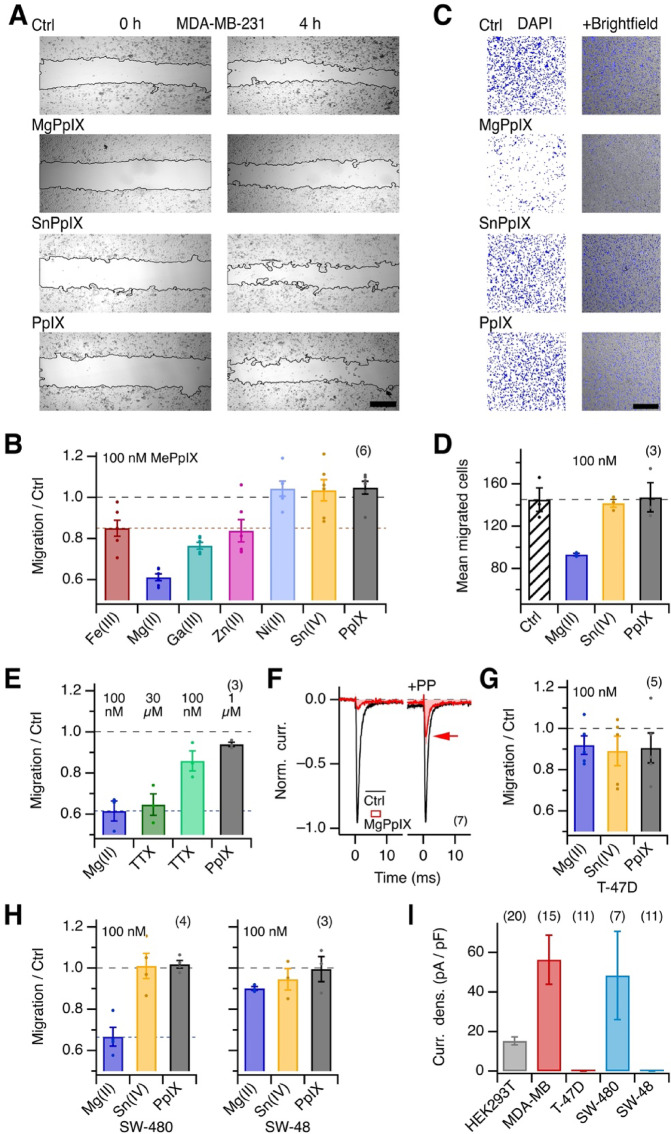 Figure 6
Peer Reviews
No public reviews on file for this paper yet. If you reviewed it on a platform where reviews are public (OpenReview, ICLR, NeurIPS, ICML), you can paste yours below so the community can read it here.
Videos
No videos yet. Explain this paper in a talk, walkthrough, or lecture? Add one.
Taxonomy
TopicsIon channel regulation and function · Ion Transport and Channel Regulation · Ion Channels and Receptors