Delphinidin modulates neuroinflammation and behavioral deficits in a Parkinson’s disease mouse model
A. Grotemeyer, S. Alexander, L. Frieß, J. Roewer, E. E. Bankoglu, M. Badr, J. Wu, H. Stopper, J. Volkmann, N. Roewer, C. W. Ip

TL;DR
Delphinidin, a plant compound, reduces brain inflammation in a mouse model of Parkinson’s disease but does not protect all affected brain cells.
Contribution
The study reveals delphinidin’s partial anti-inflammatory effects and a shift toward anti-inflammatory T cells in Parkinson’s disease.
Findings
Delphinidin reduced microglia activity and improved some motor behaviors in Parkinson’s mice.
CD8+CD122+ regulatory T cells increased in the substantia nigra, suggesting anti-inflammatory effects.
Despite these changes, delphinidin did not prevent the loss of dopamine-producing neurons.
Abstract
Neuroinflammation is deeply intertwined with dopaminergic (DA) neurodegeneration in Parkinson’s disease (PD). We tested whether delphinidin, an anthocyanidin with reported inflammasome/NF-κB modulatory activity, alters neuroinflammation and nigrostriatal integrity in a progressive AAV1/2-A53T α-synuclein (hαSYN) mouse model. Once-daily intraperitoneal delphinidin for nine weeks modestly ameliorated asymmetric forepaw use, attenuated the hαSYN-induced loss of striatal TH⁺ terminal density, and was associated with modest alterations in dopamine turnover, yet did not prevent the loss of DA neurons in the substantia nigra (SN). On the immunological level, delphinidin attenuated the innate immune response by reducing the number and activity of CD11b+ microglia in both the SN and striatum. In contrast, CD4+-mediated adaptive inflammation remained unchanged, while the number of CD8+ T cells…
Genes, proteins, chemicals, diseases, species, mutations and cell lines named across the full text — each resolved to its canonical identifier and authoritative record.
Click any figure to enlarge with its caption.
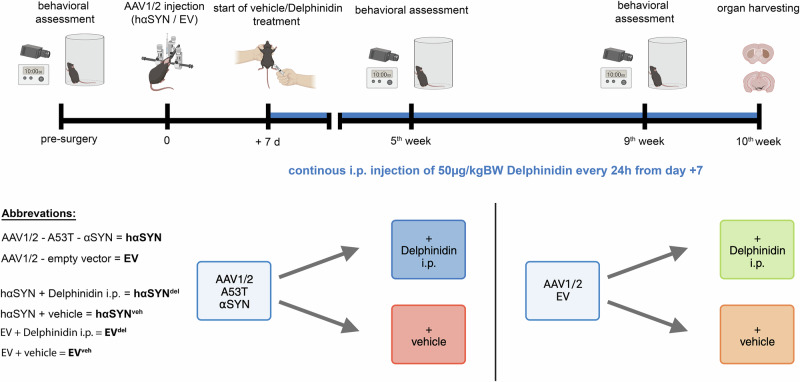 Figure 1
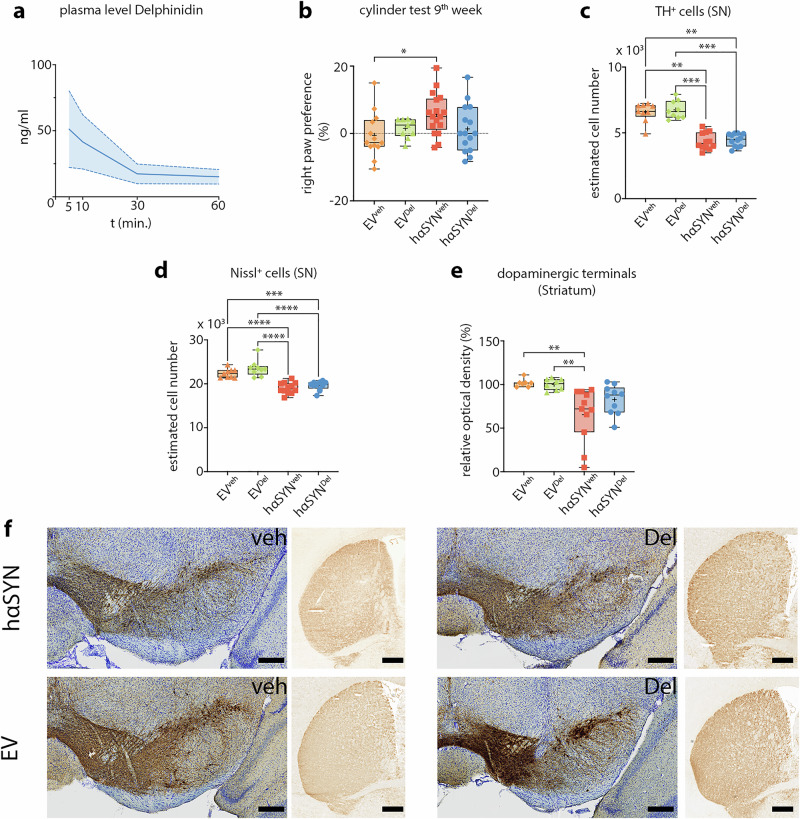 Figure 2
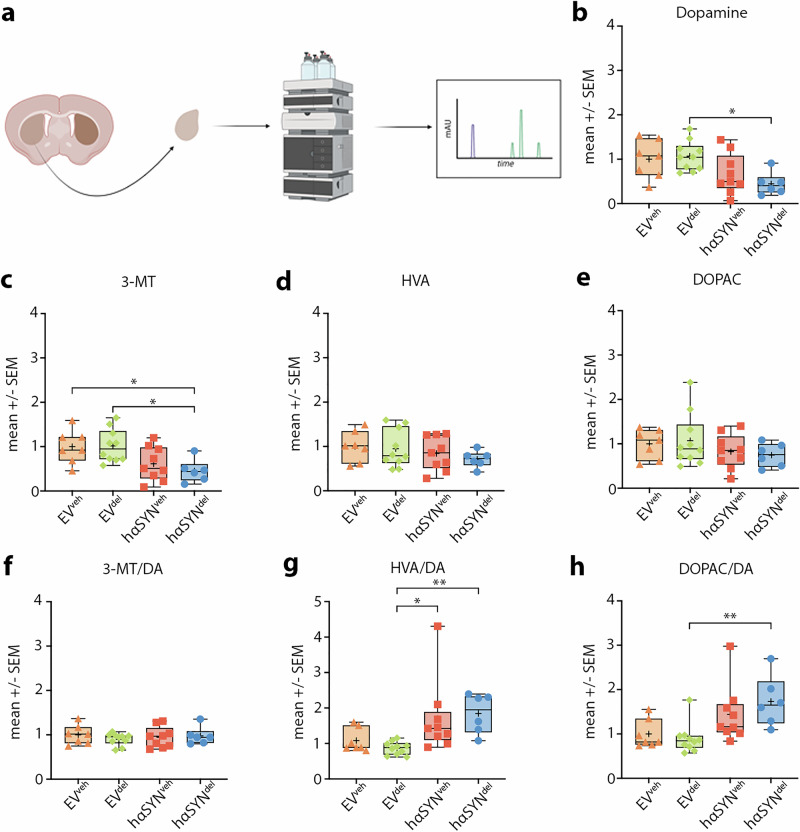 Figure 3
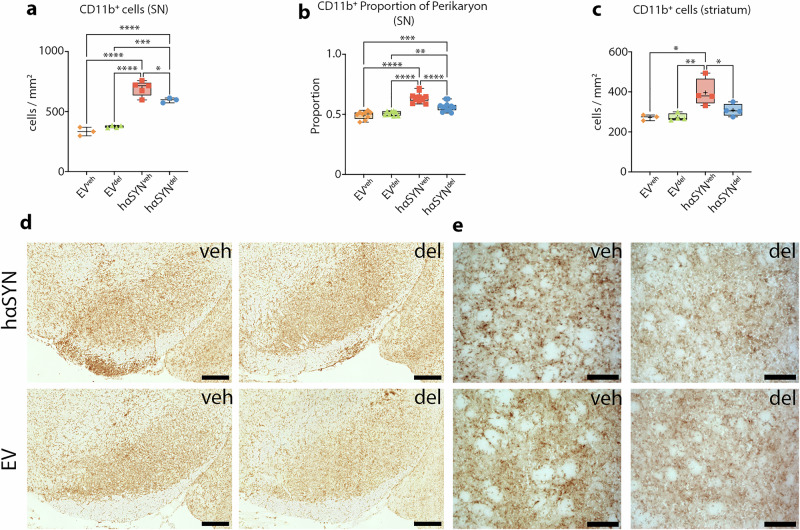 Figure 4
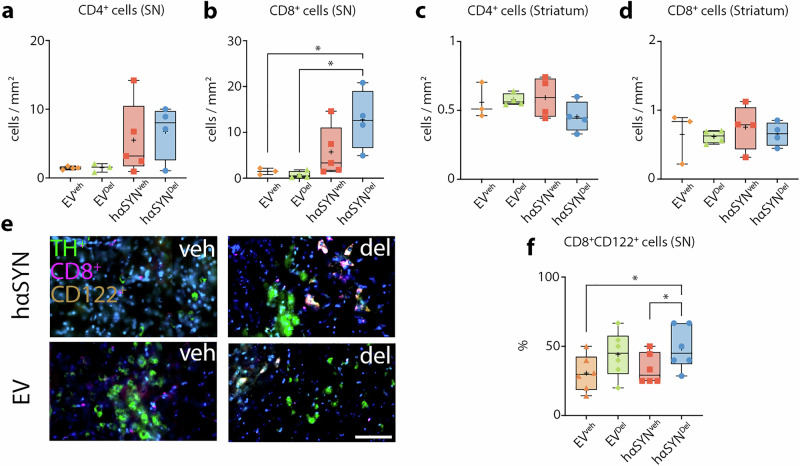 Figure 5
Peer Reviews
No public reviews on file for this paper yet. If you reviewed it on a platform where reviews are public (OpenReview, ICLR, NeurIPS, ICML), you can paste yours below so the community can read it here.
Videos
No videos yet. Explain this paper in a talk, walkthrough, or lecture? Add one.
Taxonomy
TopicsParkinson's Disease Mechanisms and Treatments · Neuroinflammation and Neurodegeneration Mechanisms · Tryptophan and brain disorders