Identifying psychological distress data available in nationally representative surveys: A scoping review and case study of Australian surveys
D. Varley, A. Henry, J. Halladay, A. Baillie, K. Keyes, T. Slade, C. Chapman, S. O’Dean, R. Visontay, L. Mewton, N. C. Newton, M. Teesson, M. Sunderland

TL;DR
This paper reviews Australian surveys measuring psychological distress, providing a database to help researchers find and use these datasets more efficiently.
Contribution
The novel contribution is a systematically compiled metadata database of psychological distress datasets in Australia, enabling easier data discovery and integration.
Findings
283 datasets from 41 studies were identified, with the K10 scale being the most commonly used distress instrument.
Surveys often included demographics and socioeconomic data but underrepresented youth, Indigenous people, and those with disabilities.
The metadata database promotes data sharing and can be replicated for other public health topics.
Abstract
Mental health data are crucial for understanding trends in psychological distress. This scoping review aimed to identify and describe surveys of representative samples of the Australian household population that measured psychological distress, and to provide a case study illustrating how datasets can be systematically summarized to assist researchers to more easily identify available datasets. We systematically searched PubMed and data archives for surveys state or nationally representative of the Australian household population that assessed psychological distress. We provide a searchable metadata database characterizing 283 identified datasets from 41 studies (25 cross-sectional, 16 longitudinal) conducted between 1989 and 2023. Thirty-nine psychological distress instruments were used, with the Kessler Psychological Distress scale (K10) [1] most common (n = 114 datasets). Surveys…
Genes, proteins, chemicals, diseases, species, mutations and cell lines named across the full text — each resolved to its canonical identifier and authoritative record.
Click any figure to enlarge with its caption.
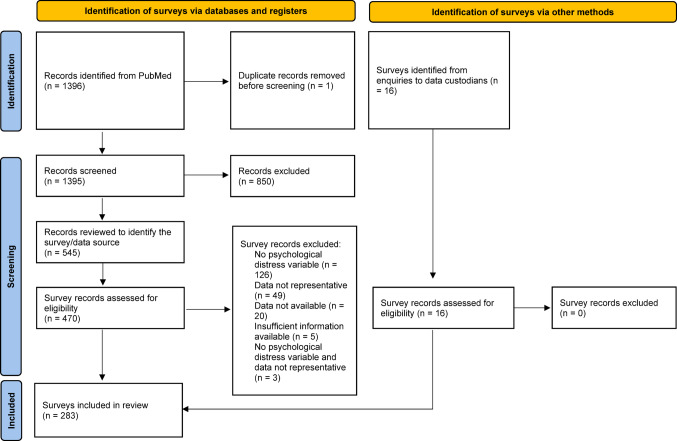 Figure 1
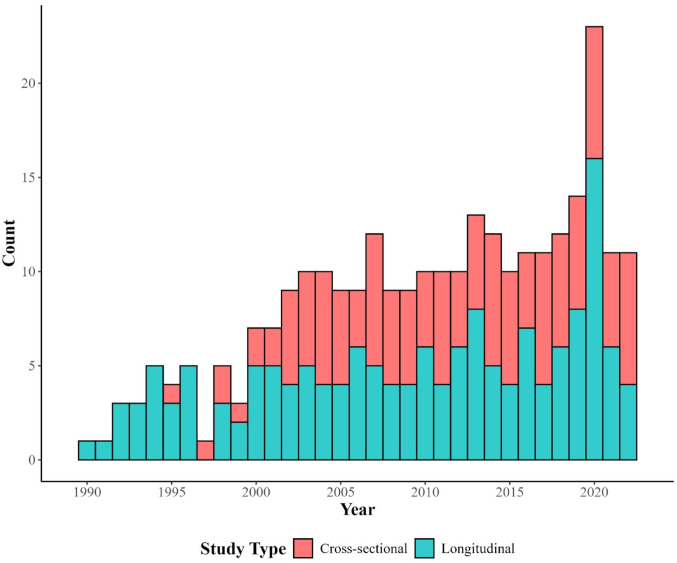 Figure 2
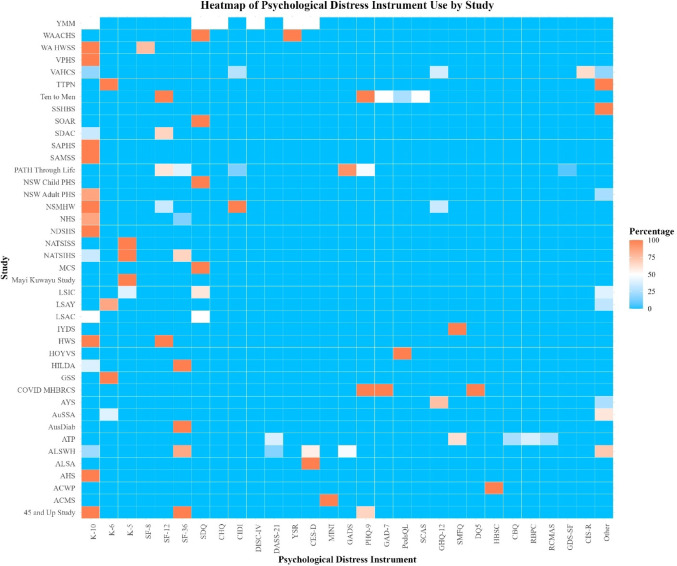 Figure 3
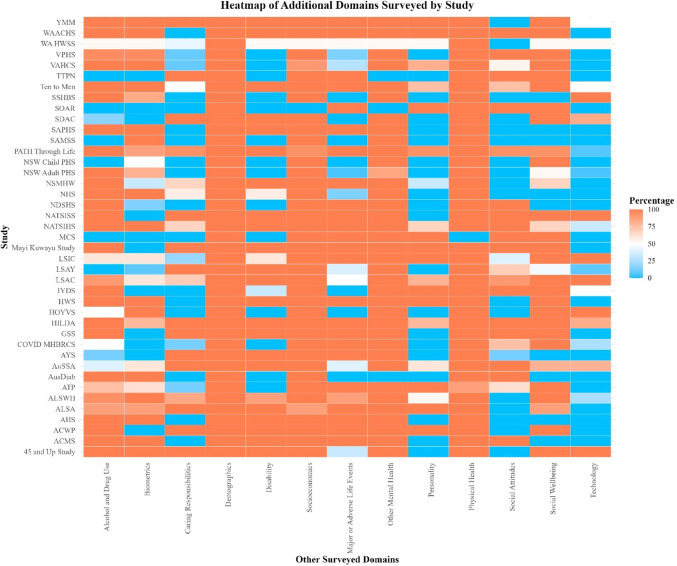 Figure 4
Peer Reviews
No public reviews on file for this paper yet. If you reviewed it on a platform where reviews are public (OpenReview, ICLR, NeurIPS, ICML), you can paste yours below so the community can read it here.
Videos
No videos yet. Explain this paper in a talk, walkthrough, or lecture? Add one.
Taxonomy
TopicsMental Health Treatment and Access · Health disparities and outcomes · Family Caregiving in Mental Illness