Effectiveness of high-sensitivity troponin I to predict cardiovascular events in chest trauma patients
Baptiste Milley, Xavier-Jean Taverna, Stanislas Abrard, Sophie Debord-Peguet, François-Xavier Jean, Régine Cartier, Anne-Claire Lukaszewicz, Pauline Pérèz

TL;DR
This study finds that high-sensitivity troponin I testing in chest trauma patients has limited value for predicting heart complications, with age and injury severity being better indicators.
Contribution
The study evaluates the predictive value of high-sensitivity troponin I in chest trauma patients and challenges its clinical utility in this specific population.
Findings
Initial high-sensitivity troponin I had moderate predictive value (AUROC 0.74) for cardiac complications.
Neither initial troponin I nor its change predicted complications in a multivariate model.
Age and SAPS II scores were stronger predictors of complications and mortality.
Abstract
Chest trauma accounts for nearly one-third of severe trauma cases and is associated with cardiac complications that increase morbidity and mortality. The utility of repeated high-sensitivity troponin I (hsTnI) testing in this context remains uncertain, particularly with the advent of ultra-sensitive assays. We conducted a retrospective cohort study of 1,749 intensive care patients with chest trauma who underwent hsTnI testing. Cardiac complications during intensive care hospitalisation and 30-day mortality were recorded. Predictive performance of initial hsTnI was assessed using receiver operating characteristic curve (ROC) analysis, and associations between hsTnI values (initial and dynamic changes) and complications were tested in a multivariate logistic regression model adjusted for age and severity (SAPS II Score). Cardiac complications occurred in 64 patients (3.7%), most…
Genes, proteins, chemicals, diseases, species, mutations and cell lines named across the full text — each resolved to its canonical identifier and authoritative record.
Click any figure to enlarge with its caption.
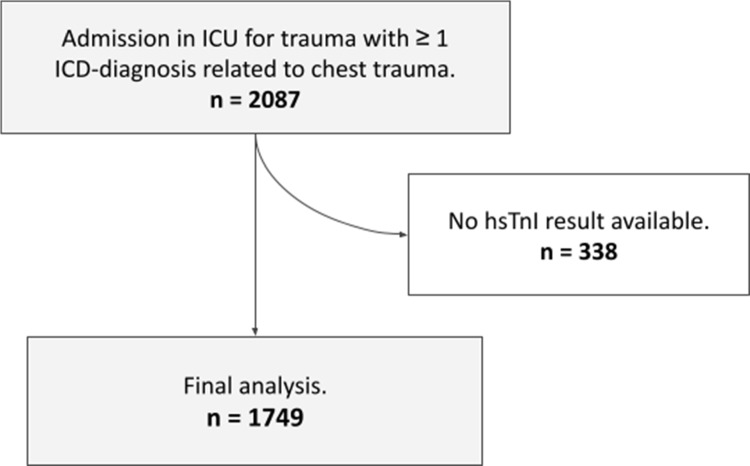 Figure 1
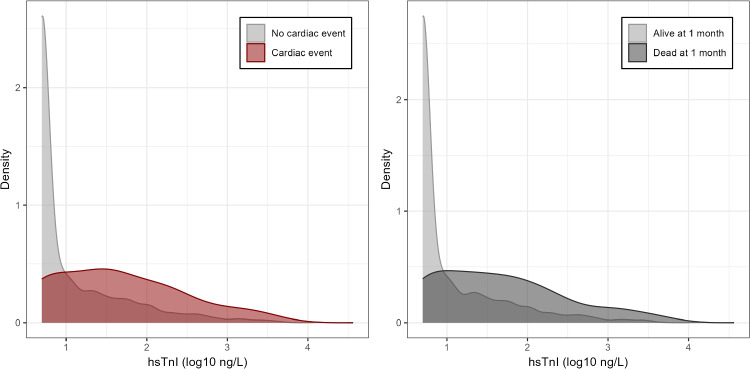 Figure 2
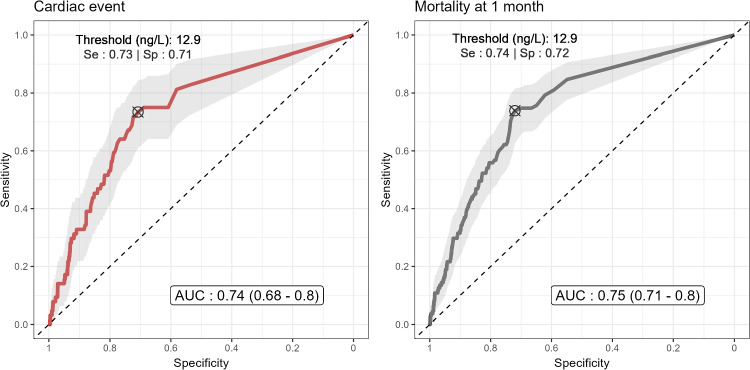 Figure 3
Peer Reviews
No public reviews on file for this paper yet. If you reviewed it on a platform where reviews are public (OpenReview, ICLR, NeurIPS, ICML), you can paste yours below so the community can read it here.
Videos
No videos yet. Explain this paper in a talk, walkthrough, or lecture? Add one.
Taxonomy
TopicsTrauma Management and Diagnosis · Acute Myocardial Infarction Research · Abdominal Trauma and Injuries