Fuzzy weighted natural nearest neighbor based density peak clustering
Mingzhao Wang, Xiangzhong Chen, Juanying Xie

TL;DR
This paper introduces a new clustering algorithm that improves upon existing methods by reducing sensitivity to parameters and enhancing accuracy on datasets with varying cluster densities.
Contribution
The novel FWNNN-DPC algorithm uses fuzzy weighted natural nearest neighbors to enhance clustering accuracy without arbitrary parameters.
Findings
FWNNN-DPC outperforms DPC and its variants on benchmark datasets.
The new algorithm reduces bias in cluster center selection for mixed density datasets.
FWNNN-DPC performs better than DBSCAN and K-means in experiments.
Abstract
DPC (density peaks clustering) algorithm has garnered widespread attention due to its novelty and superior performance. However, it is sensitive to the arbitrary cutoff distance, and its very efficient assignment strategy is prone to leading “domino effect”. Although FKNN-DPC and other variants addressed DPC’s limitations somewhat, the arbitrarily fixed number of neighbors to calculate the local density of a point will bring the bias, particularly for the dataset containing dense and sparse clusters simultaneously, resulting in the bias to cluster centers and that in the final clustering. To remedy these limitations, this paper proposes a novel Fuzzy Weighted Natural Nearest Neighbor based parameter-free Density Peak clustering algorithm named FWNNN-DPC. It proposes a novel local density of a point utilizing its natural nearest neighbors by assuming that there is at least one “true…
Genes, proteins, chemicals, diseases, species, mutations and cell lines named across the full text — each resolved to its canonical identifier and authoritative record.
Click any figure to enlarge with its caption.
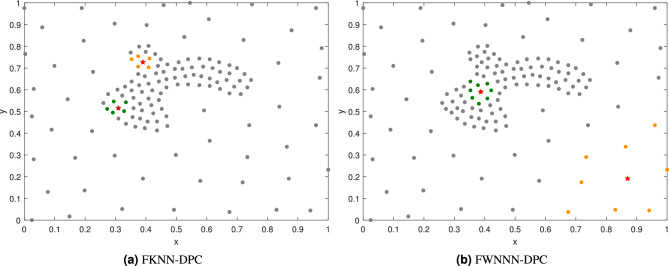 Figure 1
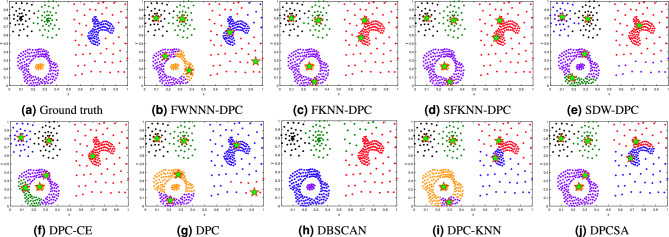 Figure 2
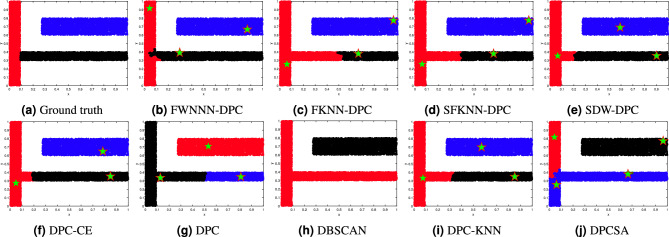 Figure 3
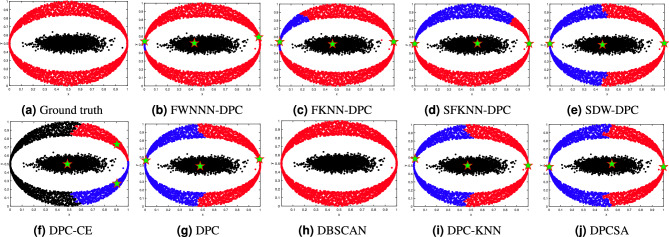 Figure 4
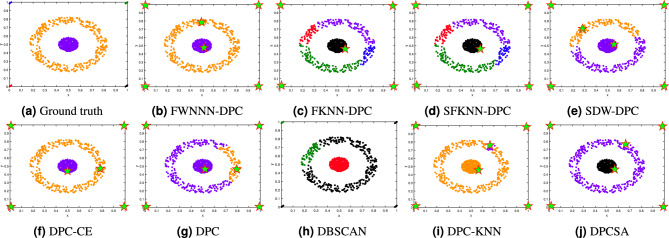 Figure 5
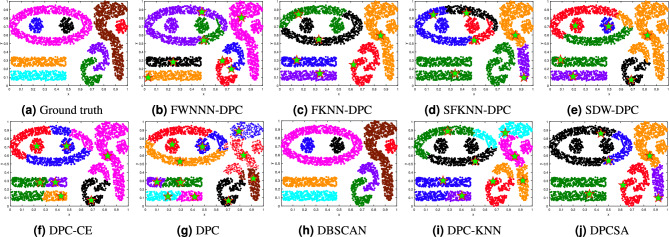 Figure 6
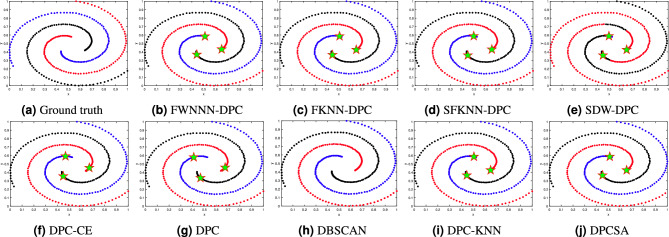 Figure 7
 Figure 8
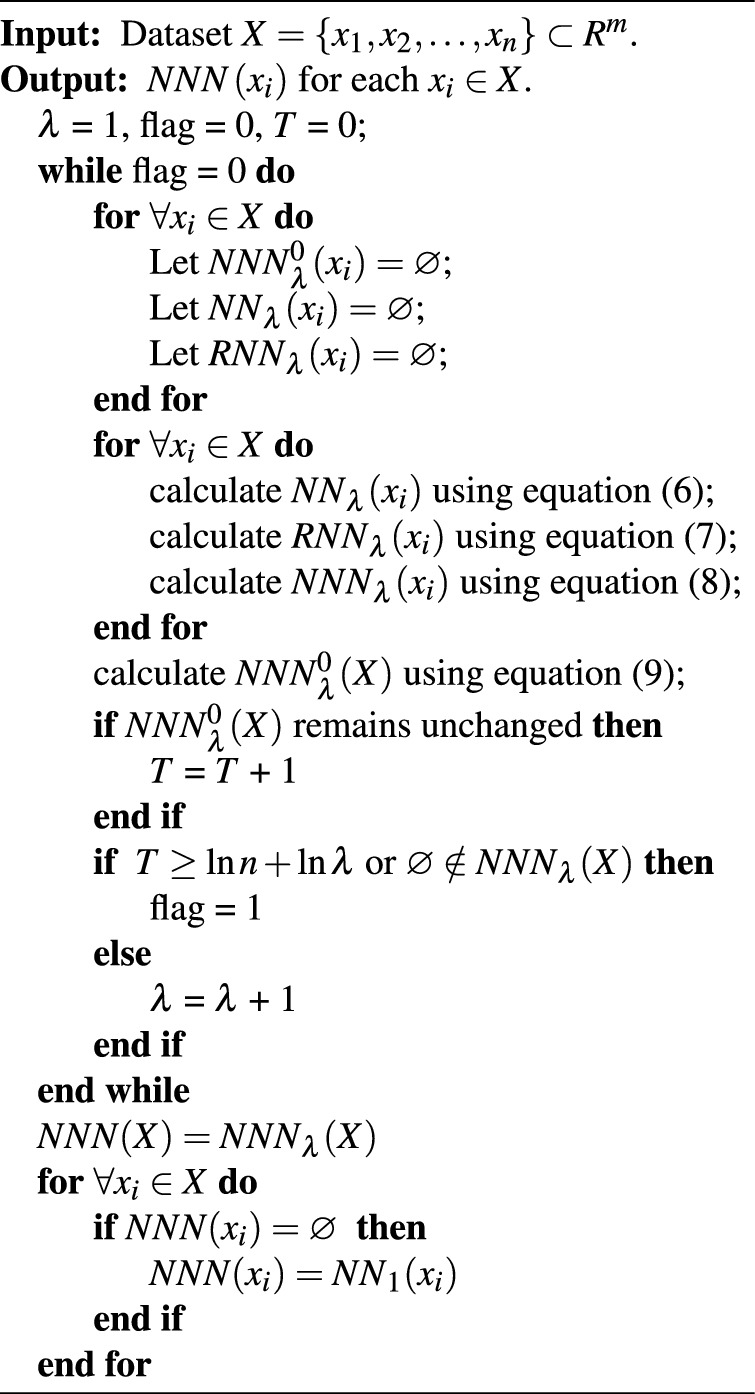 Figure 9
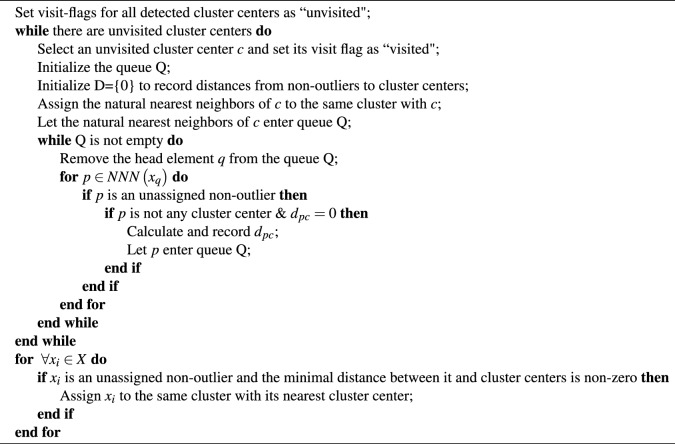 Figure 10
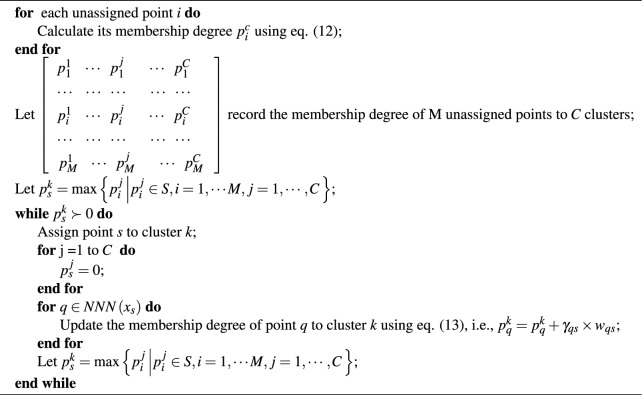 Figure 11
Peer Reviews
No public reviews on file for this paper yet. If you reviewed it on a platform where reviews are public (OpenReview, ICLR, NeurIPS, ICML), you can paste yours below so the community can read it here.
Videos
No videos yet. Explain this paper in a talk, walkthrough, or lecture? Add one.
Taxonomy
TopicsAdvanced Clustering Algorithms Research · Face and Expression Recognition · Bayesian Methods and Mixture Models