Computational analysis of CCN1 as a druggable target predicts interactions with bioactive compounds
Roudy Bou Francis, Racha Kerek, Mohamad Rima

TL;DR
This paper uses computational methods to identify potential drug targets on the CCN1 protein, suggesting it could be a viable target for treating aging and disease.
Contribution
The study is the first to computationally demonstrate CCN1's druggability and identify candidate small molecules for modulating its activity.
Findings
Multiple high-confidence druggable pockets were identified in CCN1 using AlphaFold 3 and Fpocket.
Metformin showed the highest ligand affinity with a strong SwissDock AC score of -200.26.
Ligand interactions remained stable across CCN1 variants and after amino acid deletions, indicating genetic robustness.
Abstract
In silico druggability assessment helps shorten early drug discovery by identifying small molecules worth experimental testing as potential protein modulators. CCN1 is a multifunctional protein involved in various physiological processes and its dysregulation has been implicated in pathological conditions such as aging, fibrosis, inflammation, and cancer. The diverse, and sometimes contradictory, functions of CCN1 make it an important candidate for druggability assessment. In this study, we evaluated its druggability by predicting its 3D structure using AlphaFold 3, identifying binding pockets with Fpocket, and assessing ligand affinity with SwissDock. Our integrative in silico workflow identified multiple high-confidence druggable pockets within the CCN1 protein, with the top-scoring site located between the thrombospondin type 1 (TSP-1) and C-terminal cystine knot (CTCK) domains.…
Genes, proteins, chemicals, diseases, species, mutations and cell lines named across the full text — each resolved to its canonical identifier and authoritative record.
Click any figure to enlarge with its caption.
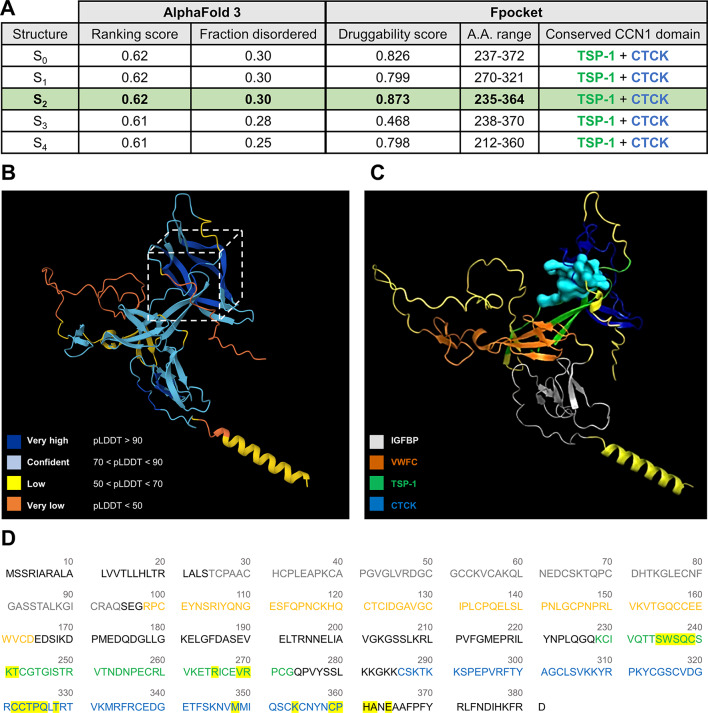 Figure 1
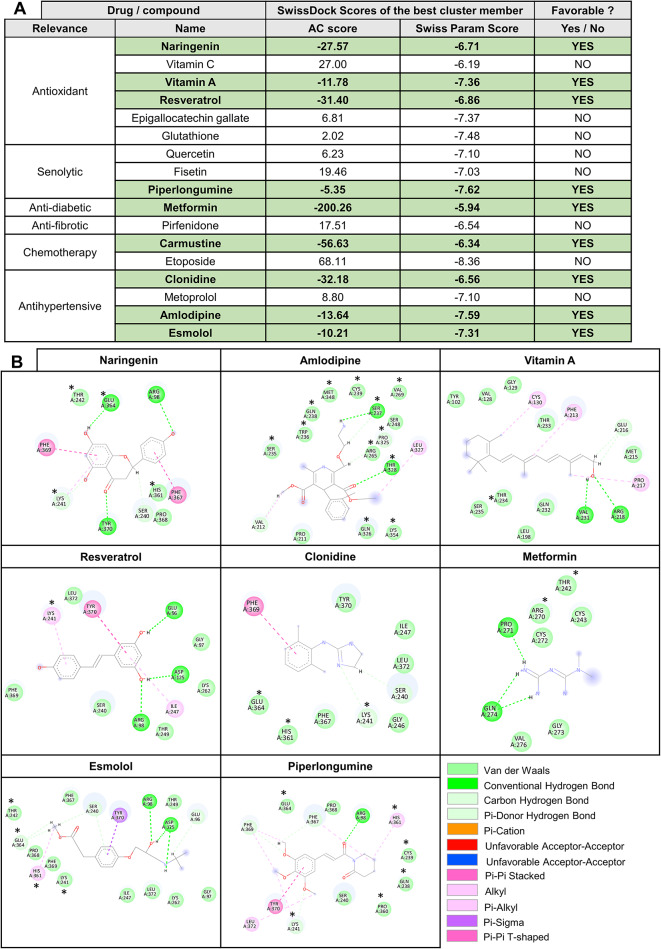 Figure 2
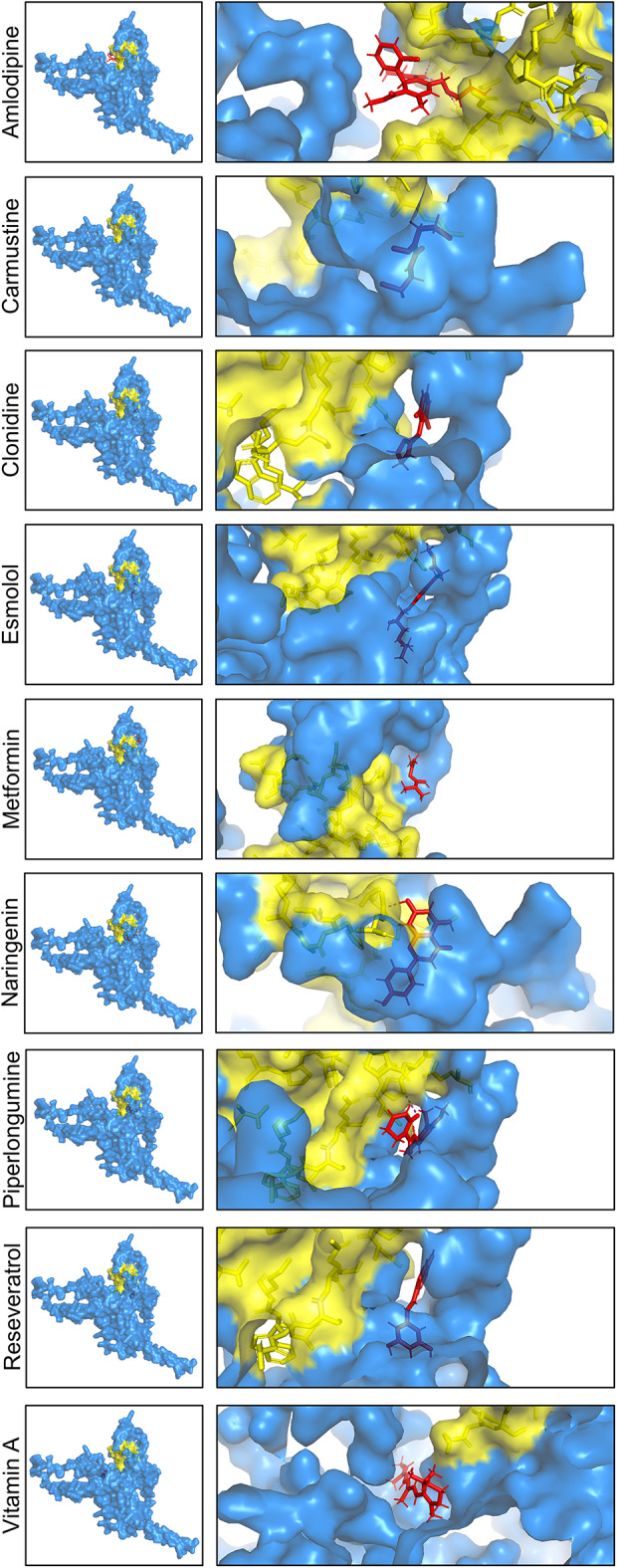 Figure 3
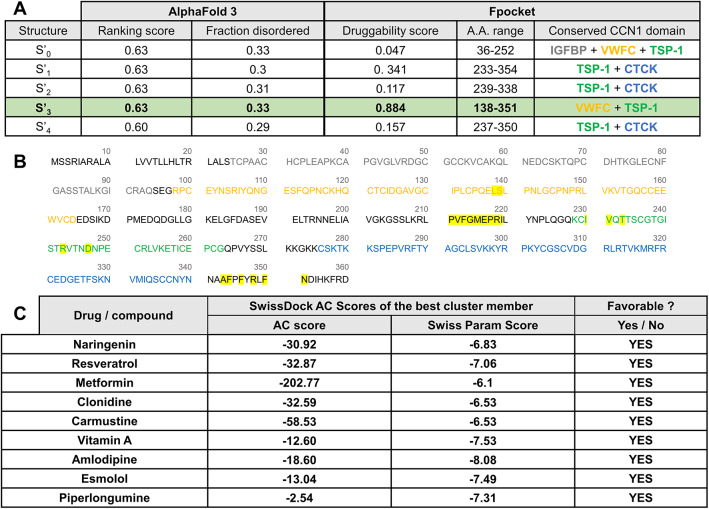 Figure 4
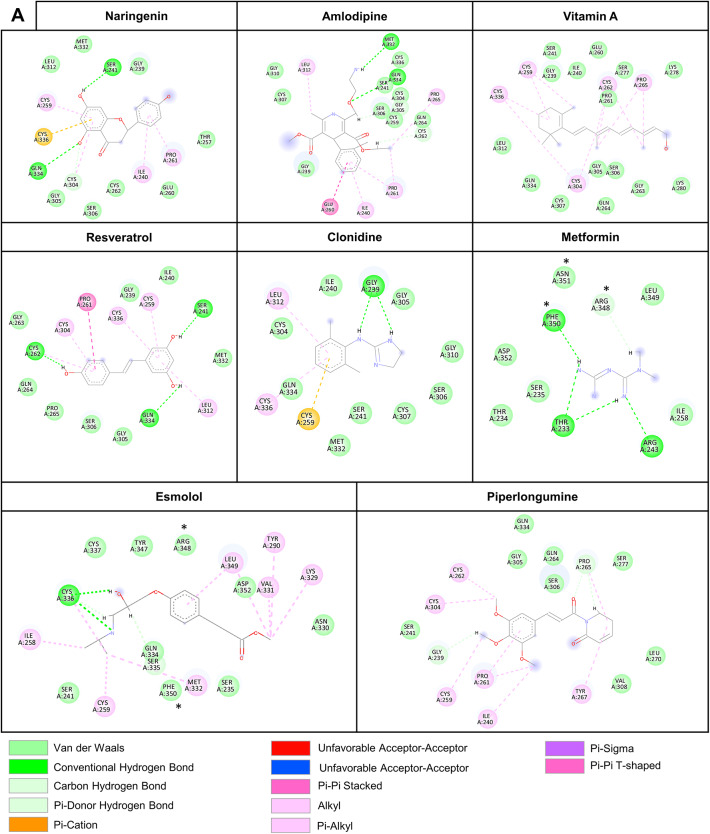 Figure 5
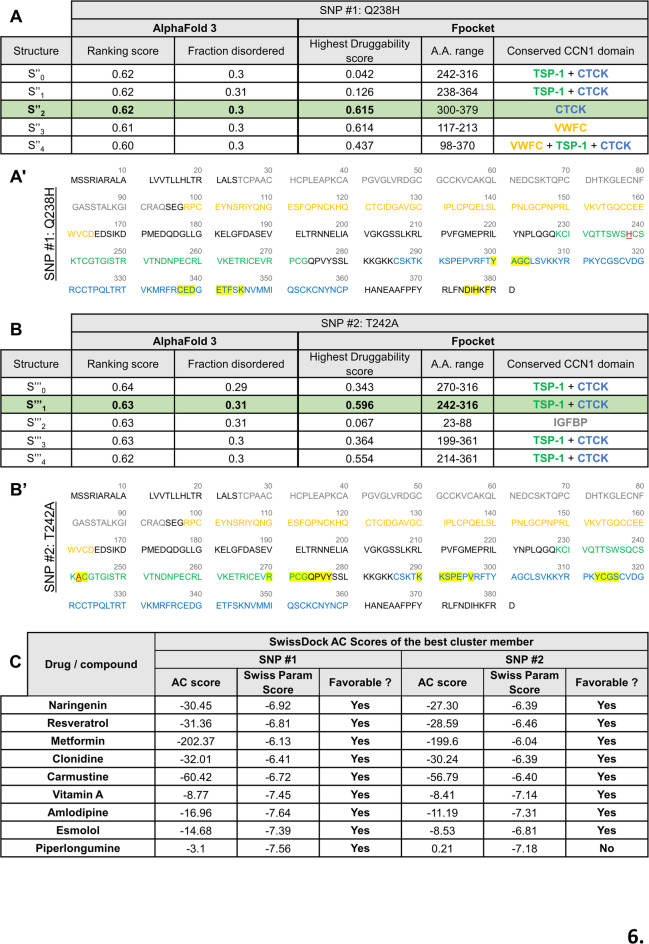 Figure 6
Peer Reviews
No public reviews on file for this paper yet. If you reviewed it on a platform where reviews are public (OpenReview, ICLR, NeurIPS, ICML), you can paste yours below so the community can read it here.
Videos
No videos yet. Explain this paper in a talk, walkthrough, or lecture? Add one.
Taxonomy
TopicsConnective Tissue Growth Factor Research · GDF15 and Related Biomarkers · S100 Proteins and Annexins