Stochastic phenotypic switching arises in response to directional selection in experimentally evolved multicellular yeast
Beatriz Baselga-Cervera, Nahui Olin Medina-Chávez, Noah Gettle, Michael Travisano

TL;DR
This study shows that a mutation in yeast leads to two distinct cell types, maintaining diversity through random switching, which may influence the evolution of multicellularity.
Contribution
The study identifies a mutation in ACE2 that causes stochastic phenotypic switching in yeast, maintaining diversity during early multicellularity.
Findings
A loss-of-function mutation in ACE2 generates two distinct morphotypes in yeast.
Stochastic phenotypic switching is observed between large and small clusters.
Gene expression differences suggest distinct growth states between morphotypes.
Abstract
Phenotypic diversity in genetically homogenous populations has increasingly been recognized as potentially adaptive even under constant conditions. The origins of adaptive differentiation during major evolutionary transitions, such as the evolution of multicellularity and eusociality, are generally thought to arise from pre-existing stochastic and plastic phenotypic heterogeneity. Here, we characterize phenotypic diversity in isogenic populations of experimentally-evolved multicellular yeast, Saccharomyces cerevisiae. Our results show support for a bistable system maintained across different growth conditions, consisting of two distinct morphotypes: large multicellular clusters and smaller ancestral-like clusters consisting of one to a few cells. This bistable system arises as a pleiotropic consequence of a loss-of-function mutation in ACE2 that generates the selected large…
Genes, proteins, chemicals, diseases, species, mutations and cell lines named across the full text — each resolved to its canonical identifier and authoritative record.
Click any figure to enlarge with its caption.
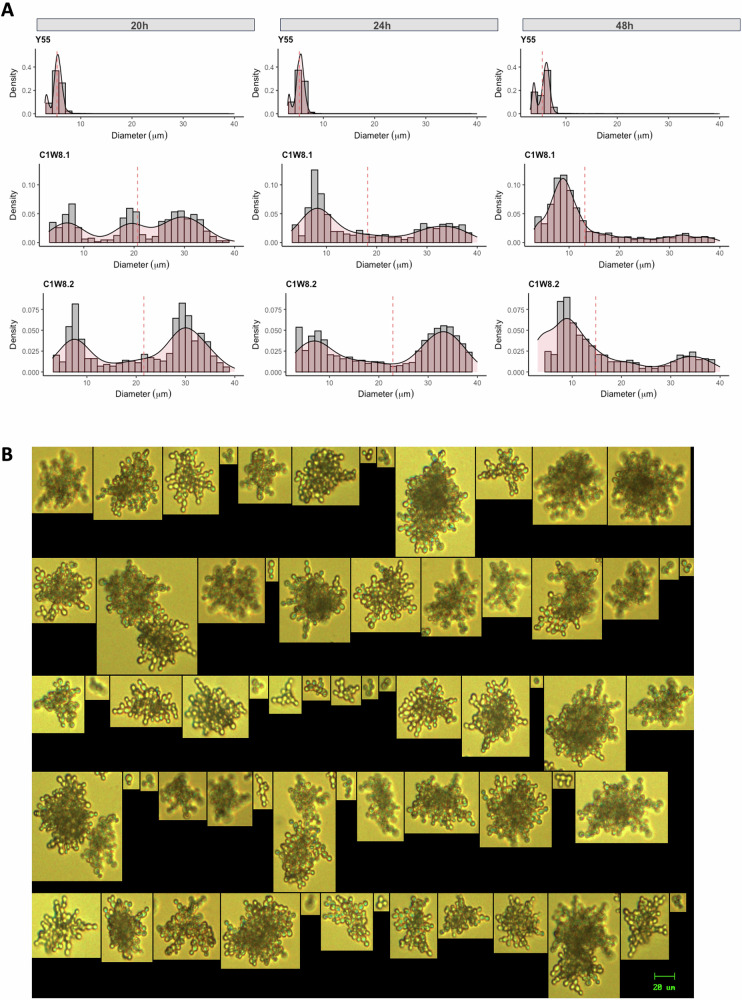 Figure 1
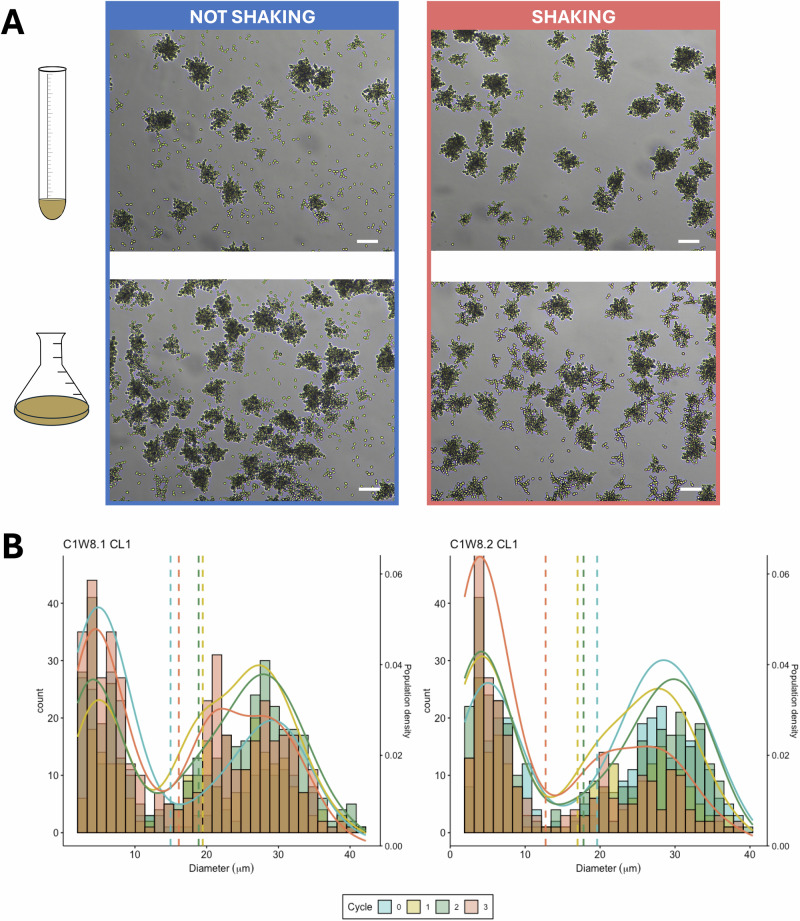 Figure 2
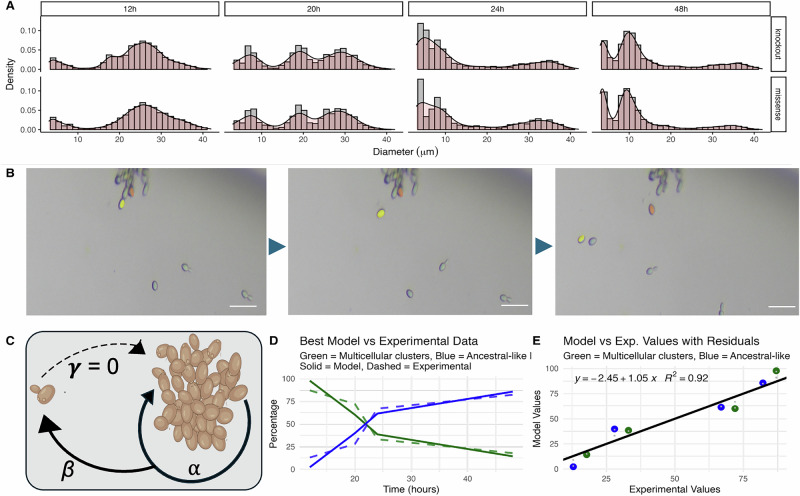 Figure 3
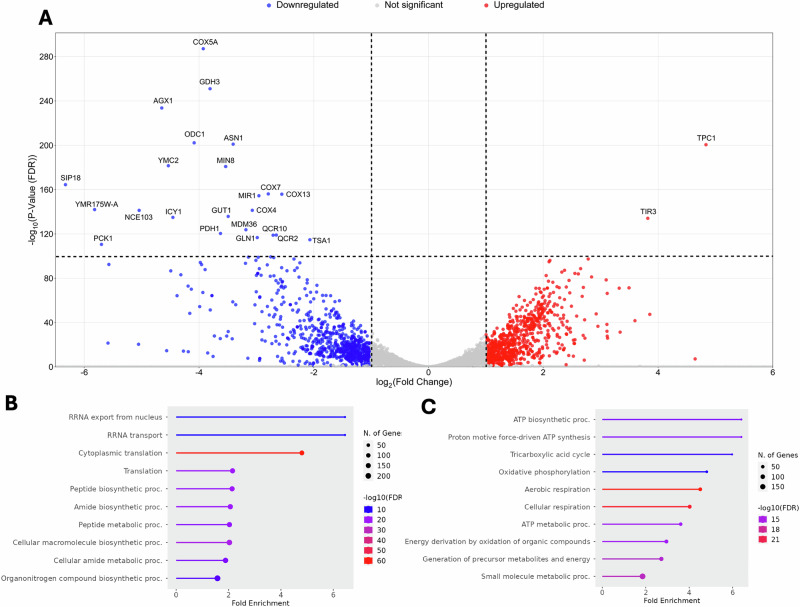 Figure 4
Peer Reviews
No public reviews on file for this paper yet. If you reviewed it on a platform where reviews are public (OpenReview, ICLR, NeurIPS, ICML), you can paste yours below so the community can read it here.
Videos
No videos yet. Explain this paper in a talk, walkthrough, or lecture? Add one.
Taxonomy
TopicsEvolution and Genetic Dynamics · Fungal and yeast genetics research · Gene Regulatory Network Analysis