Unveiling Vertebrate Biodiversity in Arid and Semi‐Arid Terrestrial Ecosystems Through eDNA Metabarcoding at Savanna Waterholes
Tamara Schenekar, Janine Baxter, Irmgard Sedlmayr, Julia Gladitsch, Sibusiso Mahlangu, Monica Mwale

TL;DR
This study uses eDNA metabarcoding at waterholes to explore vertebrate biodiversity in arid ecosystems and identifies factors affecting species detection.
Contribution
The study provides empirical guidance on eDNA sampling design parameters for terrestrial vertebrates in arid ecosystems.
Findings
Sediment samples detected abundant taxa better, while water samples detected rare taxa more frequently.
Mixed sampling of substrates yielded the highest species richness.
Wet season sampling detected more species overall, while dry season sampling detected more mammal species.
Abstract
Applying environmental DNA (eDNA) metabarcoding to samples from waterholes and their surroundings offers a promising approach for monitoring terrestrial vertebrates in semi‐arid and arid ecosystems, such as the southern African savannas. However, minimal guidance exists on key sampling design parameters for terrestrial ecosystems, which can significantly influence species detection. This study investigated the effects of sampled substrate, sampling season, and metabarcoding primer pair on species richness and taxonomic group detection in terrestrial vertebrates, with a focus on mammals, using eDNA samples from waterholes in Botsalano Game Reserve, South Africa. A total of 725 eDNA samples were collected from 94 sampling events across wet and dry seasons, detecting 95 species (45 birds, 42 mammals, 4 amphibians, 3 reptiles, and 1 fish). Sediment samples provided more reliable detection…
Genes, proteins, chemicals, diseases, species, mutations and cell lines named across the full text — each resolved to its canonical identifier and authoritative record.
Click any figure to enlarge with its caption.
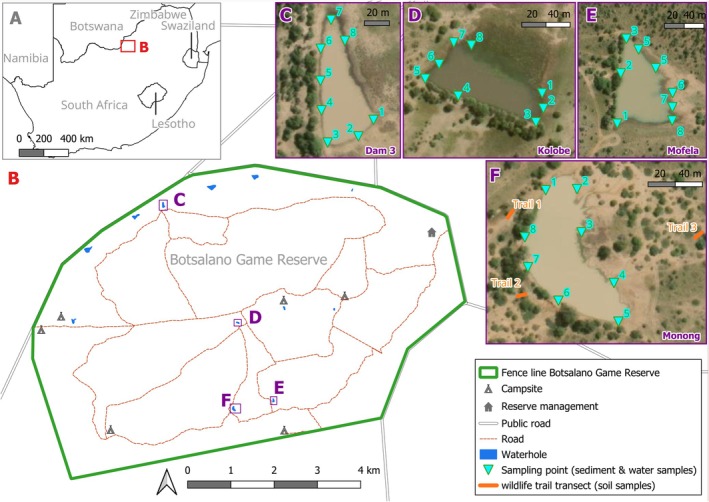 Figure 1
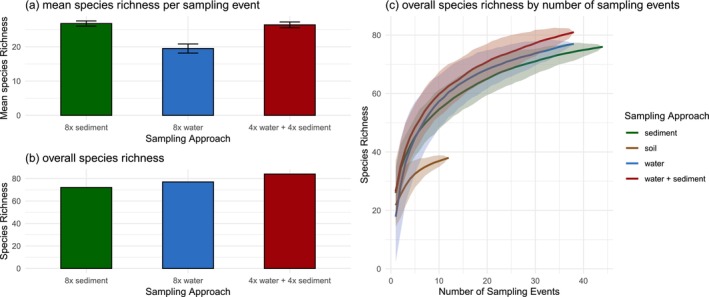 Figure 2
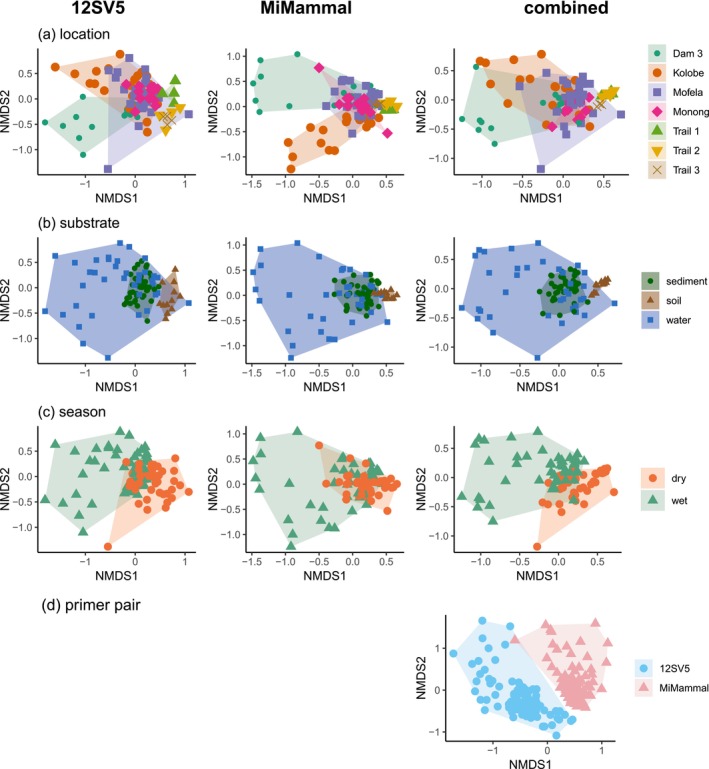 Figure 3
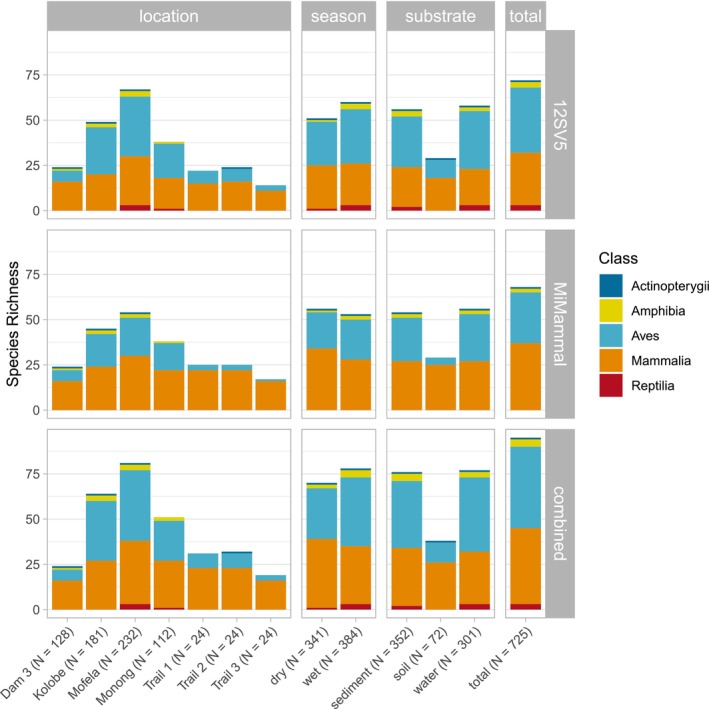 Figure 4
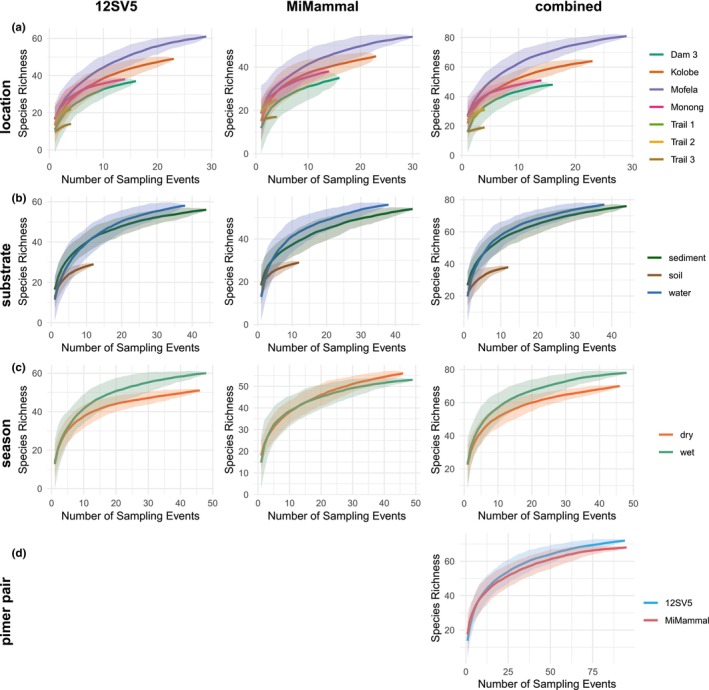 Figure 5
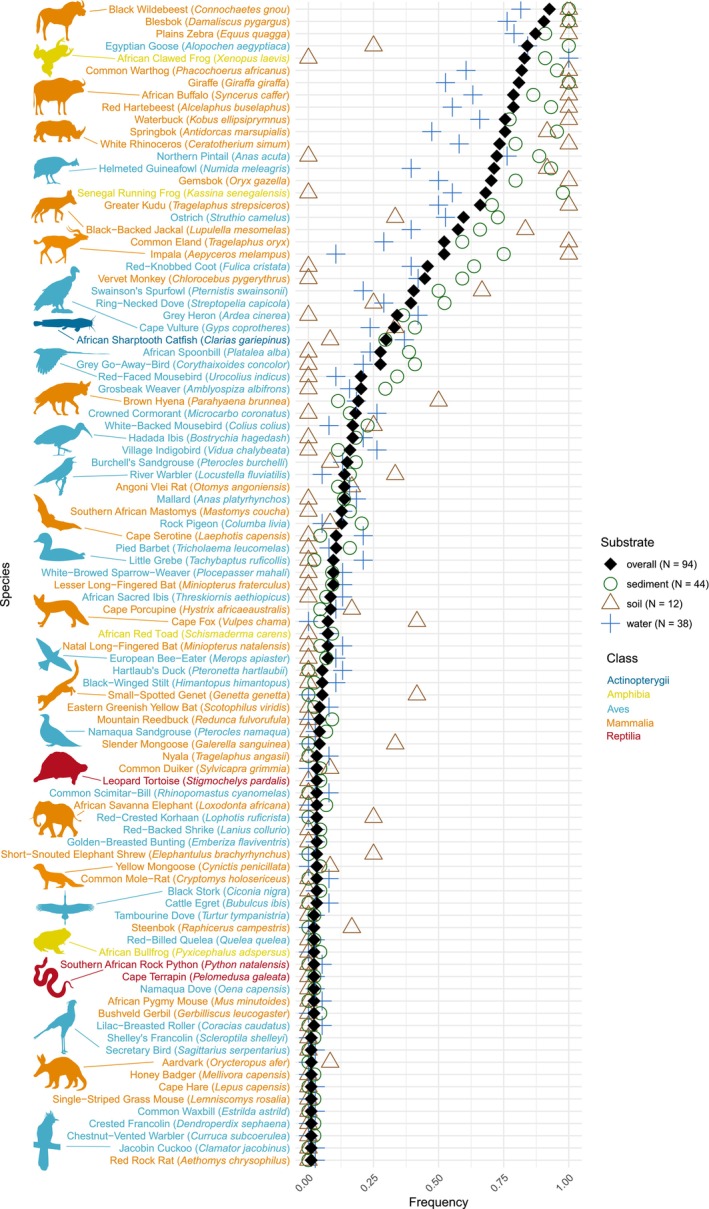 Figure 6
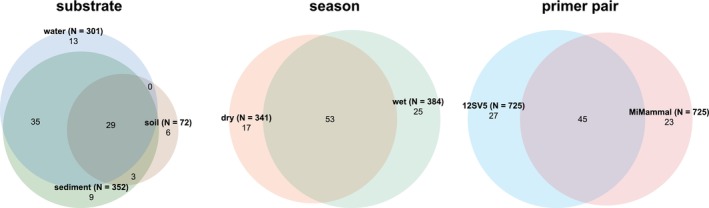 Figure 7
Peer Reviews
No public reviews on file for this paper yet. If you reviewed it on a platform where reviews are public (OpenReview, ICLR, NeurIPS, ICML), you can paste yours below so the community can read it here.
Videos
No videos yet. Explain this paper in a talk, walkthrough, or lecture? Add one.
Taxonomy
TopicsEnvironmental DNA in Biodiversity Studies · Genomics and Phylogenetic Studies · Protist diversity and phylogeny