Epithelial-myoepithelial carcinoma of the nasopharynx: cases report and literature review
Wenju Xiong, Lijuan Yin, NaNa Wu, Zhongzheng Xiang, Jun Wang, Yuanyuan Zeng, Xiaoyuan Wei, Zelei Dai, Chenfeng Tan, Lei Liu

TL;DR
This paper reports two rare cases of epithelial-myoepithelial carcinoma in the nasopharynx, highlighting their different outcomes and suggesting that high 18F-FDG uptake may indicate a more aggressive form of the disease.
Contribution
The study contributes novel insights into the variable clinical behavior of nasopharyngeal EMCa and identifies potential biomarkers for aggressive disease.
Findings
One patient achieved a complete clinical response with surgery and radiotherapy, remaining disease-free for 31 months.
Another patient showed aggressive disease with high 18F-FDG uptake and required combined chemotherapy and immunotherapy for stabilization.
The study suggests high 18F-FDG uptake may be a biomarker for aggressive EMCa.
Abstract
Epithelial-myoepithelial carcinoma (EMCa) is a low-grade malignant tumor that occurs primarily in the salivary glands. Its occurrence in the nasopharynx is exceedingly rare. Due to its scarcity, there is currently a lack of standardized treatment protocols, and robust prognostic data remain limited. We report a case series of two patients with histopathologically confirmed nasopharyngeal EMCa, supplemented by a systematic literature review to summarize its clinicopathological characteristics, treatment modalities, and prognostic factors. The two cases exhibited strikingly divergent outcomes. The first patient (Case 1) underwent surgical resection followed by adjuvant radiotherapy, achieving a complete clinical response and remaining disease-free at 31 months. In contrast, the second patient (Case 2) presented a markedly more aggressive profile, characterized by younger age,…
Genes, proteins, chemicals, diseases, species, mutations and cell lines named across the full text — each resolved to its canonical identifier and authoritative record.
Click any figure to enlarge with its caption.
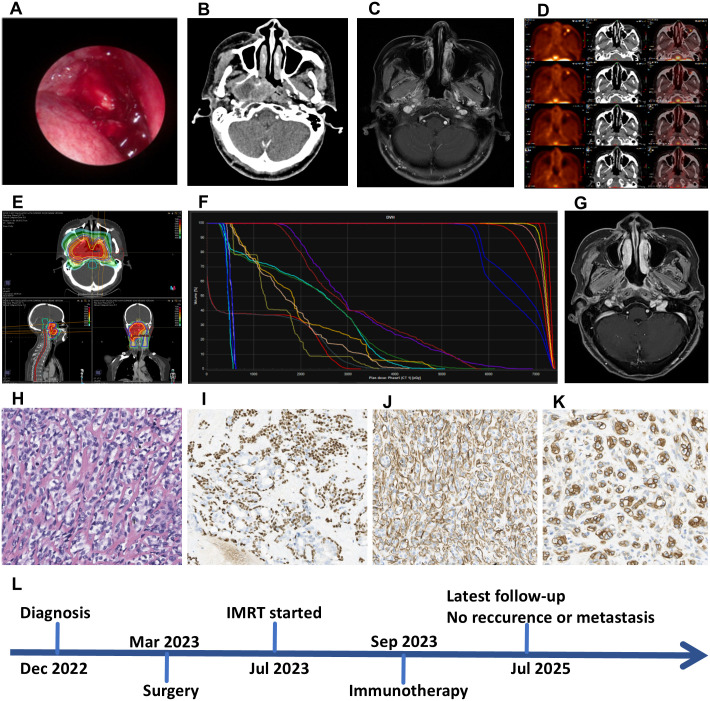 Figure 1
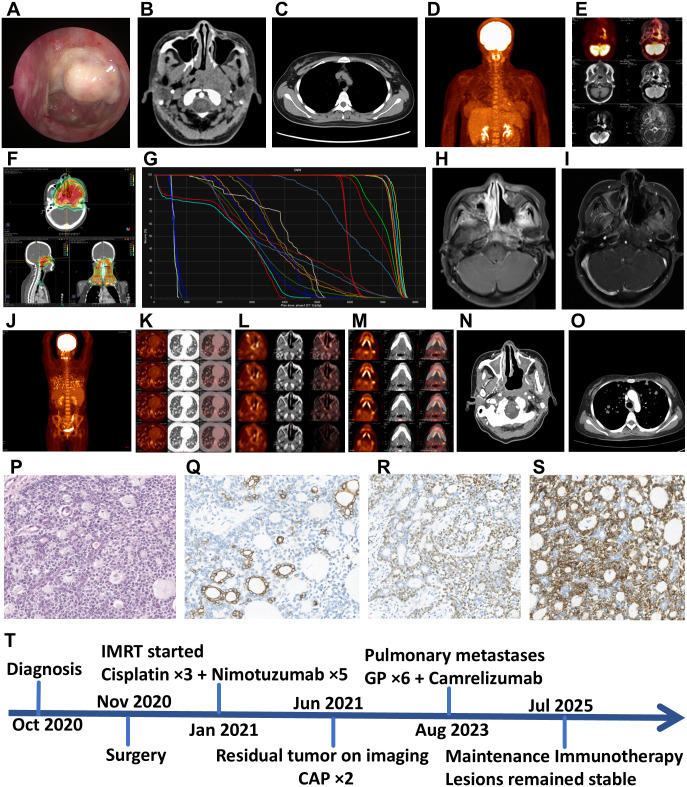 Figure 2
Peer Reviews
No public reviews on file for this paper yet. If you reviewed it on a platform where reviews are public (OpenReview, ICLR, NeurIPS, ICML), you can paste yours below so the community can read it here.
Videos
No videos yet. Explain this paper in a talk, walkthrough, or lecture? Add one.
Taxonomy
TopicsSalivary Gland Tumors Diagnosis and Treatment · Head and Neck Cancer Studies · Viral-associated cancers and disorders