Intermuscular coherence during arm movement changes significantly with shoulder abduction and age, but not with limb dominance
Andrew Erwin, Angelo Bartsch-Jimenez, Hesam Azadjou, Grace Niyo, Francisco J. Valero-Cuevas

TL;DR
This study shows that intermuscular coherence during arm movement is affected by shoulder position and age, but not by limb dominance.
Contribution
The study provides the first overall comparison of intermuscular coherence patterns in unimpaired individuals across age and arm conditions.
Findings
Shoulder abduction significantly increases intermuscular coherence across multiple frequency bands.
Older adults show reduced intermuscular coherence in the alpha-band compared to younger adults.
Limb dominance does not significantly affect intermuscular coherence.
Abstract
Intermuscular coherence (IMC) has the potential to become a clinical biomarker to quantify disruptions of shared neural drive to muscles in individuals with upper and lower extremity motor impairments. Here we test whether shoulder abduction, limb dominance and age affect IMC in unimpaired individuals to serve as a baseline for studies with clinical populations. Twenty-five unimpaired participants performed an established single-arm reaching task: rotating an ergometer in the horizontal plane while surface electromyography signals were recorded from the biceps, triceps and deltoids arm muscles. We compared IMC within the alpha, beta, and gamma frequency bands across three experimental factors: shoulder posture (neutral vs. abducted), arm (dominant vs. non-dominant), and age (younger {18–42 years. N = 12, 6 female} vs. older {51–74 years. N = 13, 7 female} adults). We found that there…
Genes, proteins, chemicals, diseases, species, mutations and cell lines named across the full text — each resolved to its canonical identifier and authoritative record.
Click any figure to enlarge with its caption.
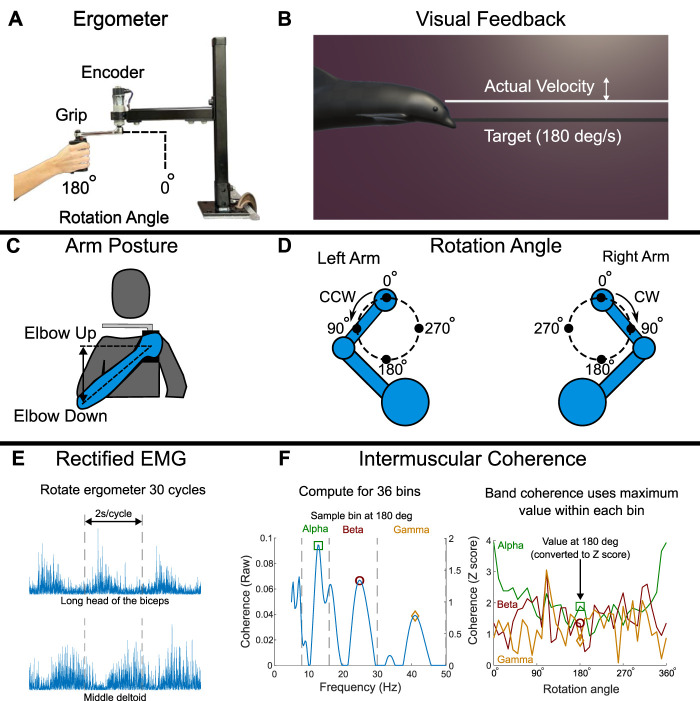 Figure 1
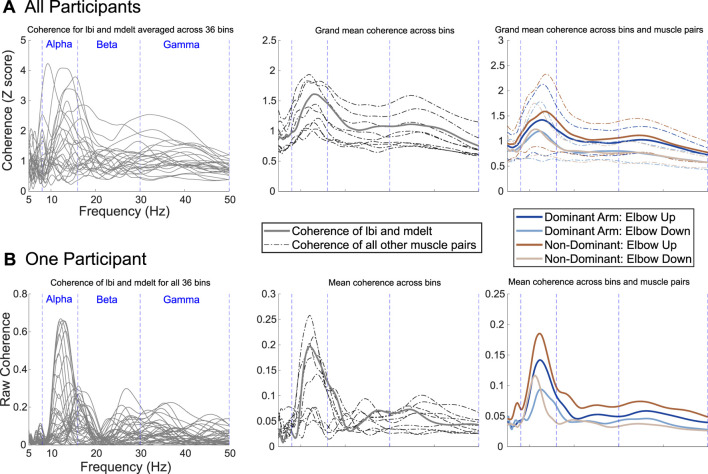 Figure 2
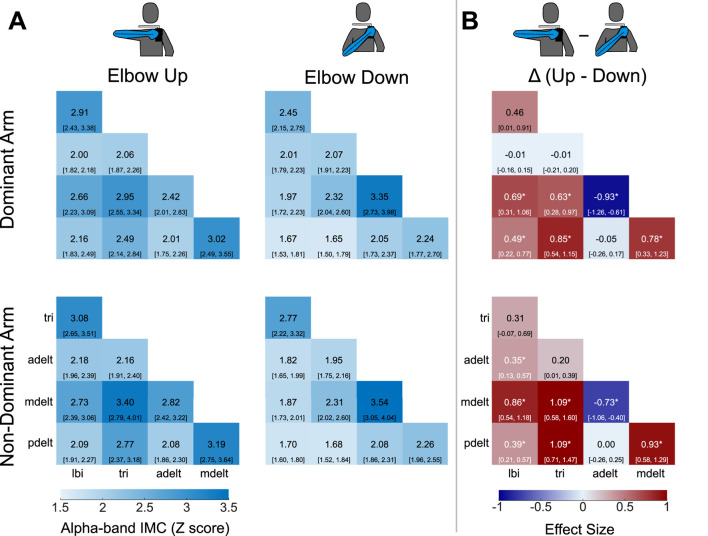 Figure 3
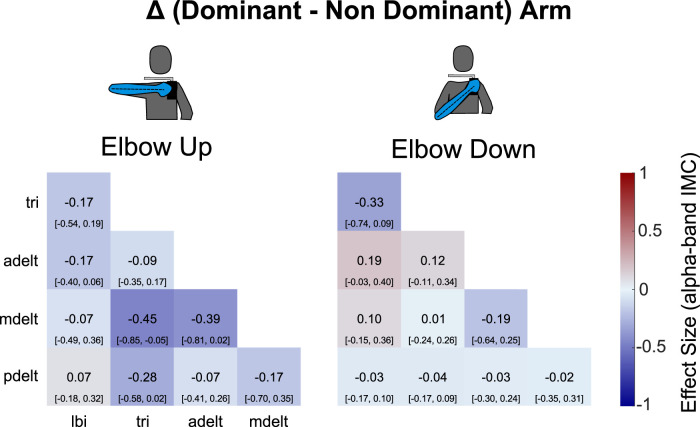 Figure 4
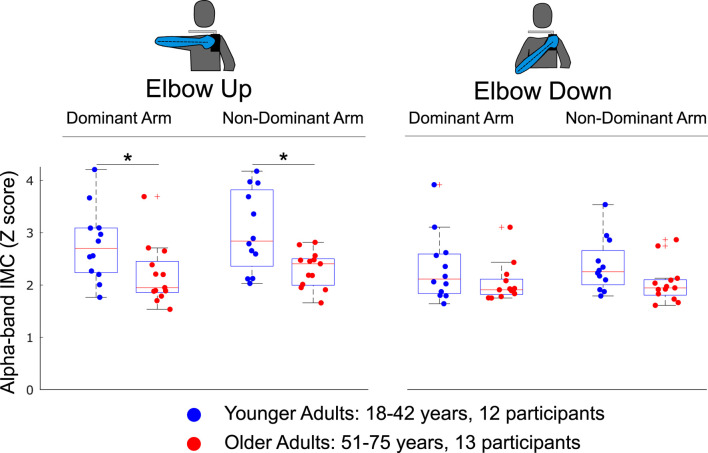 Figure 5
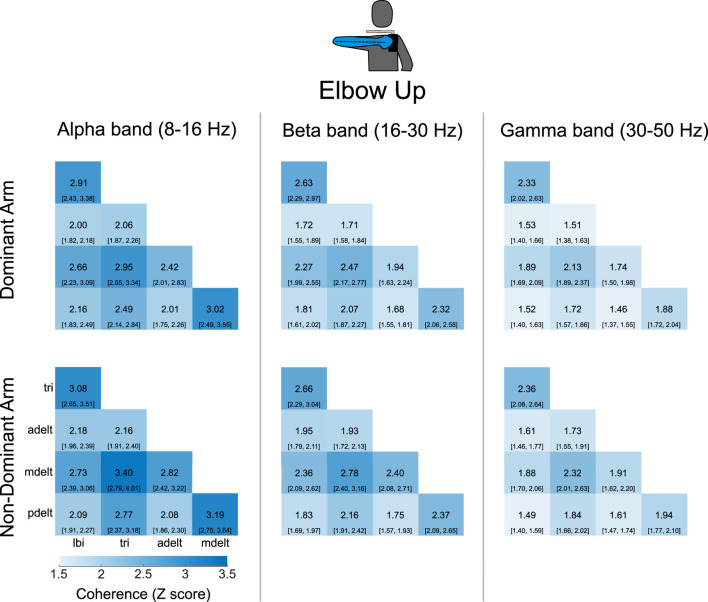 Figure 6
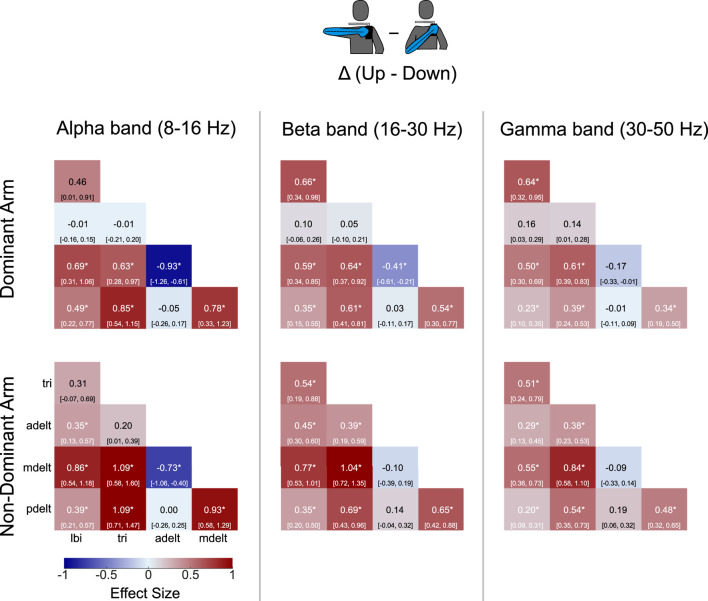 Figure 7
Peer Reviews
No public reviews on file for this paper yet. If you reviewed it on a platform where reviews are public (OpenReview, ICLR, NeurIPS, ICML), you can paste yours below so the community can read it here.
Videos
No videos yet. Explain this paper in a talk, walkthrough, or lecture? Add one.
Taxonomy
TopicsMuscle activation and electromyography studies · Motor Control and Adaptation · Transcranial Magnetic Stimulation Studies