Clinical and radiographic intersection of cerebral amyloid angiopathy with euglycemic diabetic ketoacidosis in the development of transient focal neurologic deficits: case report
John Paul Aboubechara, Michael Saggio, Olivia Campa, Kader Karli Oguz, Ivy Nguyen

TL;DR
An 81-year-old man with cerebral amyloid angiopathy and euglycemic diabetic ketoacidosis experienced transient neurological symptoms, possibly due to cortical spreading depolarization.
Contribution
This case report highlights a rare intersection of CAA and euglycemic DKA with reversible T2 FLAIR hypointensity and transient focal deficits.
Findings
The patient exhibited euglycemic DKA with transient neurological deficits and MRI findings consistent with probable CAA.
Reversible T2 FLAIR hypointensity was observed in brain regions with heavy microbleed burden from CAA.
Cortical spreading depolarization is speculated as a common pathway linking CAA and hyperglycemia-related deficits.
Abstract
This study aimed to describe a case of transient neurologic deficits triggered by euglycemic diabetic ketoacidosis (DKA) in brain tissue at risk due to heavy cerebral amyloid angiopathy (CAA) microbleed burden, while demonstrating the rare imaging finding of reversible T2 fluid-attenuated inversion recovery (FLAIR) subcortical hypointensity. We present the clinical course, laboratory findings, and neuroimaging features of an 81-year-old man who presented with acute altered mental status and transient focal neurologic deficits. The patient presented with encephalopathy, headache, left hemianopsia, left sensory neglect, and mild left upper extremity weakness. Laboratory examination showed euglycemic DKA. Brain MRI revealed findings consistent with probable CAA according to Boston Criteria 2.0, including innumerable cortical microbleeds predominantly in the right…
Genes, proteins, chemicals, diseases, species, mutations and cell lines named across the full text — each resolved to its canonical identifier and authoritative record.
Click any figure to enlarge with its caption.
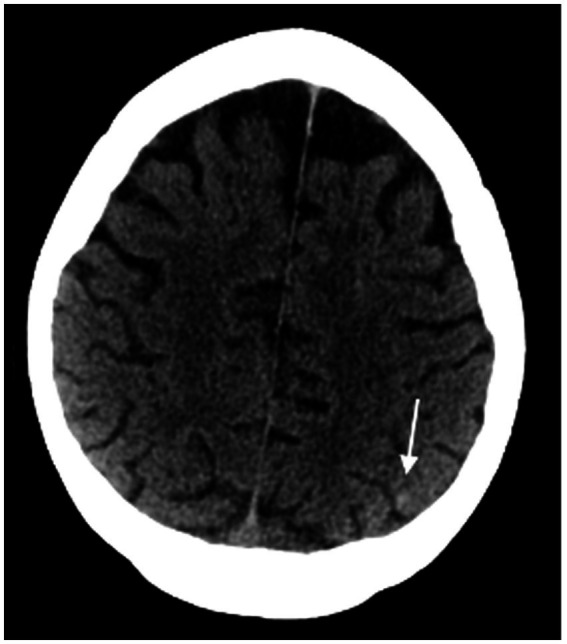 Figure 1
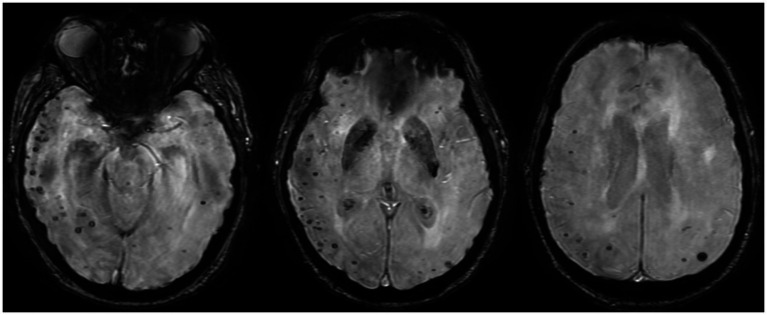 Figure 2
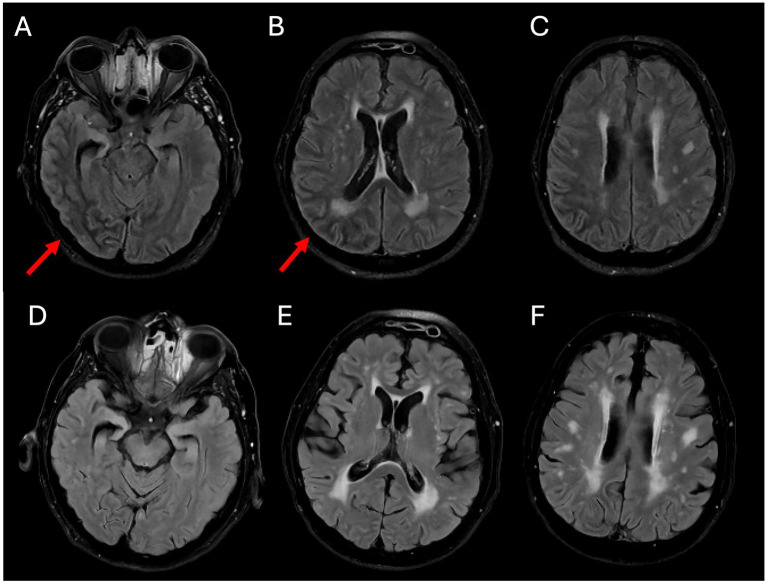 Figure 3
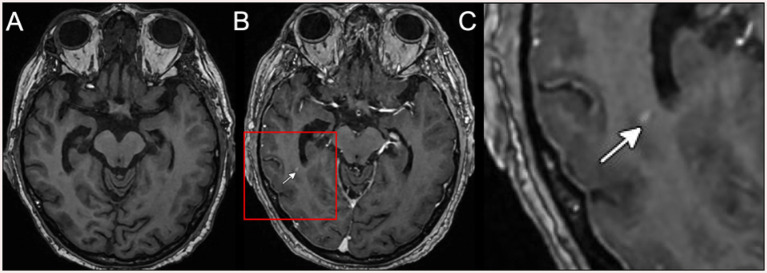 Figure 4
Peer Reviews
No public reviews on file for this paper yet. If you reviewed it on a platform where reviews are public (OpenReview, ICLR, NeurIPS, ICML), you can paste yours below so the community can read it here.
Videos
No videos yet. Explain this paper in a talk, walkthrough, or lecture? Add one.
Taxonomy
TopicsNeurological and metabolic disorders · Intracerebral and Subarachnoid Hemorrhage Research · Traumatic Brain Injury and Neurovascular Disturbances