Peritoneal carcinomatosis management through cytoreductive surgery with hyperthermic intraperitoneal chemotherapy: first experience in Iraq
Aqeel Shakir Mahmood, Ahmed Dheyaa Al-Obaidi, Mustafa Najah Al-Obaidi, Yousif Ali Madlul, Ahmed Sermed Al Sakini, Hashim Talib Hashim, Ahmed A. Shakir, Tabarak Qassim, Aya Ahmed Shimal, Marafi Jammaa Ahmed, Fatima Elbasri Abuelgasim Mohammed, Hasan Al-Obaidi

TL;DR
This study reports on the first use of CRS+HIPEC for peritoneal carcinomatosis in Iraq, showing survival rates and factors affecting outcomes.
Contribution
The first study in Iraq on managing peritoneal carcinomatosis using CRS+HIPEC, considering local genetic and socioeconomic factors.
Findings
An overall survival rate of 26.2% and median survival of 32.51 months were observed.
Neoadjuvant chemotherapy, CC score, and PCI significantly correlated with survival rates.
No significant difference was found between closed and open HIPEC methods.
Abstract
Given the current lack of data from Iraq regarding peritoneal carcinomatosis (PC) management using Cytoreductive Surgery (CRS) with Hyperthermic Intraperitoneal Chemotherapy (HIPEC), and the diversity in genetics, environmental conditions, and socioeconomic factors in Iraq, we conducted the first study of PC management using CRS+HIPEC. This is a retrospective single-center study at Al-Arabi Private Hospital in Baghdad, Iraq, on 61 patients recently diagnosed with peritoneal cancer who have been managed by CRS and HIPEC for the first time in Iraq. Subsequently, the patients were observed for a duration of 4 years throughout the follow-up phase. The study, with an average participant age of 49.15 years and females representing 62%, showed an overall survival rate of 26.2% and a median survival duration of 32.51+/-12.8 months. Colorectal and ovarian cancers were predominant at 49% and…
Genes, proteins, chemicals, diseases, species, mutations and cell lines named across the full text — each resolved to its canonical identifier and authoritative record.
Click any figure to enlarge with its caption.
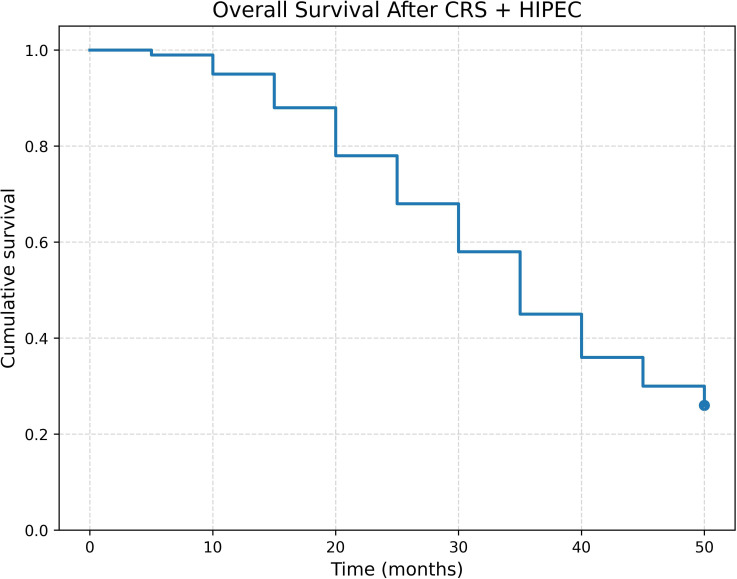 Figure 1
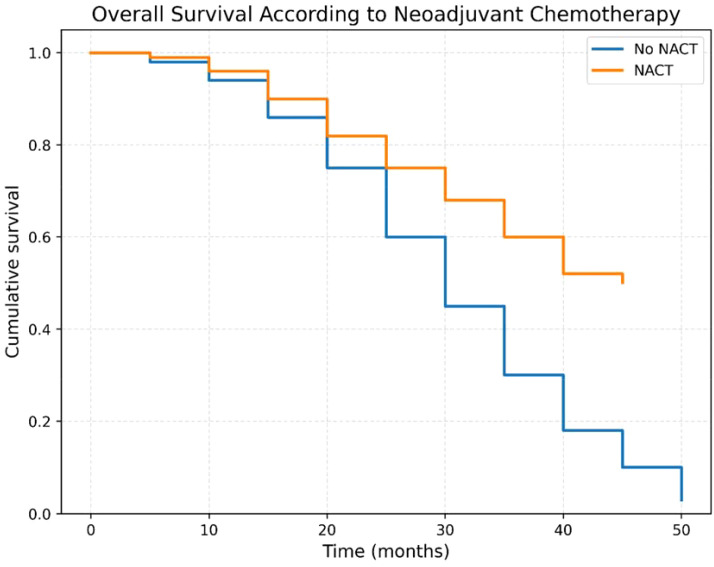 Figure 2
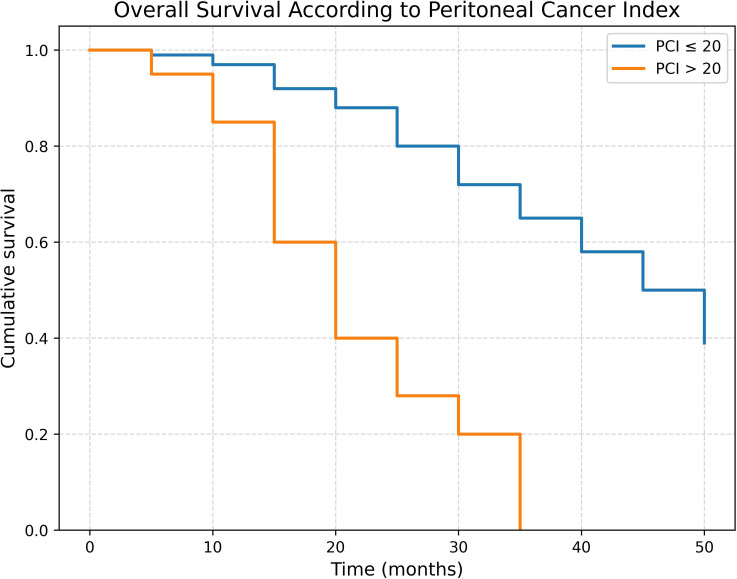 Figure 3
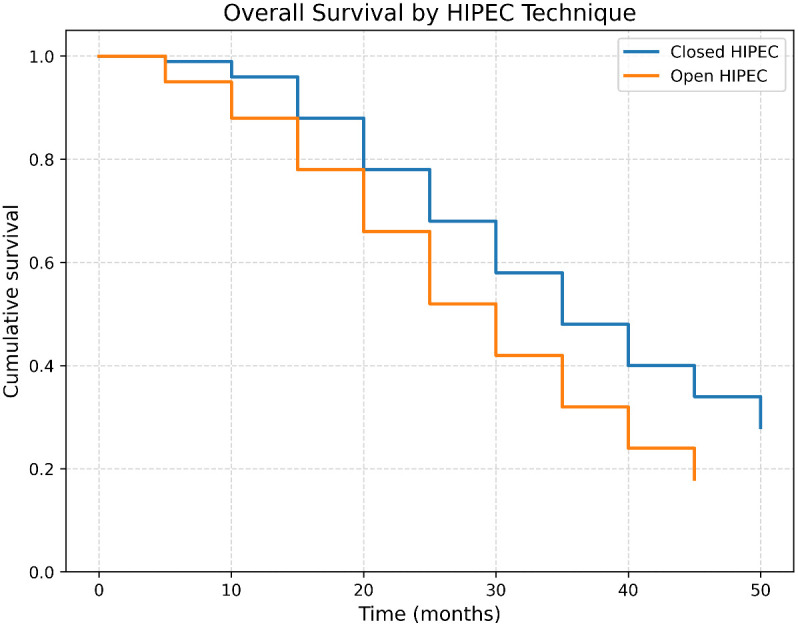 Figure 4
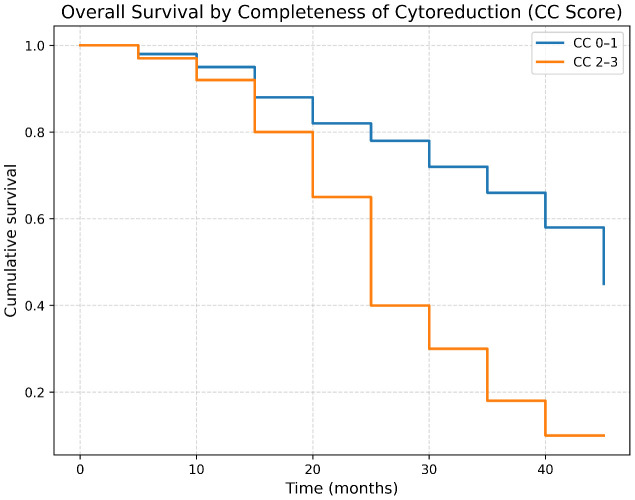 Figure 5
Peer Reviews
No public reviews on file for this paper yet. If you reviewed it on a platform where reviews are public (OpenReview, ICLR, NeurIPS, ICML), you can paste yours below so the community can read it here.
Videos
No videos yet. Explain this paper in a talk, walkthrough, or lecture? Add one.
Taxonomy
TopicsIntraperitoneal and Appendiceal Malignancies · Occupational and environmental lung diseases · Ovarian cancer diagnosis and treatment