Aberrant systemic acute-phase complement responses in conjunction with soluble CR1 attribute to varying grades of dengue disease severity
Abdul R. Anshad, Shanmugam Saravanan, Amudhan Murugesan, Ravindran Vighnesh, Sivadoss Raju, Rajendran Kannan, Yean K. Yong, Marie Larsson, Esaki M. Shankar

TL;DR
This study finds that abnormal complement system activity and soluble CR1 levels are linked to different levels of dengue disease severity.
Contribution
The study identifies sCR1 as an independent predictor of dengue severity, offering potential for early disease prediction.
Findings
Early classical complement proteins C1Inh, C1q, and C2 show significant alterations in dengue patients.
sCR1 levels inversely correlate with dengue severity, with each unit increase reducing severity odds by 22%.
Platelet counts are negatively associated with RDW and basophils, and positively with serum uric acid.
Abstract
Dengue virus (DENV) infection poses a serious health burden across the tropical and sub-tropical regions. The role of complement factors and acute-phase reactants in clinical dengue remains ambiguous. The cross-sectional study enrolled 156 participants, with 114 confirmed clinical dengue cases and 42 healthy controls. Serological profiling (NS1, anti-DENV IgM, and anti-DENV IgG), estimation of serum acute-phase reactants, clinico-laboratory parameters, and viral load were performed to classify dengue patients under dengue with warning signs (DWS+, n = 35), dengue without warning signs (DWS-, n = 74), and severe dengue (n = 5) (based on varying grades of severity) in accordance with the 2009 WHO guidelines. Measurement of complement factors, i.e., C1 inhibitor (C1Inh) (n = 145), C1q (n = 152), C2 (n = 146), C3a (n = 153), C3b (n = 152), mannose-binding lectin (MBL) (n = 151), C5a (n =…
Genes, proteins, chemicals, diseases, species, mutations and cell lines named across the full text — each resolved to its canonical identifier and authoritative record.
Click any figure to enlarge with its caption.
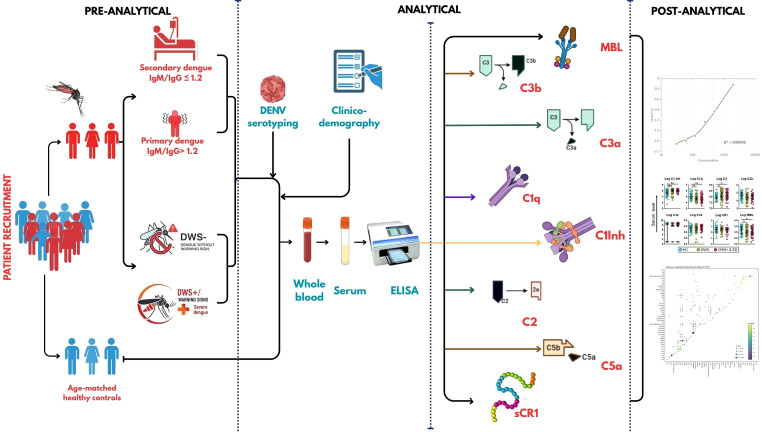 Figure 1
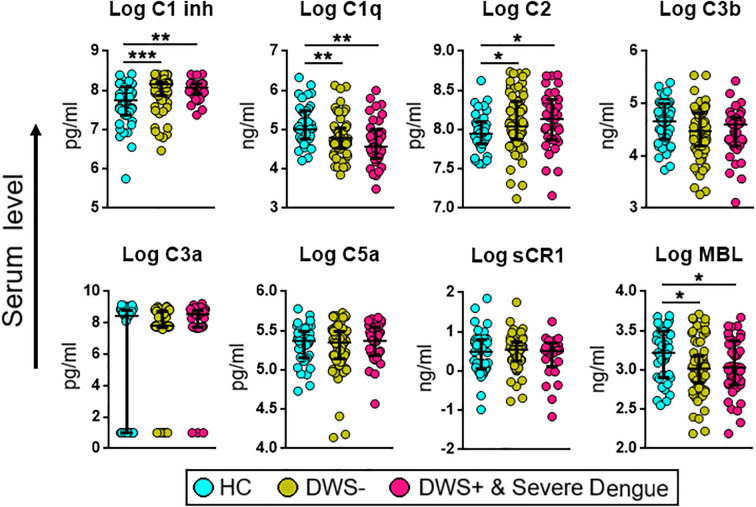 Figure 2
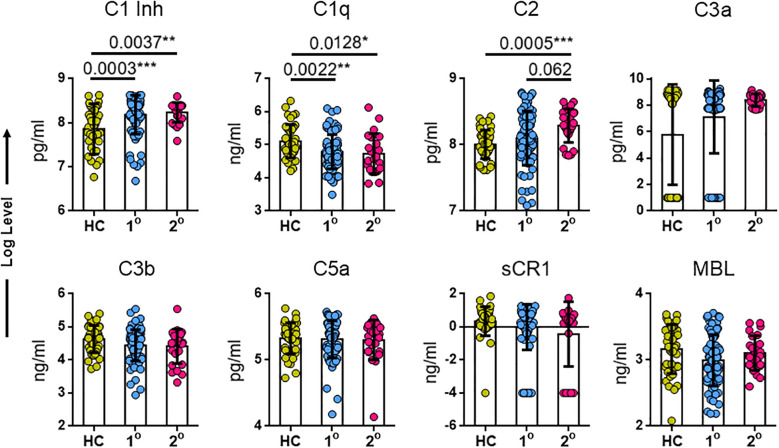 Figure 3
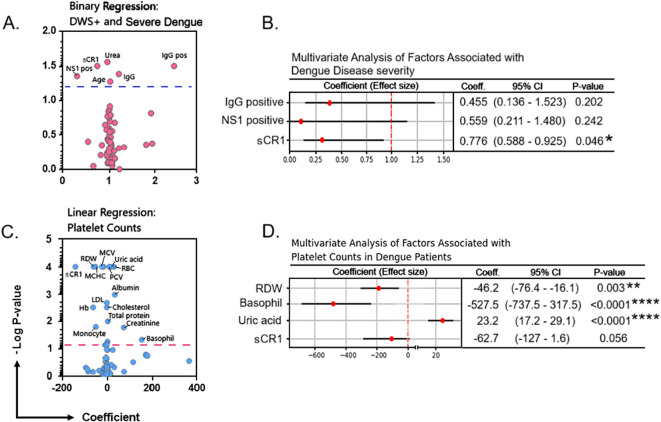 Figure 4
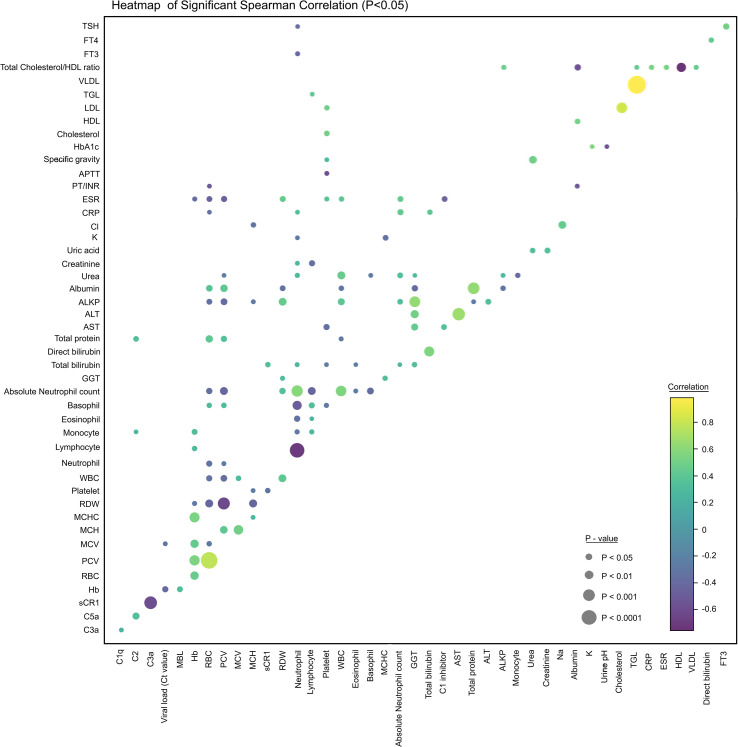 Figure 5
Peer Reviews
No public reviews on file for this paper yet. If you reviewed it on a platform where reviews are public (OpenReview, ICLR, NeurIPS, ICML), you can paste yours below so the community can read it here.
Videos
No videos yet. Explain this paper in a talk, walkthrough, or lecture? Add one.
Taxonomy
TopicsMosquito-borne diseases and control · Complement system in diseases · Malaria Research and Control