The emerging role of anti-thymic stromal lymphopoietin monoclonal antibody (Tezepelumab) in comorbid and non-comorbid CRSwNP patients: a scoping review
Antonio Moffa, Eugenio de Corso, Domiziana Nardelli, Antonella Loperfido, Jacopo Galli, Peter Baptista, Manuele Casale

TL;DR
Tezepelumab, a new drug, effectively treats nasal polyps and related symptoms, even in patients with asthma, reducing the need for steroids and surgery.
Contribution
This study is the first to systematically review Tezepelumab's effectiveness in both comorbid and non-comorbid CRSwNP patients.
Findings
Tezepelumab significantly reduces nasal congestion and loss of smell in CRSwNP patients.
The drug lowers the need for corticosteroids and surgery in patients with nasal polyps.
Improvements in lung function were observed in patients with comorbid asthma.
Abstract
•Tezepelumab improves CRSwNP symptoms and polyp burden.•Tezepelumab reduces nasal congestion and loss of smell in CRSwNP.•Tezepelumab is effective in patients with CRSwNP and comorbid asthma.•Tezepelumab lowers systemic corticosteroid and surgical needs.•Tezepelumab targets upstream inflammation, including T2 and non-T2 types. Tezepelumab improves CRSwNP symptoms and polyp burden. Tezepelumab reduces nasal congestion and loss of smell in CRSwNP. Tezepelumab is effective in patients with CRSwNP and comorbid asthma. Tezepelumab lowers systemic corticosteroid and surgical needs. Tezepelumab targets upstream inflammation, including T2 and non-T2 types. This systematic review aims to evaluate the effectiveness of Tezepelumab, a monoclonal antibody targeting the thymic stromal lymphopoietin, in patients affected by chronic rhinosinusitis with nasal polyposis, both with and without…
Genes, proteins, chemicals, diseases, species, mutations and cell lines named across the full text — each resolved to its canonical identifier and authoritative record.
Click any figure to enlarge with its caption.
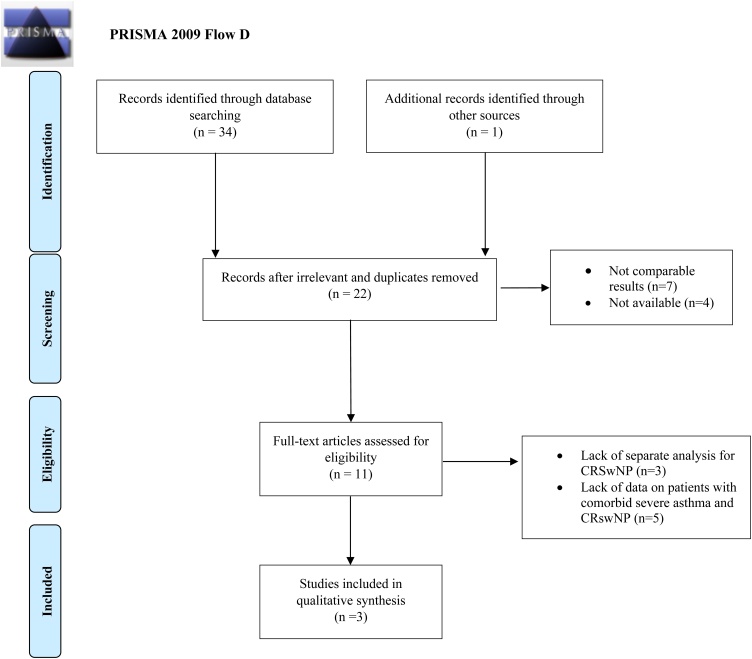 Figure 1
Peer Reviews
No public reviews on file for this paper yet. If you reviewed it on a platform where reviews are public (OpenReview, ICLR, NeurIPS, ICML), you can paste yours below so the community can read it here.
Videos
No videos yet. Explain this paper in a talk, walkthrough, or lecture? Add one.
Taxonomy
TopicsSinusitis and nasal conditions · Allergic Rhinitis and Sensitization · Dermatology and Skin Diseases