Treatment of Epidermal Pathology in a Pediatric Patient With Keratitis–Ichthyosis–Deafness (KID) Syndrome With Topical Mefenamic Acid
Radhika Gupta, Alisa Ho, Lars Brichta, Albert C. Yan

TL;DR
A 5-year-old boy with KID syndrome showed improvement in scalp lesions after using mefenamic acid, suggesting a new treatment possibility.
Contribution
This case report introduces topical mefenamic acid as a potential novel therapy for KID syndrome.
Findings
Topical mefenamic acid significantly improved persistent scalp lesions in a pediatric KID syndrome patient.
The treatment was well-tolerated and provided pain relief and visible clinical improvement.
Abstract
Keratitis–ichthyosis–deafness (KID) syndrome is a rare genetic condition typically presenting at birth with ichthyosiform erythroderma and bilateral hearing loss and later progressing to diffuse keratodermatous plaques with scaling. The condition is associated with mutations in the GJB2 gene, which lead to aberrant activation of connexin hemichannels in keratinocytes. While no targeted treatment currently exists, a previously published in vivo study demonstrated that flufenamic acid (FFA), a nonspecific connexin inhibitor, reduces epidermal pathology in transgenic mouse models expressing the lethal GJB2 mutation. Herein, we report the case of a 5‐year‐old boy with KID syndrome presenting with painful, persistent scalp lesions, which responded remarkably well to topical mefenamic acid, offering a potential novel therapy for managing this challenging condition.
Genes, proteins, chemicals, diseases, species, mutations and cell lines named across the full text — each resolved to its canonical identifier and authoritative record.
Click any figure to enlarge with its caption.
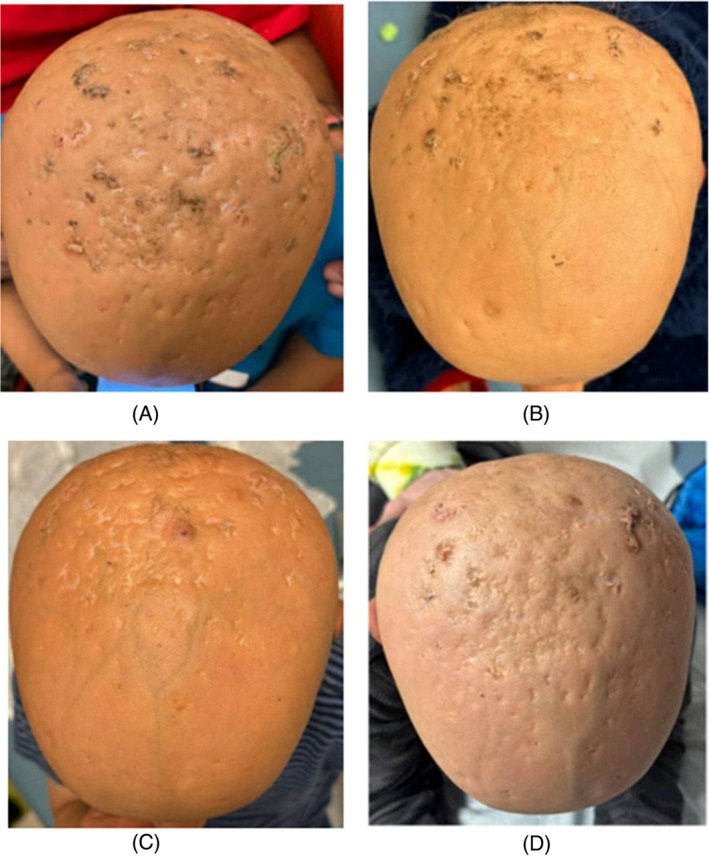 Figure 1
Peer Reviews
No public reviews on file for this paper yet. If you reviewed it on a platform where reviews are public (OpenReview, ICLR, NeurIPS, ICML), you can paste yours below so the community can read it here.
Videos
No videos yet. Explain this paper in a talk, walkthrough, or lecture? Add one.
Taxonomy
TopicsConnexins and lens biology · Nicotinic Acetylcholine Receptors Study · Heat shock proteins research