High yield production of the antifungal proteins PeAfpA and PdAfpB by vacuole targeting in a TMV‐based expression vector
Adrià Bugeda, Xiaoqing Shi, Laia Castillo, Jose F. Marcos, Paloma Manzanares, Juan José López‐Moya, María Coca

TL;DR
Researchers developed a new method to produce antifungal proteins in plants, which could help protect crops and food from harmful fungi.
Contribution
A novel approach using vacuole targeting in a TMV-based vector significantly increases antifungal protein yields in plants.
Findings
PeAfpA and PdAfpB antifungal proteins were produced with ninefold and 3.5-fold higher yields using vacuole targeting.
Antifungal activity of plant-derived PeAfpA and PdAfpB matched that of fungal-derived proteins against key pathogens.
AFPs were successfully localized in both apoplast and vacuole, confirming compatibility with vacuolar environments.
Abstract
Antifungal proteins (AFPs) derived from filamentous fungi show great potential against economically significant fungi that cause plant diseases and consequently threat food safety and security. This study focuses on the Penicillium expansum PeAfpA and Penicillium digitatum PdAfpB proteins and their activity against several phytopathogens. The AFPs were synthesized through a highly productive tobacco mosaic virus‐based expression vector in the fast‐growing model plant Nicotiana benthamiana, combining signalling sequences for apoplastic and vacuolar compartmentalization to increase yields. Adding a vacuolar signalling peptide from a Nicotiana sylvestris chitinase at the C‐termini of the AFPs in combination with an apoplastic N‐terminal signalling peptide from N. benthamiana osmotin significantly enhanced AFP yields without altering functionality. Results showed an improvement of ninefold…
Genes, proteins, chemicals, diseases, species, mutations and cell lines named across the full text — each resolved to its canonical identifier and authoritative record.
Click any figure to enlarge with its caption.
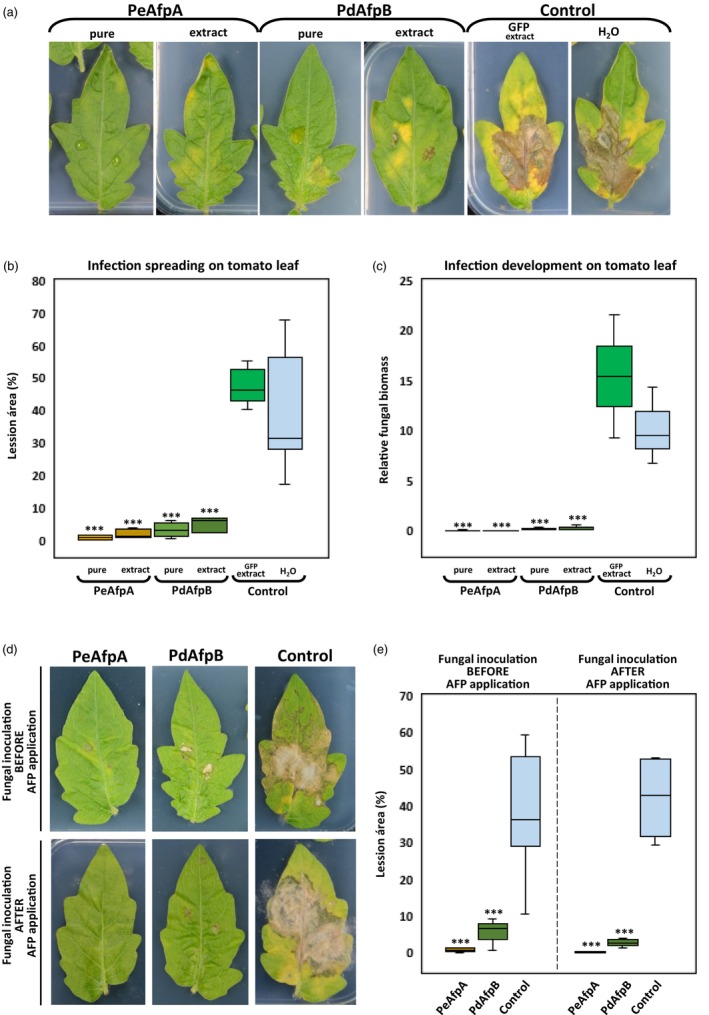 Figure 1
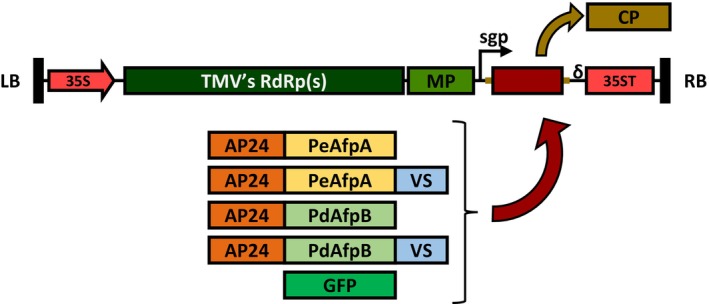 Figure 2
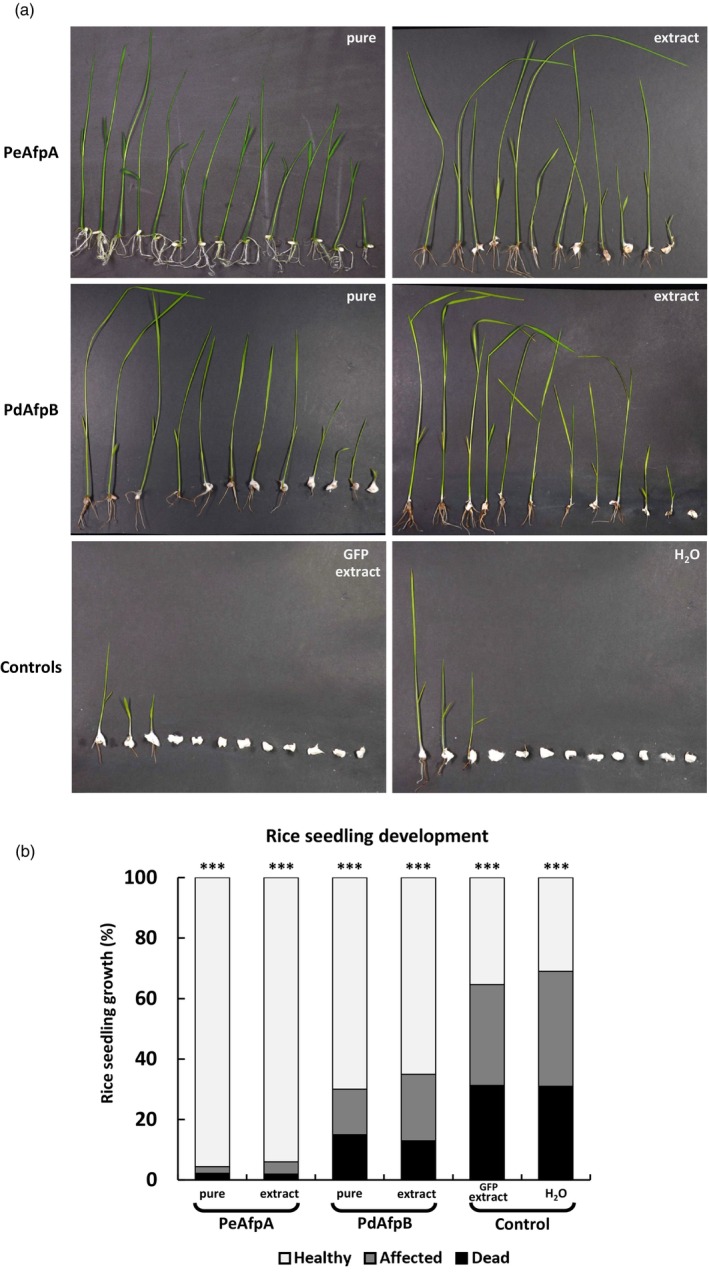 Figure 3
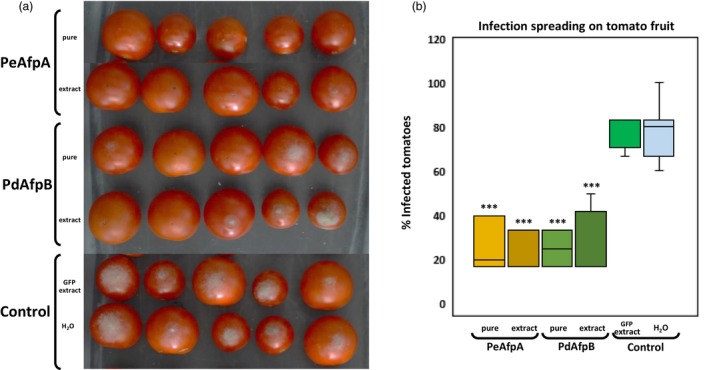 Figure 4
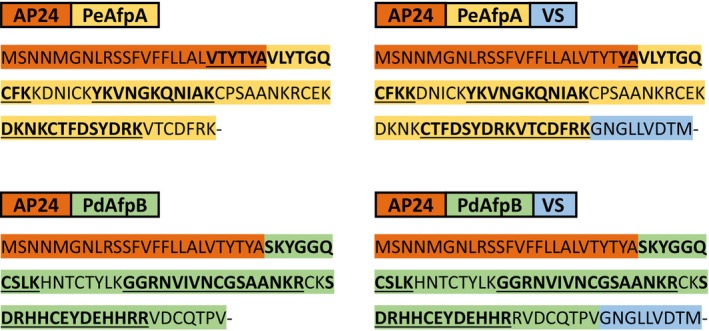 Figure 5
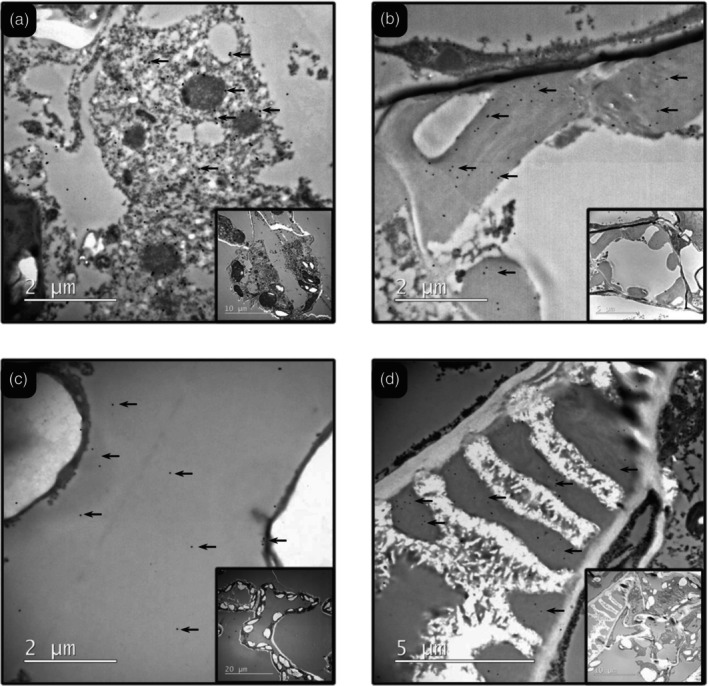 Figure 6
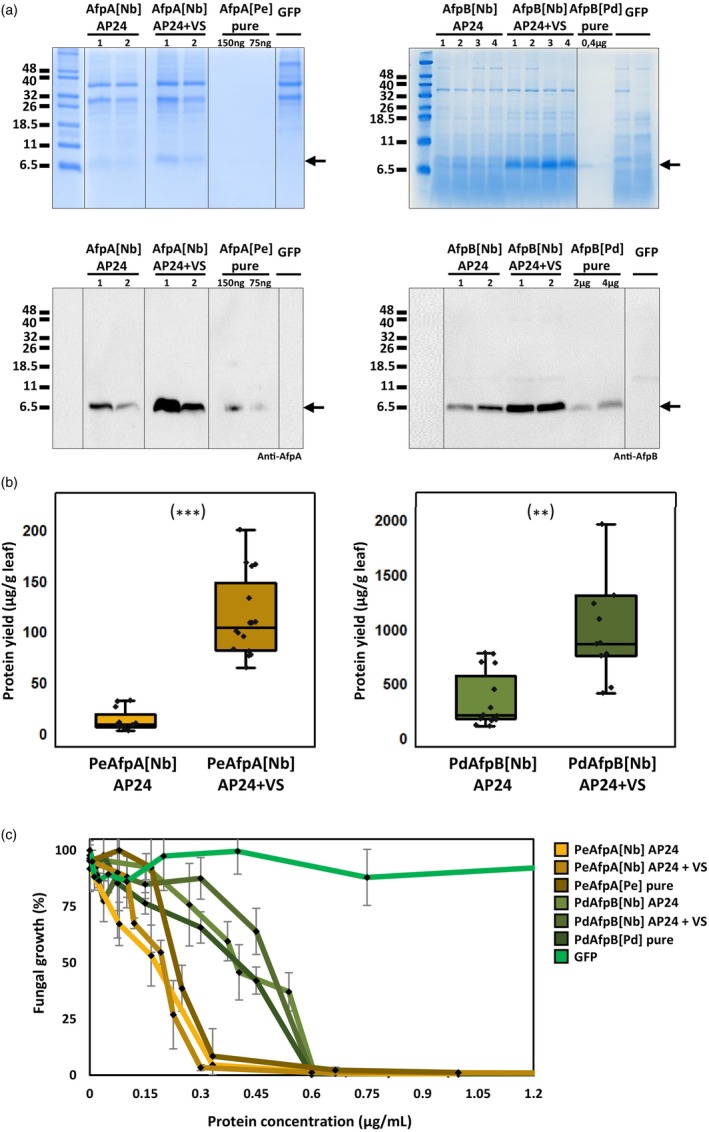 Figure 7
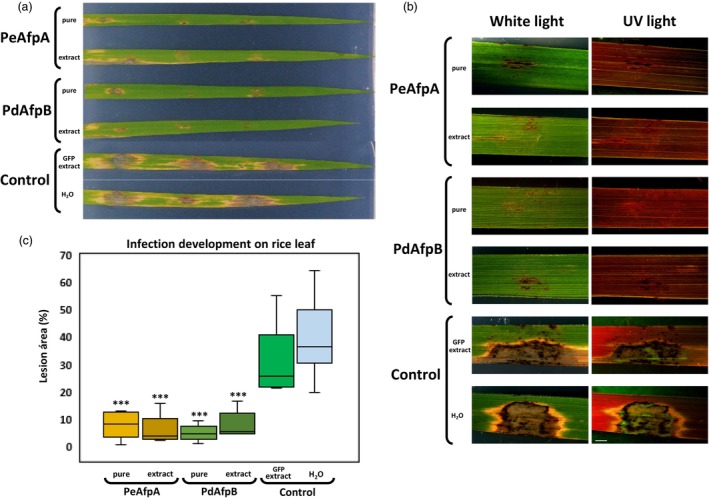 Figure 8
Peer Reviews
No public reviews on file for this paper yet. If you reviewed it on a platform where reviews are public (OpenReview, ICLR, NeurIPS, ICML), you can paste yours below so the community can read it here.
Videos
No videos yet. Explain this paper in a talk, walkthrough, or lecture? Add one.
Taxonomy
TopicsTransgenic Plants and Applications · Plant-Microbe Interactions and Immunity · Entomopathogenic Microorganisms in Pest Control